WORSHIP IN A MUSLIM MOSQUE
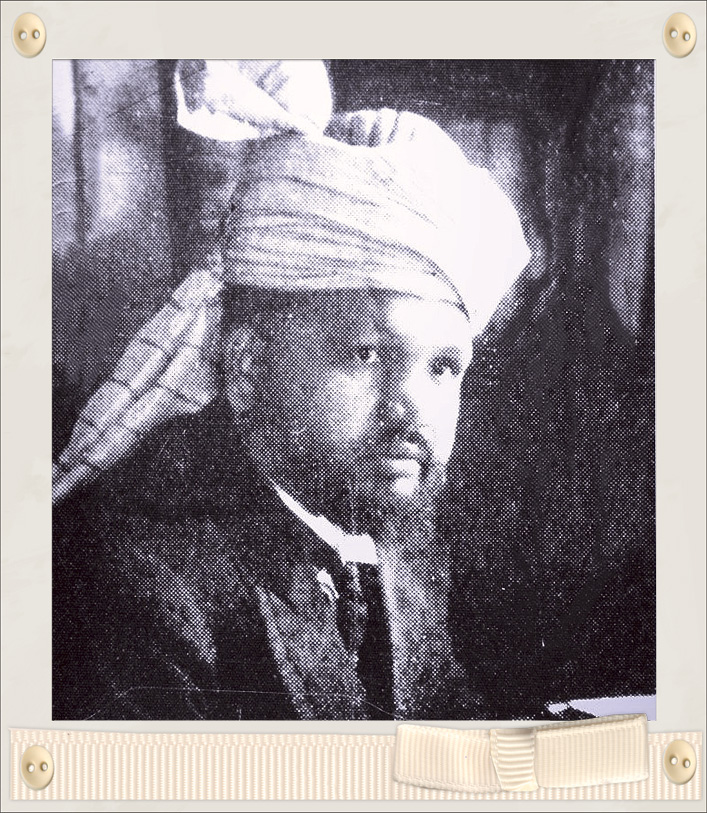
Mohammad Yaqub Khan
Editor : The Light
(A Lecture by MAULVI MUHAMMAD YAKUB KHAN at the Forest Hill and District Literary Society,England)
A WORD is necessary, at the very outset, as to the true conception of the term worship in Islam. The word smacks of an implicit significance, which it inherits from early pagan forms of worship, where the idea was to appease an angry deity, that worship is something of the nature of a tax or duty which man owes to God. Islam, however, takes just the reverse view of worship which may rather be termed as Prayer. Worship aims, according to the Islamic conception, not at the propitiation of a wrathful Deity, but at the elevation of man himself. Divine glorification is calculated to bring about human edification. God is self-sufficient. Should the whole universe glorify Him, it will not add a jot to His perfect self any more than it will detract a tittle from His sublimity, should not a single man sing hymns of His praises. Prayer thus is nothing of the kind of an exaction on the part of the Almighty from His poor creature, man; on the other hand, it is meant for the latter’s own good. “Prayer,” says the Holy Prophet ﷺ, “is the Mi’raj of a believer.” “Mi’raj” is an Arabic word, meaning ascension to a higher plane. Hence a staircase which leads one up to a higher floor is also called a “Mi’raj”. Islamic prayer is thus a means of uplifting man from a low plane of life high up to the moral and spiritual realms, and of making him ultimately one with his Creator.
Muslim prayer is not limited to the four walls of a mosque. Anywhere on the earth’s surface a Muslim can say his prayers, provided it is not dirty. When on a journey the Holy Prophetﷺ would sometimes say his prayers on the back of his horse or dromedary. Neither is prayer restricted by time limitations. A Muslim can say his prayer at any hour of the day or night he chooses. Five times a day, however, it is compulsory to say it. Islamic prayer is thus above the restrictions of both space and time.
A Muslim is not summoned to his prayer with the ringing of a bell or the blowing of a pipe. Every detail of Islamic prayer, like its very name, is pregnant with a deep significance. It is a human throat that gives out a loud cry, with the enthusiasm of a living conviction, what is called the call to prayer. This is how it runs: –
“Allah is great. Allah is great. Allah is great. Allah is great. I bear witness there is none worthy of worship besides Allah. I bear witness there is none worthy of worship besides Allah. I bear witness that Muhammad is the Apostle of Allah. I bear witness that Muhammad is the Apostle of Allah. Come to prayer. Come to prayer. Come to felicity. Come to felicity. Allah is great. Allah is great. There is none worthy of worship besides Allah. “The words,” Prayer is better than sleep” (twice) are added in the case of morning prayer.
Five times a day the cry rings out in all directions, a sort of reminder inviting man’s attention to the eternal truth that there is a Power, a Being, the great Unseen, to Whom he must humble himself in prayer.As soon as the cry falls into his ears, a true Muslim is expected to give up his work, whatever it may be, and mind the call towards God, the source of all real happiness. Islam has blended the temporal and the spiritual in a most beautiful way. The old conception when the two were regarded as two watertight compartments of the same mind, quite incompatible with each other, has been replaced in Islam by the conception that the two are supplementary to and interdependent upon each other. The one cannot prosper without the other. Work-a-day life is necessary for the growth and development of the spiritual capacities of man, as already illustrated, while, on the other hand, constant return in the midst of busy life to a calm contemplation of higher truths, tends to give a fresh tone to man’s spiritual fibres, enabling him to bring a still nobler outlook to bear on his various pursuits in life.
In order to betake himself in prayer to the presence of God, a Muslim must make his ablutions. A sound mind, they say, dwells in a sound body. It is perhaps no less true that a pure heart dwells in a pure body. Cleanliness, they say, is next to godliness.Then he stands with his face towards the Ka’ba, which does not; by any means, imply that he worships the house or localizes God. The Holy Qur-an contradicts the view with the words, “To whichever side you turn your face, there indeed God is.” As a matter of fact the Muslims look upon it as the first house on earth erected for the worship of God. Muir, too, admits the remote antiquity of the house.
The house thus stands as an ostensible monument to the worship of one God. It was rebuilt by Abraham with his son Ismail. To this day, tradition has preserved the association of Abraham with the place. A certain place there still exists, known as the Maqam-i-Ibrahim or Abraham’s standing-place. It was here that Abraham prayed to Allah to raise a Prophet from among the descendants of Ismail, which found fulfilment in the person of the Holy Prophet ﷺ. Besides, it is intended to serve as a common centre, emblematic of the universal brotherhood of man, for which Islam stands.
The Ka’ba has thus a threefold significance for a Muslim. It stands as the most ancient monument of the worship of God, as the scene of Abraham’s self-sacrifice in the path of Allah, and as a symbol for the unity of mankind under the universal Providence of Allah. Thus it is that it has been chosen as the common centre for Muslims all the world over. No form of prayer is addressed to the house, as often supposed. It is not vested with any Divine powers. As a building, it is just what any other is – a combination of ordinary bricks and clay. Its sanctity lies in the sanctity of its associations.
THE PRAYER AND ITS PHILOSOPHY
Let us now turn to the prayer proper, which runs thus:
All praise is due to Allah, the Lord of the worlds, the Beneficent, the Merciful; Master of the day of requital. Thee do we serve, and Thee do we beseech for help. Guide us on the right path, the path of those upon whom Thou hast bestowed favours, not of those upon whom wrath is brought down, nor of those who go astray.The most beautiful prayer ever conceived of! It is as philosophical as sweet. It is composed of three distinct ideas, without which no prayer worth the name is possible. The first puts the votary into the frame of mind indispensable for a genuine prayer. Obviously, a prayer must be the spontaneous outpouring of the heart. One may undergo a deal of trouble in repeating certain words, yet he may be far from a prayerful state of mind. It is of the very essence of true prayer that the deep inner sentiments of the heart must involuntarily gush out, in the presence of God. No amount of mechanical ceremonials by themselves constitute prayer. Prayer is essentially an affair of the heart, and unless the heart goes out towards God, one may be doing anything but praying. The first portion of Muslim prayer is therefore calculated to put man into the mood of mind suitable for prayer. A little insight into the working of man’s heart reveals the fact that all the influences capable of commanding man’s love and devotion ultimately resolve themselves into two main heads – beauty and utility. The beautiful and the useful in nature have an irresistible attraction for us. We are drawn towards them, in spite of ourselves. We cannot help it. Islamic prayer has drawn upon these forces in the fullest measure. In order to bring man closer to his Creator, it depicts Him both as lovely and as benefactor, beyond all measure.
The prayer opens with the words, ” All praise to Allah.” He is, possessed of all conceivable good attributes, free from every form of flaws and frailties. Whatever of beauty and loveliness is met with in the nature round about us, is but a faint shadow of that Perfect Beauty. What a charming conception! Who would not bow down to such a God? The effect of human beauty, infinitesimal as it is as compared to Divine beauty, works on the heart of man, with the spell of magic. Divine beauty must be bewitching beyond all conception. It makes the lover dumb, deaf and blind to the external stimuli, vainly playing upon his or her sense-organs. Transported beyond the world of sense-experience, the worshipper grows oblivious to his mundane environments, and enjoys sweet communion with that Perfect Loveliness. There, in realms celestial, he or she breathes in the atmosphere of bliss, saturated with Divine presence, enjoying sweet heavenly music. There he is above the worries and cares of this earthly life. Pain and pleasure, as conceived of in the terms of sense-experience, can no longer affect him. The Holy Prophet ﷺ, when in moods of sorrow or depression, would begin praying to Allah, which is the balm, the panacea for all sorts of sores and ailments. It is said of Ali, one of the most devoted companions of the Holy Prophet ﷺ, that in a certain battle he was shot with an arrow in the leg. His friends wanted to pull it out, but the pain was too much for him. Thereupon he asked his fellows to wait; for he would, as an antidote against the pain, stand in prayer, and when he should reach the posture of prostration, the arrow might be drawn out. Accordingly, it was pulled out at that stage of the prayer, without his feeling the intensity of the pain. This illustrates what that sweet sensation is which a true Muslim prayer enables one to experience.
Then follows the Divine bounties we have been enjoying, before as well as after birth. Allah is the rab of all the worlds. Now this word rab means the Creator, the Sustainer and the Evolver. Out of nothingness, when man is yet part and parcel of the lifeless nature, for that is the stage from which all life springs, His Providence brings together various scattered particles in the form of food, which in turn is transformed through innumerable complex processes of the digestive system into human blood and finally into human seed. Then follows man’s conception by his mother, during which period Allah’s Providence takes good care to furnish him with the nutrition necessary for the growth of a body of flesh and bones. Thus, originates man from mother earth, by the mere Providence of Allah. Man owes his very existence to Him. How he goes on growing and developing, physically, intellectually, morally and above all spiritually, passing through various stages of evolution, is a matter of no small indebtedness to the same rab; for He it is Who sustains as well as evolves us all the time.
Then He is Rahman, an attribute indicative of the kindness shown to man, without having been merited by him, by virtue of any deeds on his part. The sun, the moon, the earth, the air, water, etc., in short, the whole universe, but for which man’s existence could not have been possible for a single minute, has already been created for his sake. Such unmerited grace is the outcome of Allah’s attribute known as Rahmaniyyat.
In spite of all this, however, life would have been a very dull sort of a job if everything one desired could be had for nothing, i.e. for no effort on man’s part. Allah therefore ordained a set chain of cause and effect with a view to giving an impetus to our latent faculties to work themselves out. Without such occasions for coming into play, the manifold capacities embedded in the nature of man would have got stunted and atrophied. The apple-seedling contains within itself the roots, the trunk, the branches and leaves of the plant, and ultimately lovely, sweet apples, but all these potentialities cannot become actualities unless the requisite occasions such as sowing, watering, manuring, weeding and so forth are there to bring them into play. Thus the Divine attribute, known as Rahmaniyyat, has so arranged that man’s efforts may invariably result in corresponding consequences. But for this there would have been no progress whatsoever. Thus, the God of Islam, called Allah, is not only the possessor of all the good and the beautiful attributes, but at the same time His attributes are a source of infinite benefit to us. He is not only beautiful, but at the same time useful.
Beauty and utility, thus combined together in the God of Islam, their power becomes irresistible. Both being blended in the highest conceivable degree in Allah, a Muslim is drawn towards Him with the strength of an immense magnet and is so absorbed in Him that he becomes dumb and deaf to all that is unworthy of the pure company of Allah.
With such a conception of Allah in his mind, his own being dwindles into nothingness. He falls down prostrate before Him, all instinctively, by way of a token of utter humility. This is the stage when he becomes insensitive to the physical world around him. He loses himself, a microscopic drop, into Allah, the vast ocean from which he had sprung. Thus merged into Him, he becomes part and parcel of the Universal Providence. This is real atonement with God, which a Muslim has the occasion to attain to, each time in his daily five prayers. This is what the Holy Prophet’s saying that prayer is the “Mi’raj” of man, signifies.
But this frame of mind is further enhanced by bringing to man a sense of his utter insignificance and utter dependence upon God. Thus, the next portion is: “To Thee alone do we humble ourselves, and Thee alone we ask for assistance.” The sublimity of God inspires him with the sense of his own humility. Thus, he feels all the more drawn towards that Source of Power and Goodness, and the sense of his dependence makes his prayer all the more spontaneous which he then addresses to God.
“Guide us,” he exclaims, “O Lord, unto the right path.” This is the next part of the prayer, prayer in the sense of asking. Now, mark the dignity of the prayer as well as its wisdom! It is worthy both of the votary and the worshipped. He does not ask for “bread,” for even Jesus is reported to have said, “Man does not live by bread alone.” Nor does he ask for this or that particular object of desire; for every consequence has been bound up, according to the teachings of Islam, with an appropriate set of causes, which must be brought about to attain it. There is no such thing, in Islam, as the lamp of Aladdin, just a rubbing of which might build you a palace in no time. If, for instance, one should go on praying for a crop of wheat without having ploughed the soil, watered it and sown the proper seed therein, he would be asking for a will-ò-the-wisp. Among other good points, Islam is essentially a rationalistic religion, a religion in just accordance with the laws of nature, for both religion and nature spring from the same source, Allah. There could be no inconsistency between the two aspects in which a single being, Allah, has manifested Himself. To disregard the chain of causation, fixed and immutable, as set at work by God, cannot be the teaching of the same God Who has created the universe. The right sort of prayer is, therefore, the one that does not ignore the established system of the universe as chained down by Allah. A Muslim is therefore taught to pray not for a particular object but for the various ways and means necessary for the achievement of the same.
Thus, his heart is filled with the conviction that what he is asking for is not only intrinsically good, but also quite in accord with the demands of his reason. Yet still further momentum is added to all these psychological influences brought to bear upon him. The next part, “The path of those on whom Thou hast showered Thy blessings, not of those on whom Thy wrath came down or who went astray,” gives him further impetus to prayer. The idea that those before him who followed, the right path were actually blessed by God, and those who ignored it invoked His wrath, fills him with all the more devotion in prayer.
Thus, Islamic prayer makes the best use of all the possible incentives to true prayer. It presents to man a God All-Might, All-Beauty and All-Good-ness. It brings home to him his sense of utter, dependence upon Him. The prayer it teaches him to address to God is worth asking for. Those who got the right path were blessed, those who rejected it incurred His wrath. Can there be another chord in the heart of man, which is not struck by some part or other of the Muslim prayer? It is, therefore, the best conceivable form of prayer and truly characterized by the Holy Prophet ﷺ as the “ Miraj ” of man.
(The Islamic Review – February 1922)