WHAT IS NOT ISLAMIC STATE
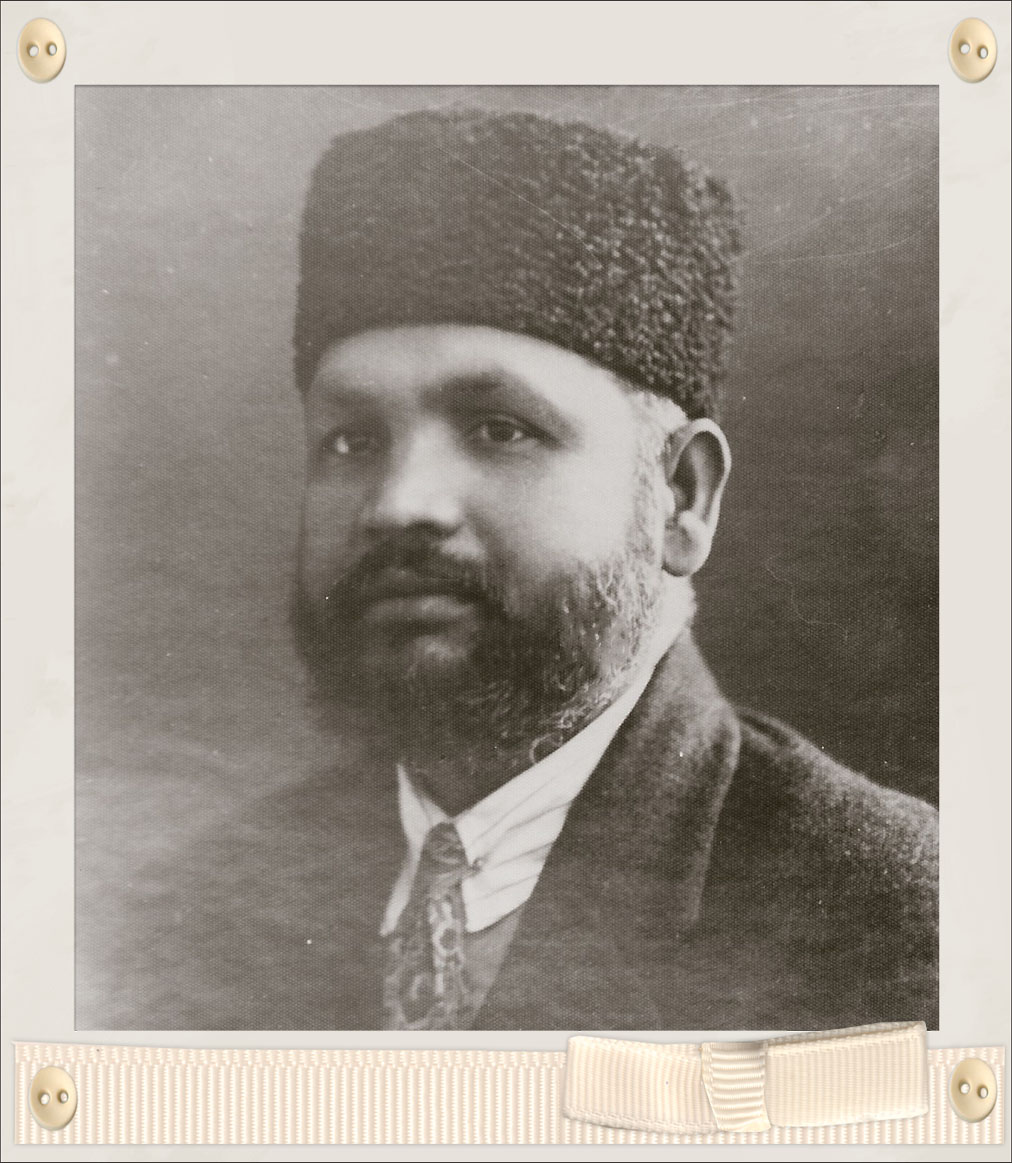
Mohammad Yaqub Khan
Editor The Light
A great deal of confusion prevails just now as to what form the constitution of Pakistan should take. That Pakistan must be an Islamic State is on everybody’s lips, but nobody has been able to give a clear-cut structure of what an Islamic State ought to be like. It is the object of these lines to clear, as far as possible, some of the confusion by indicating what is not an Islamic State.
The first point that is raised in this connection is whether Pakistan is to be a secular or a religious state. The very question is misleading and full of confusion. In Islam there is no such bifurcation as secular and religious. This is a Christian idea and has no place in Islam. In Islam the most mundane thing is also rooted in religion. There is no department of human life which has not its religious background. Hence in Islam statecraft is as much a religious affair as, say, the performance of Salat or of Haj. In this sense the running of the state machinery is a religious affair and Pakistan must be a religious state. A Pakistan Police Officer standing at his post to control traffic is doing as much an act of religion as the votary in the mosque, provided he does his duty well. In a way he may be superior to the man of the mosque who says his prayer but is not honest in the discharge of his duty. In this sense Pakistan must indeed be a religions state.
But this is not what is commonly understood by a religious state. A religious state is generally understood to mean a state where the authority of the priest predominates. In a religious state or theocracy, sovereignty vests in God. But since the will of God cannot be understood and interpreted except by a special class of people known as priests, in actual practice, God’s rule means the rule of the priestly class. In this sense Pakistan can not be a theocracy or a religious state for the simple reason that Islam not only does not recognize any priestly class within its body politic; it is dead against the creation of any such class. Those who blindly follow the so-called religious leaders, whether they are theologians or the Pirs, taking their word as Gospel truth, not seeing for themselves whether what they say is really in keeping with the will of God, are denounced as polytheists. Religious knowledge is not the monopoly of any class nor is there any special sanctity attached to a particular class of people. In this sense, therefore, Pakistan is decidedly not a theocracy, not a religious state.
If it is true that Islam has tinged every department of human life in religion, it is equally true that it has secularized religion itself by making it co-extensive with life and making it accessible to the man in the street. In this sense, it will be quite right to say that Islamic state is a secular state, not a religious state where a certain religious hierarchy dominates.
Then, the other point that we must clarify is: Is Islamic State a democracy? Yes and no; The Quran lays down that the public must be consulted in the affairs of the State – The Prophet ﷺ is enjoined:
وَأَمْرُهُمْ شُورَىٰ بَيْنَهُمْ
(Ash-Shura (The Consultation) 42:38)
وَشَاوِرْهُمْ فِى ٱلْأَمْرِ
(Al-Imran (The Family of Imran) 3:159)
“Consult them (people) in the affairs of the state ”.
The Quran also gives the meanest man to call the Head of the state to account for his conduct and demand a vote of censure on him. In this sense Islamic State is a democracy.
But – and this is a very important but – if democracy means the counting of hands and heads. Islamic State is decidedly not a democracy. Western democracy has adult franchise for its cornerstone. If the majority of people elect a man who is a veritable villain to the state Legislative Assembly or as the Head of the state, western democracy sees no harm in it. So long as a thing is done by the will of the people, it is right, no matter if morally it is a crime. This is not what Islam contemplates. None of the first four caliphs, whom we accept as models of an Islamic State, was elected in this way. They were no doubt accountable to the people for their conduct but not subject to or at the mercy of their votes. That this is the greatest evil of modern Western democracy is a common bitter experience of our own day. The blackest deeds are committed in the name of democracy. It was under the name of democracy that the Hindu till the other day tried tooth and nail to carry out his own dark designs of imposing his rule on Muslims. Why is President Truman backing the Jewish horse in Palestine and lending his weight to an obviously immoral act of robbing Arabs of their hearths and homes? Because of Jewish votes and Jewish money which hold the balance of power in the U.S.A. Presidential elections. Islam puts the Head of the state beyond the reach of the voting threat and thereby strengthens his hand to do the right thing, in the light of his own judgment and conscience. In this sense Islamic State is not a democracy. In fact, in a way, it vests the Head of the state with right dictatorial powers, in so far as he is free to turn down the will of the people if he finds it at variance with the will of God or the best interest of the state. Western democracy has done more harm than good. By vesting power in every Tom, Dick and Harry, it has undermined the moral backbone of society and landed humanity in the hundred and one muddles with which it finds itself confronted today. Iqbal had exactly this in mind when he said:
گریز از طرز جمہوری غلام پختہ کاری شو
کہ از مغز دو صد خر فکر انسانی نمی آید
Who would dare deny that if at the head of affairs in the Punjab politics there had been a Pukhta Kar of Iqbal’s conception, the East Punjab holocaust which cost untold suffering to Muslims could very possibly have been averted or at least, minimized in its devastation? But at the head of affairs, we had men not fit even to be the Heads of a school but thrown up there by the so-called democratic system of vote casting. Islamic State is certainly no such democracy.
M.Y.K.
(The Light – Monday, March 1, 1948)