What I Saw in England (Part 7)
Interest in the study of comparative religion – irresistibility of the cold logic of Islamic teachings – Need for extensive missionary activity
I hope, by now, I have been able to disabuse the minds of people in this country of the commonly prevalent notion that the Westerner is a completely lost soul, so far as God and religions are concerned. In a way there is more of religious urge in the West than in the East. Let me explain how. In the East religion is more in the nature of a custom or tradition handed down from generation to generation, and, as such, accepted as a fatality, devoid of the spark of personal curiosity or quest which is of the very essence of a truly religious attitude. In the Quran we read of the Prophet ﷺ as one lost in the quest after Truth, which attitude of mind was rewarded with the true light of Faith. True religion thus is more of a mental attitude than of the observance of certain rituals. In the East we have plenty of observances, but not much of the questing curiosity. That is where the West, where everybody thinks for himself or herself and would not take anything on authority, has a superiority over the East, in the matter of religions. Whereas the East in content with the form of religion, the West with its restlessness and inquisitiveness of mind wants to get at the essence behind the forms. This spirit of free inquiry is an ideal climate for the message of Islam to evoke the appreciative response it is entitled to, by virtue of its appeal to common sense. I found from personal experience this appeal to be irresistible. Wherever I had the occasion to present this message, it left the audience dumbfounded. The simple, straightforward cold logic of the principles of Islam came to them as the echo of the deepest yearning of their minds. I will give just two instances of this at the two symposia held at the Universities of London and Sheffield.
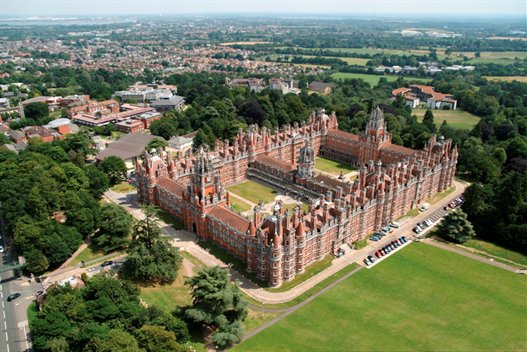
University of London, United Kingdom
The London University symposium on world religions was held at the Institute of Education, and it was through the interest of Miss Ameen Qureshi of the West Pakistan Education Service who happened to be there for advanced study that the invitation was sent to me to speak on Islam.
I found the under-graduates, (young men and women), full of life and vivacity, running up and down from floor to floor, and room to room, as I reached the place, conducted by my energetic guide Mr. Iqbal Ahmad, himself a student of the London University for Ph.D., in Arabic. The particular hall where the symposium was to be held, we were told, was somewhere on the third floor. We jumped into one of the lifts constantly plying up and down, and within a minute, found ourselves dumped on that floor. After a brief introduction at a cup of tea to the officials (all students) of the Overseas Society under whose auspices the symposium was organised, as well as to fellow speakers, we repaired in a body to the lecture hall. The students who came from all parts of the Commonwealth, and were receiving training as teachers, came pouring in, and soon the hall was full to capacity. The religions represented were Hinduism, Christianity, Buddhism and Islam.
The Buddhist spokesman, an English convert, was the most spectacular figure, being dressed in the typical Bhikshu´s saffron robe and sandals, despite British winter cold. He was the first to be called upon to present his religion. Man´s greatest problem, he said in a nutshell, was how to get rid of pain which was the inevitable concomitant of life. This was impossible so long as one was under the chains of the law. In release from the shackles of law, he said, lay the highest bliss, according to Buddhism.
This provided a most favourable background for the Islamic teachings to shine at their best by sheer contrast, and when I rose to speak I found an easy access to the hearts of the would-be teachers by reminding them of the disastrous consequences of the defiance of the school rules by students. The class-room will soon present the scene of a mess, with window-panes smashed, chairs and desks broken, if the boys took it into their heads to follow the Bhikshu´s advice of attaining spiritual bliss through breaking the law of the school. Islam taught just the opposite thing as the only path to spiritual eminence and bliss – viz., the observance of the law. I dwelt at length on the profound wisdom underlying this supremacy of the law and the necessity of man´s implicit observance of it. Even misery and pain, according to the Islamic view of life which led Buddhism to see nothing but evil in this earthly life, put on a rosy hue, being calculated to the cultivation of the finer fibres in human personality which was made possible only through the crucible of the ordeals man had to face. In Islam renunciation of life amounted to self-stultification. The Islamic way therefore lay in facing life and grappling with its problems with their frustrations and pains, because therein lay the secret of a truly rich and abundant life of the spirit which was but another name for salvation.
Tremendous was the impression created by the rational, scientific philosophy of life as expounded by Islam. There was no answer to how Islam unravels the mystery of life. Every religion has an answer of its own to the riddle of life, its why and wherefore. But the Islamic say in the matter carries a lustre of its own, unapproached by any other version. In the words of the Mujadid, Hazrat Mirza Sahib:
بکار خانہٗ عالم ھزارھا نقش اند
مگر تجلی رحمان ز نقش ما باشد
” In this stupendous workshop of the universe there are thousands of imprints,
But Islam´s imprint alone carries the imprint of God”
The Hindu and Christians speakers found their task all the more difficult. It looked like an anti-climax after the well-knit scientific picture of the whole range human life as presented by Islam, to indulge in a jumble of commonplaces. And when the time came for questions and answers, all the questions were addressed to the other three speakers. The audience could not find any flaw or gap in the Islamic picture. The Bhikshu especially came in for a heavy fire, and he felt embarrassed when Mr. Iqbal confronted him with the question that if he believed in release from bondage to the law, why did he put on the standardised dress of a Buddhist monk, which, after all, was an observance of the dress code of a Bhikshu.
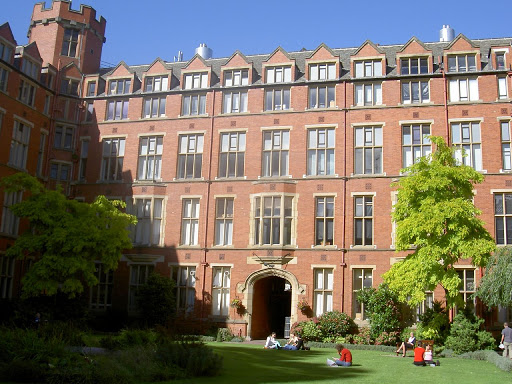
Univerist of Sheffield
At Sheffield, I witnessed a similar phenomenon of another Islamic principle shining with added lustre by the process of contrast. The religions represented on this symposium included Judaism as well, whose spokesman was the Head of the Chair of Hebrew at the University. Hinduism was represented by Dr. Basu, a distinguished scholar from India, who was a Professor at the neighbouring Durham University. Here the occasion for the Islamic teaching to show off its lustre was provided by the Jewish theory of their race being God´s chosen people. He brought all this scholarship and skill as a lecturer to bear upon proving the theory on the basis of historical evidence – how this most persecuted race managed to survive every wave of persecution that overtook them from the earliest times. Did it not point to a Divine scheme which was to find fulfilment through Jews? The emergence of the State of Israel, he urged, after Jewry had witnessed the worst fury of persecution of all history under Hitler and Communism, was a palpable demonstration of the fact that the Jews had been chosen for the final act in the drama of world history in playing a decisive role in the reshaping of the world.
Islam´s emphasis on universal human equality in God´s eye had only to be presented to explode the Jewish theory of a chosen race as a figment of their own imagination, unwarranted by the hard facts of life and the phenomena of Nature which made no discrimination between Jews and Gentiles. Every other version of religion given by other speaker paled into insignificance before the cold irresistible logic of Islam, borne out by the inexorable laws of Nature. A Sikh student who still retained his beard said he found in it an echo of what Guru Nanak had taught. The Muslim students especially Mr. Haleem who had arranged the Islamic part of the programme, were thrilled and they felt proud that their religion touched such a high watermark of rationalism and scientific insight.
And wherever in my leisure moments I recollect the beams of joy and satisfaction play on so many faces when they listened to the Islamic interpretation of the riddle of life, I share that spiritual elevation over again. My only depression comes when I see such thick pall of apathy among Muslims towards the beauties of their own Faith. If they had the least idea how Islamic teaching has only to be presented to capture the hearts of the free-thinking people in the West, they would know no rest until they have done something to make that message known on a much wider scale.

Woking is but a drop in the ocean. Its success as an outpost of Islam in England should, however, serve as an eye-opener to those who are too myopic to see the potentialities of Islam as an answer for the modern man´s manifold problems.
Pakistan was created expressly for the advancement of the ideology of Islam as a way of life. Are we not cheating both God and man by raising not a finger in that direction now that we have got what we wanted – an ideological State of our own? There is talk now of all sorts of developments. The only item which is nobody´s concern is exactly what the State was created for – viz., the advancement of Islam as an ideology which calls for an extensive network of missionary centres in the Western world.
(The Light, March 16, 1958 – To be continued)