What I saw in England (Part 5)

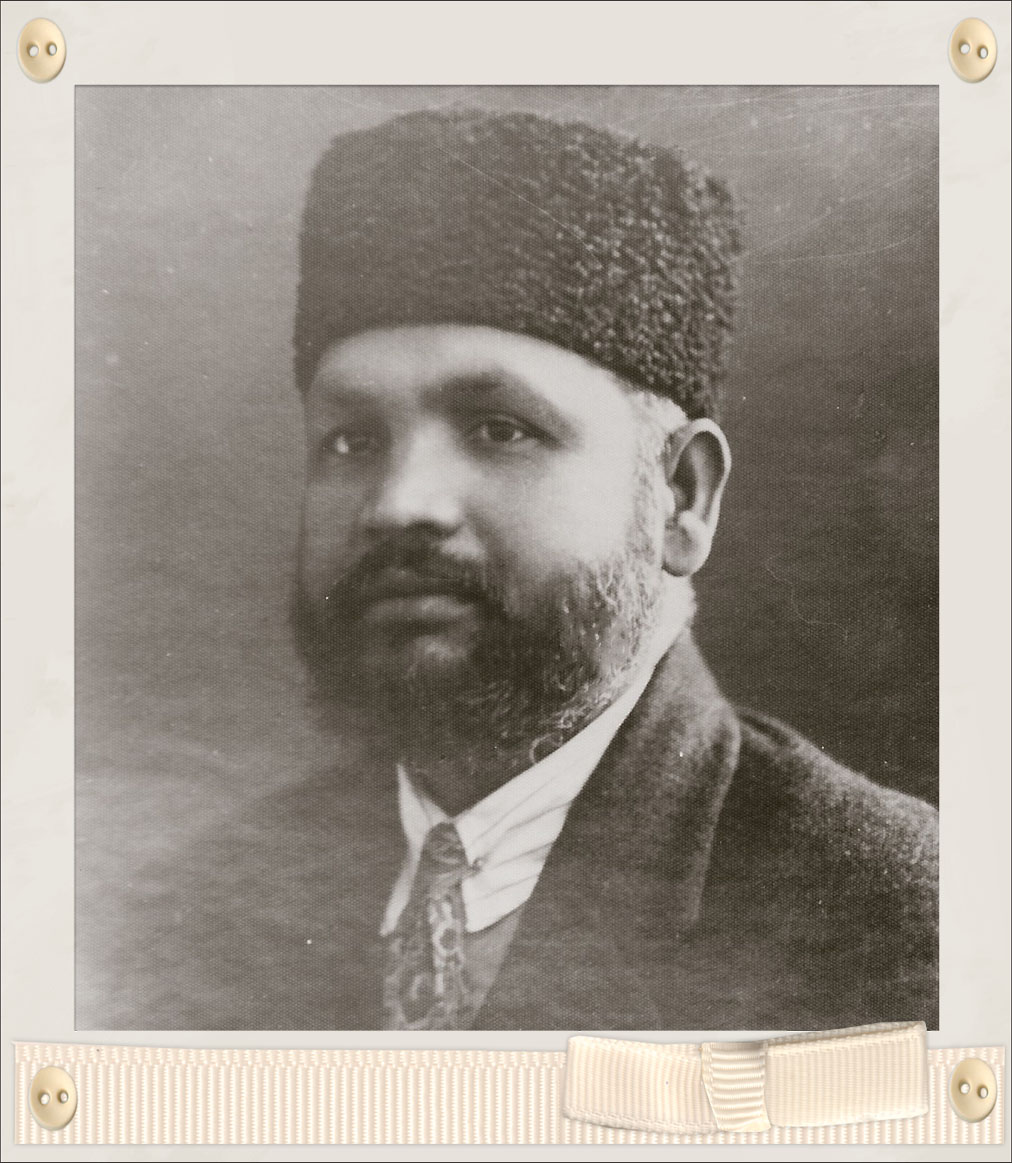
Imam, The Woking Mosque
In Universal brotherhood of Islam lies its greatest appeal to the western mind – growing identity between basic concepts of Islam and Christianity.
In the last instalment I spoke of a regular pro-Islam wave in the West. It is mostly a bye-product of the general revival of interest in the institution of revealed religion. The Quran is still a sealed book, even to leading thinkers. True appreciation of Islam will come only when the profound wisdom and mysteries with which the Divine Word is charged have been discovered by Western scholars. What, however, has a tremendous appeal even at first sight, to a man in the street is the sense of the universal brotherhood of Islam.
Universal human equality is frankly recognised as the triumph of Islam where Christianity has signally failed. I remember this candid confession made by a speaker at the Annual Conference of the World Congress of Faiths who was the secretary of International Missionary Society. It was a distinct achievement of Islam, he said, to which Christianity, despite its emphasis on love of neighbour, had not much to show.
This should give food for thought to those who have thrown this greatest beauty of Islam to the winds, and dissected the vast brotherhood of Islam into narrow sects and sub-sects. That is an Islam which the Westerner will not touch with a pair of tongs. Disgusted with the soul-cramping rigidity of a sect-ridden Christianity, the Westerner finds his soul impelled towards a creed which, in its human sympathies, is as unbounded as the vast sea of humanity as a whole.
The secret of phenomenal success of the Woking Muslim Mission lies in this sect-less approach to Islam. Sunnis and Shias forget they are Sunnis and Shias the moment they enter the precincts of the Woking Mosque. They are just Muslims. The Id-ul-Fitr and Adha congregations at Woking which attract crowds of about 3000 and 1200 respectively present a most vivid and spectacular picture of the universal brotherhood of Islam. Worshippers from the Dark Continent in their flowing robes are seen rubbing shoulders with their white brethren in faith. For once all distinctions of race, colour and language are submerged in the overall brotherhood of Islam, and Muslims from all parts of the world bow and kneel as one mass before Allah, the Creator of all. Non-Muslims – men and women – who come in large numbers to watch the celebrations thus get a first-hand idea of Islam in action. They cannot but go back with a deep impress of this great social miracle wrought by Islam.
It seems to me that in the fulness of time when the Western mind fully opens to the true message of Islam – which was indeed the true message of Christianity as taught by Jesus – it will be a day of emancipation for Islam itself from the clutches of petty minded Mullas who, by compartmentalisation of this great religion, has stifled its very life-breath. When the leadership of Islam passes into the hands of Western Muslims, the true spirit of Islam as envisaged in the Quranic words “Verily, all Believers are brothers” will be released from the sectarian shackles put on it during the centuries by ignorance, fanaticism and political exploitation. Such transfer of Islam´s centre of gravity from the East to West will be a repetition of history. Once before, as history bears out, Islam in the political sense, re-emerged as a vital force on the map of the world after its total collapse, when its leadership passed into the hands of Central Asian hordes who had been responsible for bringing about the destruction of a decadent priest-ridden Caliphate. History may witness another similar drama re-enacted when Islam´s leadership passes into the hands of the West. It will be a different Islam altogether – a return to the true Quranic Islam. It will be an Islam as a binding, rather than a dividing force, an Islam in the sense of exploring the unbounded mysteries of Nature, and unlimited scope for the expansion, progress and development of the human mind and personality. That is the broad hint in the Prophet´s celestial vision as to the rise of the sun of Islam in the West. Facts are already pointing in that direction. Western mind, thanks to centuries of scientific thinking and training, is already working along the broad, universal, all-human lines which have been the hallmark of the message of Islam. In the universality of Islam, they are finding a re-echo of their own inner hankering. In such hands, Islam, in other words, as an expression of spiritual Truths, will come into its own and shine in its true splendour, when it makes its debut on the intellectual horizon of the West.
Such far-reaching historical upheavals in human thoughts are by no means unprecedented. The spread of Christianity itself over the whole of Europe is a case in point. Indeed leading minds of the West, when commenting upon the possibilities inherent in such small missionary efforts as represented by the literature produced by the Lahore Ahmadiya Anjuman and its missionary centre at Woking strike a note of warning against minimising the potentialities of such movements. Christianisation of Europe itself, they recall, started in such small beginnings.
The Quran has a way of its own to describe such shifts in the centres of civilization, replacing one social order by other. It likens the revival of human society to the resurrection of dead earth by means of a shower of rain. The downpour of rain, it says, is always preceded by the wafting of vapour-laden breezes, betokening the happy tidings of the coming of rain and new resurrection in Nature. That is how things work in the social realm, the Quran tells us. The stirrings that are noticeable in the Western mind on all sides and at all levels are undoubtedly like the gentle breezes of the Quranic simile, and the day may not be far off when the widespread restlessness and quest after things of the spirit that have gripped the Western mind may result in an altogether new religious dawn.
These stirrings, as I hinted in my last, are noticeable even in the ecclesiastical circles. The writings of the Christian missionaries about Islam no longer carry their old-time stings. While our Mulla has been intellectually stagnating and marking time where he has been, incapable of looking beyond his nose, the Christian missionary, like the rest of the social set-up to which he belongs, has been keeping abreast of the march of time. He takes to a missionary carrier only after he has been through the mill of liberal university education. And this imprint of liberal education is noticeable in his new evaluation of religious creeds and dogmas, free from traditional prejudices and marked by fairness and objectivity which invariably go with that education. Among them one now comes across men and women whom it is a spiritual pleasure to know and meet and talk to. The way they turn their searchlight on their own religion, Christianity, cannot but fill one´s mind with admiration. Of this new generation of Christian missionaries it may be said that whereas his predecessors of a generation or two ago considered it their job to defend the Truth as handed down to them, men of this new generation want to discover the Truth for themselves. The new result of this process of self-analysis on the one hand and of an objective reassessment of Islam on the other has been the approximation of the basic doctrines of the two religions.

Kenneth-cragg
Of this new look in missionary circles the latest most typical and outstanding name that comes to mind is Dr. Cragg, editor of the well-known Christian missionary organ, The Moslem World. His recent publication, The Call from the Minaret may be described as a hand of friendship on behalf of Christianity extended towards Islam.I defer a detailed reference to the views expressed in this book to the coming instalment. But I must say that the spirit of sympathetic understanding it breathes encourages the hope that Christianity and Islam, stemming from the same root as they do and standing for the same truth, may someday rediscover their identity, and face the coming new world as co-workers and colleges in a common cause – the revival of live faith in a spiritual dispensation – rather than adversaries which they, through an historic irony, have hitherto been.
Typical of this growing sense of identity between Christianity and Islam are the words of another well-known Christian writer on Islam. He insists on calling Islam as Muhammadanism, because he argues, Islam as presented in the Quran, was as much the religion of Abraham, Moses and Jesus. The Prophet´s representation of it was only the last edition of Islam, the preceding dispensations being Jewish Islam and Christian Islam.
Trends such as these cannot but force on thinking minds the question: Are we not standing on historic cross-roads in the relationship between Christianity and Islam when the two Faiths rediscovering their basic identity, may think even in terms of a merger?
Afghani´s Quranic precept – `Verily, God does not change the condition of a people until they, change their own condition`. The search has led in various directions. To liberalism – but is Muslim liberalism more than a shadow of Western liberalism? To nationalism – but how are the requirements of the `nation` to be reconciled with the imperatives of Islam? Through an `Islamic State`? Or through a secular State? Or there is some third way? To apologetics – but is defence of the Faith an adequate substitute for analysis of the problems facing the Faithful? To `dynamism` (expressed through such institutions as the Muslim Brotherhood) – but, unless the `dynamic` is directed towards rational ends, can Islamic revival be prevented from degenerating into revival of bigotry? Now, roughly since the Second World War, the tide of European power has begun to ebb; the major Muslim communities of the world have recovered the historical initiative. But the basic problem of `backwardness` remains unresolved. The search continues.
This is the most intelligent, illuminating interpretation of Muslim contemporary history that I have read since Professor H.A.R. Gibb´s Modern Trends in Islam. Naturally there are aspects that one could have wished otherwise. The language at times seems self-conscious. The chapters dealing with particular Muslim societies have a somewhat impressionistic quality-like sketches for something more substantial.

Wilfred Cantwell Smith
And – while I respect Professor Cantwell Smith`s present position that religious and ethical ideas should be studied in and for themselves ( and not merely as `reflections` of economic and social facts) – it seems a new form of ancient dogma, and unnecessary for his thesis, to presuppose that `in practice, as well as in theory, they who start by denying transcendence end by denying value`. But the book´s great virtue, over and above leering and span, is that it is written with sympathetic insight. It seeks to grasp situations and problems from the inside; and entirely avoids the instrumental, manipulative, managerial, `What-a-pity-Nasser-isn`t-another-Nuri` attitude to the Muslim world that, even at the level of scholarship, continues to haunt Western literature. – New Statesman.
(Muhammad Yakub Khan-The Light – February 24, 1958)
( To be continued)