What I saw in England (Part 2)

Love of knowledge and harnessing the forces of nature
Islam in action as against our lip-service
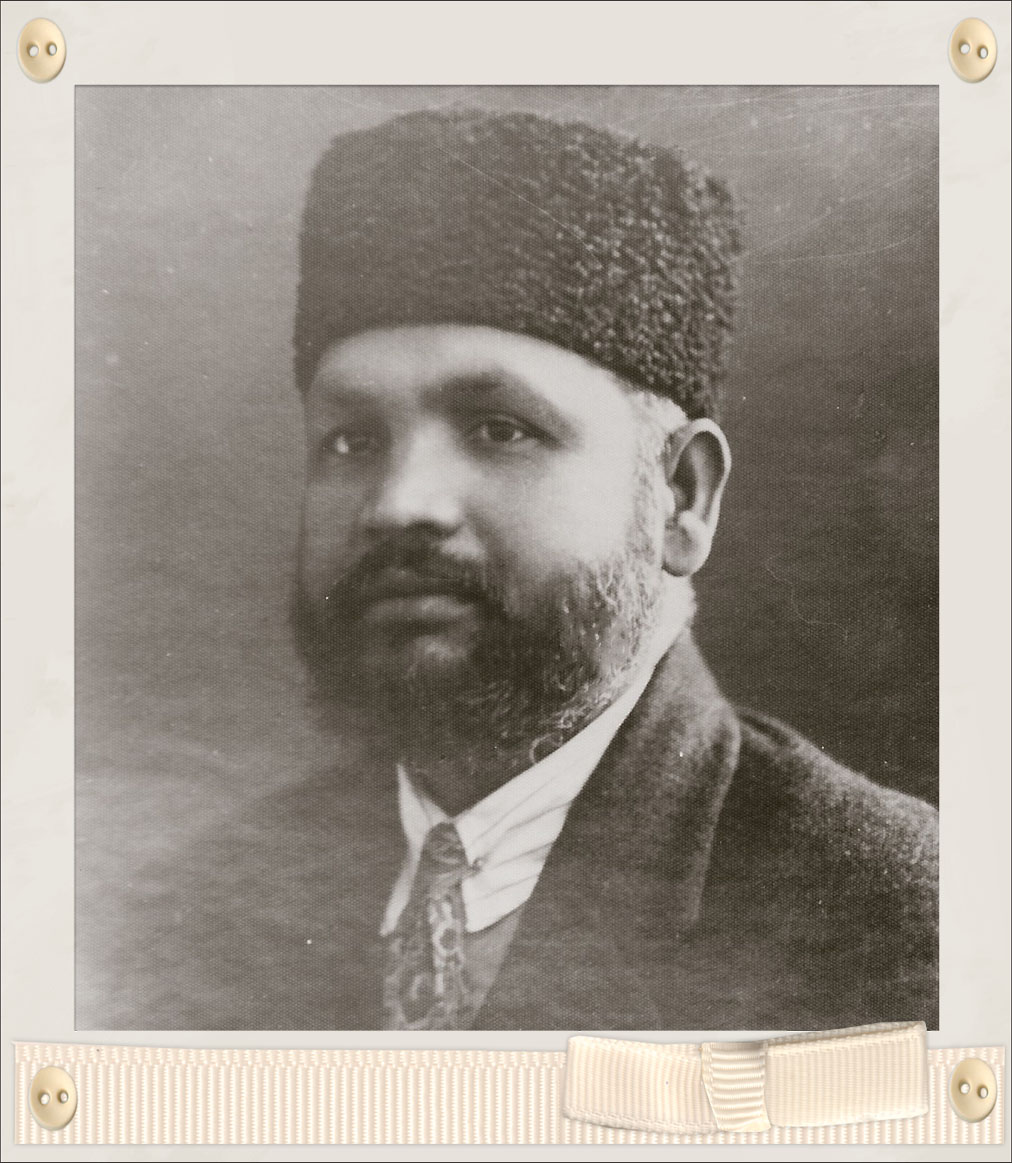
Muhammad Yaqub Khan
Imam, The Woking Mosque, England
In the first instalment of this series, I dwelt on the moral aspect of life in the West. A visitor from the East, it was brought out, could not but feel impressed with the high moral standards obtaining in the West in every walk of life. Lying, deceit, fraud, which one so often meets in apparently respectable people in this country, even, in those with pretentions to piety and religiosity, were, by and large, unknown even to the man in the street in the U.K. Even politicians have a very high standard of integrity. Unlike politicians in this country, most of whom may be justly described as adventurers, office hunters and turn-coats, politicians in England would rather sacrifice office than compromise their principles. Overnight crossing of the floor from one party to another, a very common feature of politics in this country, is unthinkable. They cling to their political creeds with the devotion of religious affiliations. The kind of regular trade in buying and selling votes within the Legislature through various political bribes, would be an abomination in the House of Commons, and a Minister guilty of such misconduct would be driving the last nail in the coffin of his political career. How is it that such a high standard of public life has been made possible? The answer again lies in the general social context, and the general climate of integrity and fair play, putting at a discount everything that is base, mean and sordid. The Suez aggression was a typical instance of how violently public opinion in the U.K. reacts to Governmental actions which offend against the cannons of fair play. The storm of protest which the Eden Government´s action evoked was so strong that the Prime Minister had to go. The Press, unlike its counterpart in this country which mostly basks in official sunshine and seldom utters a word of truth (barring rare, noble exceptions) with one voice denounced the Anglo-French aggression as a violation of the U.N. Charter.If honesty and integrity, justice and fair play, straight dealing and hatred of everything crooked and mean are high Islamic virtues as they undoubtedly are, who in all fairness, are better Muslims – we, who talk so tall about Islam but have so little of it in our daily dealings or the people who, though not labelled as Muslims, live right Islamic lives in many respects? This was the moral I tried in the last instalment to drive home.
In the present instalment I would call attention to another highlight of Western life which has such a distinct Islamic ring about it. This is the deep love of knowledge of the Western people, their researches into the mysteries of Nature and their endeavours to harness its forces to the service of man. Time there was when Muslim universities of Cordova, Damascus and Baghdad stimulated the spirit of free inquiry and national wealth was lavishly dedicated to the pursuit of scientific knowledge, when libraries, observatories, and laboratories sprang up wherever the flag of Islam went. But in these latter days, the tables have been turned. It is the West that now leads the van in this direction and for the last few centuries, has been keeping the torch of learning and scientific exploration burning.One has only to visit one of the numerous universities of Britain, with their huge libraries, well equipped laboratories, and a whole atmosphere charged with the love and pursuit of knowledge, to realise the secret of her greatness, and world domination. I had the occasion to address students` meetings at only three universities – London, Cambridge and Sheffield. But this small contact gave me some insight into this aspect of their life and could not but fill my mind with admiration for the way they have devoted national energies to and lavished national wealth on the pursuit of knowledge.
At Cambridge, a township of colleges (about two dozen), libraries, museums, playgrounds, boats and boating, it was not without a pang of conscience that I was reminded of the sorry state of things in the matter of education in our own country. As after a walk around the University campus, I sat on one of the benches on the bank of the Cam, musing over the exhilarating, experience. I could not but turn in imagination to the schools and colleges and universities in our own country which, in comparison were mere apology for national education. There, it was an altogether different picture. The people seem to have bestowed their very love on the pursuit of knowledge. The magnificent, imposing, solid structures in which the various colleges were housed, their spacious, well-kept lawns and playgrounds, the dignity, decorum and solemnity of the whole atmosphere as against the shabbiness, laxity, even rowdiness that mark our educational institutions, could not but impart a touch of freshness and exhilaration to the visitor, and make an old man like myself feel something of the throb of youth. And when on visiting the King´s College, my guide told me how various British monarchs had bestowed their attention and wealth on making its building, especially of that of its grand chapel, as imposing and artistic as human resources and ingenuity could make them, I could not help remarking to myself: Would that our kings, instead of spending crores on tombs and monuments to their beloveds, had spent all those treasures on building seats of learning.
One of our very common misconceptions about the West is that people there do not care much for religion, and have discarded it as a medieval legacy, unworthy of the modern, educated, enlightened progressive man. Nothing could be farther from the truth. The people in the Western lands are as intensely religious-minded as we in the land of Islam, and deeply devoted to Christianity and its Founder.My first disillusionment in this respect came om my very first landing on European soil at Genoa, the Italian seaport which is the terminus of the Lloyd Triestino Steamships.

Lloyd Triestino ship ”Asia”
The “Asia” which took me from Karachi on August 11, 1956 touched Genoa docks early in the morning on August 22.The train for the French port of Calais (via Paris) where I had to take the boat to cross the English Channel was due to leave at 8 p.m. I had, therefore, to seek shelter from the cold winds in the cosy spacious waiting room of the railway station. At about 10 to my great surprise, the waiting rooms was turned into a regular chapel, and the passengers and the station staff into a congregation. A moving pulpit on wheels was set up at one end, with candles, the Scriptures, idols (Italy is a Roman Catholic country) and the priest and the choir – in fact the whole paraphernalia that goes with a Sunday service. The service in typical Catholic form lasted for pretty long, full three-quarters of an hour, and everybody, men and women, listened and prayed and gesticulated in deep devotion. Ours was an Islamic country, I said to myself. We shouted this from housetops. But I had yet to see one railway waiting room in the whole of Pakistan (both wings) converted into a mosque on a Friday. If the Genoa waiting room scene is typical of the life of the nation, the religious temperament of the people may well be imagined.
I found the same emphasis on religion in the student life at Cambridge, and for that matter, as I presume, in all the educational institutions of the country. Some idea of this may be had from the fact that every college has a chapel of its own – as a rule a very grand edifice, the choicest part of all the blocks of buildings. It is a symbol that the whole process of education must revolve round religion. Church attendants form part and parcel of the education of English undergraduates.
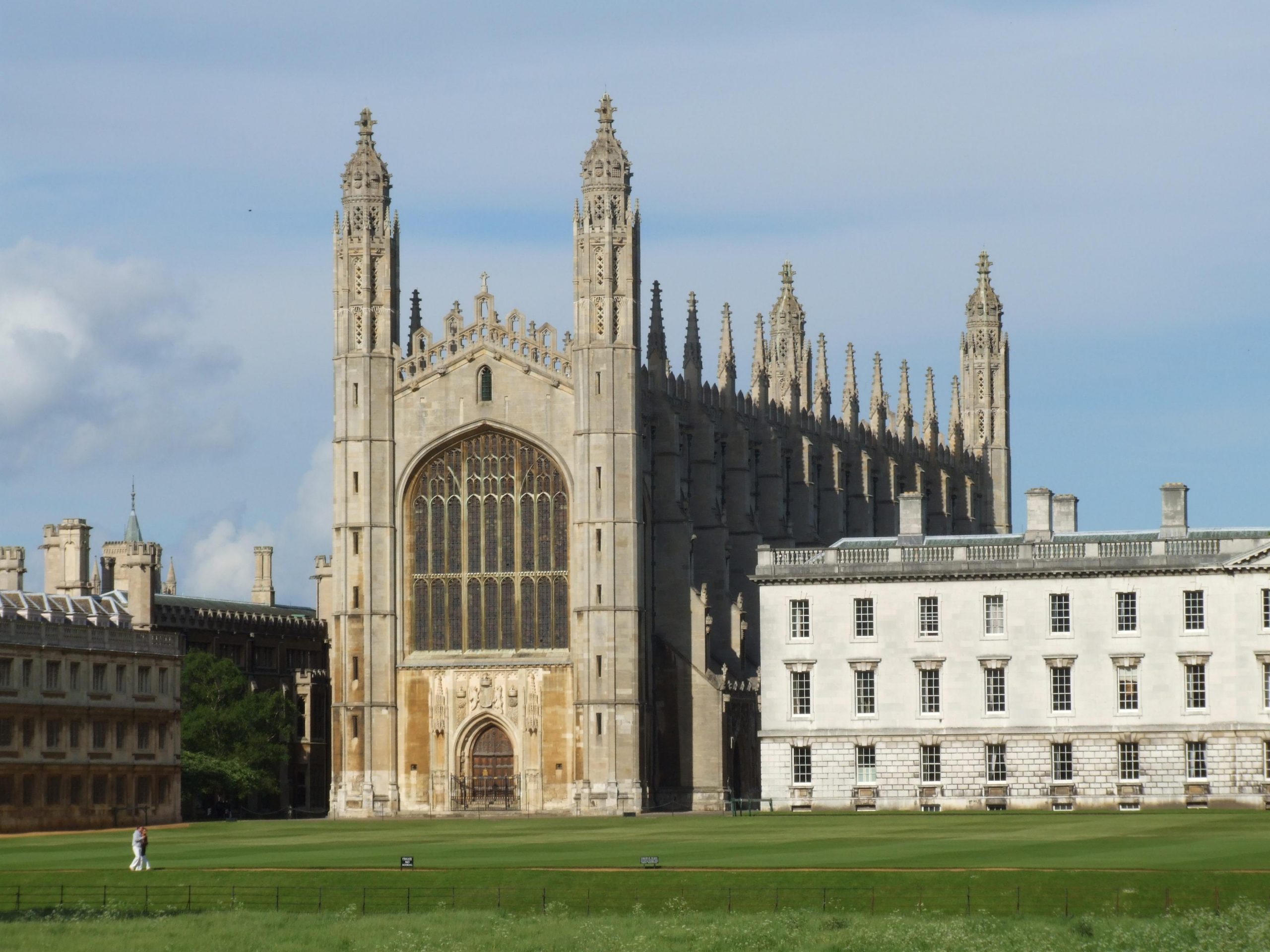
The King´s College Cathedral is a monument of artistic skill, and the wealth and skill lavished on it by successive generations of British Kings and craftsmen is a mute but eloquent testimony to the place of love and devotion which religion occupies in the heart of the people.
While at Cambridge in connection of a lecture at the invitation of the Muslim Student´s Union I came across another scene of religious mindedness which I will never forget. The lecture which was largely attended by English undergraduates and some professors was scheduled to start late in the evening, and I had to spend the night in one of the Colleges. The following morning a young man very kindly offered to take me round the various Colleges. As I was on this round, I came across a sight by the roadside which was at once strange and imposing. A small procession of dignified men (half a dozen or so) dressed in flowing robes, with a gorgeously clad macebearer walking solemnly in front, crossed from one side of the road to the other. The whole scene was so awe-inspiring that I could not but stop and watch. And when I asked my guide as to what all this meant; he told me that they were Judges who are to preside over the courts that are held there. The first thing in the morning they do before going to the courts is to go to the Church across the road to pray to God that they might be given light and strength to administer even-handed justice. My thoughts instantaneously turned to my own country. We call ourselves an Islamic State, I said to myself. But one had yet to come across a Judge imploring God before assuming his seat in the Court to enable him to do justice.
The lecture overnight lasted for an hour followed by an hour or so of questions and answers. Islam as a scientific interpretation of the riddle of life sinks straight into man´s heart, leaving little room for any serious exception. I could not however but admire the simple faith of one young man. Moore by name, who stuck to his guns with deep devotion. How could I think of attaining salvation without faith in Jesus Christ, he insisted. I explained to him that true faith in Jesus to which Muslims also subscribed was to follow in the footsteps of that great Teacher and live up his great example of faith in God and love of neighbour. To make salvation dependant on an event of history (Crucifixion) as the doctrine of atonement did was against Jesus` own teachings who made fulfilment of the law and commandment the pre-condition to God´s grace. But Moore remained unconvinced and followed me up to my residence to explain his viewpoint to me. Moore´s mentality may be taken to be typical of the average Britisher`s mood, and it would be very rash, in the face of such enthusiasm, for anyone to presume that religion has lost its grip on the Western mind.
I had the occasion to address another meeting at Cambridge – a “Service” at a Unitarian Church. It was attended by the cream of the town, who had come specifically to hear the Imam of the Mosque, Woking on a vital message like Islam, as the printed Church bulletin circulated much in advance had announced. The packed hall and packed gallery of the Church should have served as an eye-opener to those who hug the illusion that religion is the monopoly of the East, the West being totally bereft of this boon.In the London and Sheffield Universities where I addressed symposium on religion, I found the same interest in religion. The very fact of inviting representatives of various religions to present their respective viewpoints on religion should dispel the misconception of the decay of the religious feeling in the West as a myth. As a matter of fact, there is a new wave of religious revival that has emerged out of the ashes of destruction wrought by the two World Wars, and the threat of another.
Islam makes the pursuit of knowledge obligatory for every Muslim man and woman. The Quran repeatedly urges man to study the phenomena of Nature, unearth the deep mysteries locked within its bosom, and subjugate its forces which, we are told, have been made to be subservient to mankind. Whereas the lands of Islam, during the last few centuries, turned a blind eye to this great message of their religion, the Western nations have been burning incense at the alter of learning and sciences, unlocking secret after secret from Nature and harnessing the same to their own service. Their ascendancy was thus the ascendancy of the principles of Islam which inculcated the spirit of scientific inquiry so zealously seized upon by the West. In this respect as well, as in that of general moral standards, there is more of Islam in the West than in the lands of Islam.
(To be continued)