WEST’S AWAKENING TO ISLAM
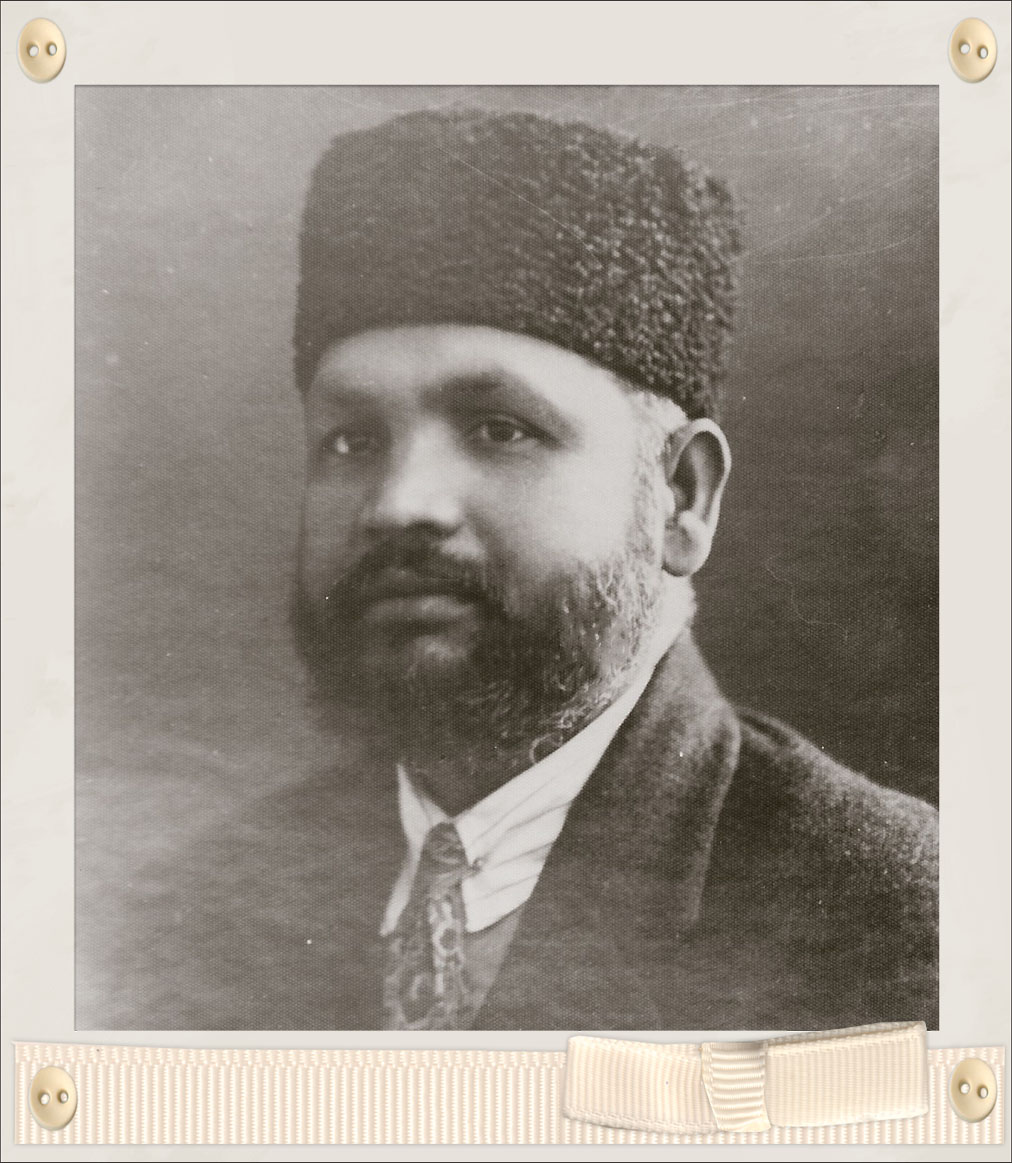
Mohammad Yaqub Khan
Editor The Light
THE greatest event of the modern age is not so much the conquest of space by man as the Western awakening to Islam and the promise this awakening holds to the whole future of mankind. Typical of this awakening is an article by a Western scholar of Islam (JAMES A. MICHENER) carried in full in this issue, which expresses surprise that Islam which in so many basic concepts of religion is identical with Christianity and Judaism should have been so much misunderstood in Europe and America.
The writer calls specific attention to the Quranic admonition to Muslims that of all peoples they would find the Christians the closest in friendship to them. This affinity between the two Faiths goes so deep that Jesus Christ occupies a central position in Muslim thinking as much as in that of Christians. When Islam falls on evil days and the game seems to be up for it, it would be Jesus Christ, so goes the common belief, who will reappear to save the sinking bark and make Islam triumphant once more against the dark forces summed up in the term Dajjal.
Even the Ahmadiyya school which considers Jesus Christ to have died a natural death pin all hopes of the revival of true religion on the appearance of a Divinely commissioned spiritual luminary in the spirit of Jesus Christ.
How is it that despite these clear indications in both the Quran and the Hadith as to the closest possible involvement of Islam and Christianity in the shaping of human destiny, Muslims and Christians have so drifted apart that each came to look upon the other as its Enemy No.1?
It should be a fit theme for research scholars to delve into the causes of this most ironic miscarriage of history. Muslims would be quite justified in saying that the boot lies on the foot of the fanatical medieval church which burnt heretics within its own fold alive and stood as a dead wall against all rays of light and learning from any quarter.
Seeing in the rising tide of Islam a threat to its own authority and vested interest, the Church concocted all sorts of fantastic stories, about Islam, the Quran and the Prophet, thereby building up an image of Islam which in the mind of an average European summed up the worst of barbarism and voluptuousness. And that legacy of the Dark Ages still lingers, bedevilling relationship between Christendom and the world of Islam.
A book Islam and the West by another distinguished scholar of Islam has collected all such fantastic stories current in Europe about Islam, the Quran and the Prophet, with the sole purpose, as it explains in the Preface, to let his own fellow-Europeans see how unfair their forefathers had been to Islam, and what nonsensical things they actually believed about it.
These stories are so indecent and revolting that by way of apology to the Muslim readers the author devotes one whole page preceding the title page to an inscription of the following Arabic aphorism in Arabic script:
ناقل الكفر ليس بكافر
“Reproducer of heretical things does not become a heretic”.
The other contributory cause of the estrangement between Islam and Christianity seems to have been that Islam itself, soon after the Prophet’s demise, came to be equated with Islamic State, the consolidation and expansion of that State becoming the main preoccupation of his successors.
Muslims ruled in Europe for a thousand years. They left a deep imprint on the life and thought of Europe. Western historians acknowledge the deep debt the West owes to Islam, tracing the dawn of the very era of enlightenment and free inquiry known as the Renaissance, the forerunner of the present scientific age, to the spark supplied by the impact of Islam in Spain. Nevertheless, one finds no evidence of any missionary activity by Muslims during all this long period to convey the message of Islam to the peoples of the West, mostly pagans and only partly Christians.
Islam was and remains pre-eminently a missionary force, aiming at showing the path to God to a benighted humanity. The Quran, time and again, underlines this to be the specific role of the Prophet’s message and mission, describing him as:
يَـٰٓأَيُّهَا ٱلنَّبِىُّ إِنَّآ أَرْسَلْنَـٰكَ شَـٰهِدًا وَمُبَشِّرًا وَنَذِيرًا
وَدَا عِيًا إِلَى ٱللَّهِ بِإِذْنِهِ ۦ وَسِرَاجًا مُّنِيرًا
Al-Ahzab (The Confederates) 33:45,46
“A witness to God’s existence, giver of happy tidings and a warner – and a caller towards God and a brightly shining (spiritual) sun.”
The Prophet ﷺ, all his life, kept this missionary role in the forefront of his objectives. He was a missionary first and a missionary last, showing the light of Faith to his own people and to mankind at large. He sent epistles to a number of Heads of States inviting them to the acceptance of Islam. This missionary zeal which constituted the core of the Islamic Movement during his lifetime was, however, submerged under the demands of the newly founded Islamic state.
The first confrontation between Islam and Christianity was thus more of the nature of an armed conflict, which could not but breed mutual distrust and hostility. The whole historical context of the times was not conducive towards a dispassionate appraisal of Islam as a religious truth. What for the stranglehold of a fanatical Church and what for the armed conflict with Islam, Christendom never really got a chance to have a dispassionate look at Islam as a religion.
This parting of ways between the world’s two greatest religious forces, Islam and Christianity, may thus be put down to the working of what the Communists call the historical process. The same historical process has now brought about this second confrontation between Islam and Christianity, setting in a whole new wave of greater and greater appreciation of the teachings of Islam – even a sense of shame at the unfairness they had been doing towards Islam throughout the centuries.
During the last half-century, the Western outlook on Islam has undergone a wholesale silent revolution. The feeling of surprise at not properly understanding a religion so close to the true teachings of Jesus, expressed by the writer of the article under comment, is really an echo of the mind of the whole of the religiously minded intelligentsia of the West.
There are clear indications of the dawn of this new epoch in Christian attitude towards Islam both in the Quran and the Hadith. The Quran, describing the rise and worldwide dominance of the Western nations under the parable of the Gog Magog and their subsequent history, winds up with the happy note that they would at long last discover the Truth of Islam and discover that true religion, even exclaim in self-condemnation:
يَـٰوَيْلَنَا قَدْ كُنَّا فِى غَفْلَةٍ مِّنْ هَـٰذَا بَلْ كُنَّا ظَـٰلِمِينَ
”Woe unto us! Verily we had been in utter ignorance of this. Nay, we had even been unfair towards it.”
Al-Anbiya (The Prophets) 21:97
This is exactly the ring carried in the article on this issue as well as in the book Islam and the West above referred to. This, indeed, is the dominant keynote today of the Western mind as a whole towards Islam.
Believe it or not, this second confrontation between Islam and Christendom in a climate of pure scientific inquiry and quest after God is fast driving the leadership of Western thought to the conclusion that the true teaching of Jesus Christ was none other than that of Islam. Even intellectually honest Church dignitaries are making a frank confession of this fact: The Hadith describes this awakening as the dawn of the sun from the West.
The whole future of mankind today depends on the closest cooperation between these two great religions, Islam and Christianity. Standing together, they can be the only bulwark against the dark forces of Godlessness and the moral anarchy, its inevitable offspring, that are just now sweeping both the West and the East.
M.Y.Khan
The LIGHT – August 1, 1965