Utilize Your Religion
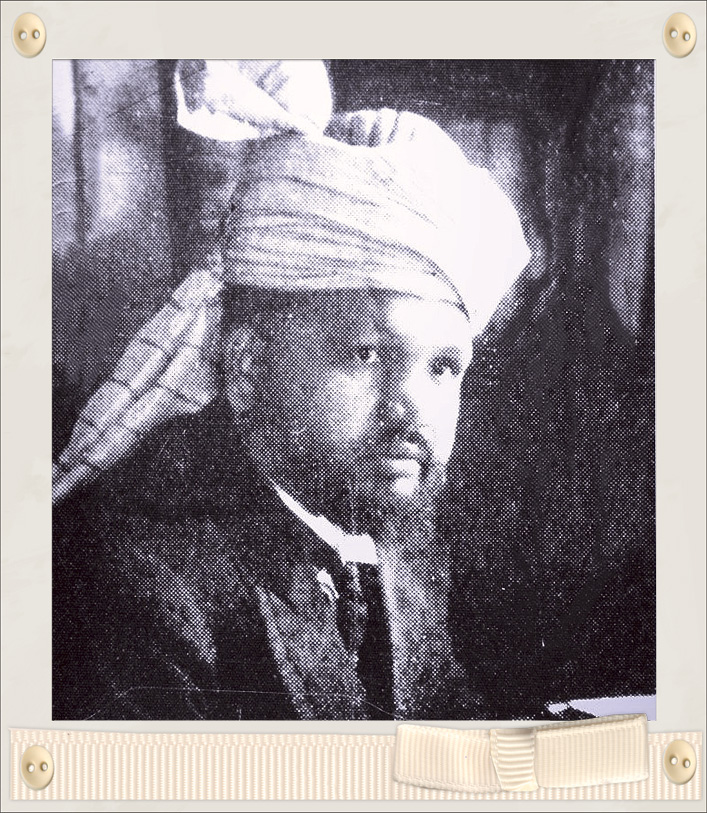
Mohammad Yaqub Khan
Editor : The Light
RELIGION would be of no use to us unless it directs our life towards a higher plane. The object of religion is to put our life under certain rules and regulations which always conform to the law of Nature, so that our actions may prove to be of greater good. Barren exposition of abstract theology for its own sake is absolutely useless. We can gain by broad principles of a religion only when they are applied to our social life. If religion is accepted as a guide to our life (and there is no other justification or necessity for owning one), the first thing which calls our attention is – to what extent we observe religion in our social life and with what benefit. It would hardly be a news to the world to say that the social structure of the Muslims of the present age, almost everywhere in the earth, is as it were rickety and tottering. In the political field the Muslims are a little better than a bankrupt community. In the economic world their position is almost tantamount to that of helots. In the sphere of education, they have grown so effete that they are unfit to produce men who might rank with the foremost scientists, philosophers, scholars, and inventors of the day. And, what crowns all, their morals are so low, character so degraded, that their claim to be the followers of the Holy Prophet Muhammad ﷺ seems as devoid of truth as the fictitious stories of the Olympian gods. And this last gives us the clue to their present degeneracy and lifelessness.
A nation whose life is not governed by some definite principles, and which lives an uncertain life has no right to be counted with living nations. Now the question is: Is the life of the Muslim community regulated by any definite principle? If it is, what is that principle and how far does it rule their social life? Again, do the Muslims belong to a society which is guided by a wise law compatible with the trend of the age? And, if they do, what is the ultimate goal they are moving toward? These and similar questions may be easily answered by saying that since we are Muslims, Islam is our guide, which promises us the best and sublimest goal of human life. But such an answer only deceives us and is soothing to our sense of boastfulness. It hides our defects and shortcomings from our own eyes and stupefies our enthusiasm to live as truly as the living and virile nations. The unworthy pride of our nominal adherence to Islam does not allow us to be animated with the sprightliness of real life which does not lose sight of a defect nor let it alone. The Muslims cannot give a satisfactory answer when they are asked why they are sunk so deep in the abyss of degeneration and destitution, in spite of their indubitable belief that the Quranic principles must enable them to live a successful and progressive life. What is wrong in the whole matter is the blunder that a mere belief in a thing counts as much as its practice. The fact is that a progressive life does not care a rap for fanciful belief; to it practice is the whole truth which really counts.
It is time the Muslims took to thinking whether they have a society which might push them forward for better and more desirable life. They should now be alive to their most backward economic condition which depends for its betterment on commercial and industrial regeneration. Their education and cultural growth depend on their healthy economic development. Their political rebirth likewise depends on the relative revivals in other aspects of social life. The preliminary necessity, however, consists in their truthfulness, honesty of purpose, selfless-ness, sacrifice, resoluteness, and ungrudging activity. They alone will bring us a time when we would be able to render disinterested service to humanity and would thus be entitled to the worthy name of Muslim.
The adaptation of the Quranic doctrines to the different aspects of society, with due consideration of the peculiar state of affairs in which we have to live, should therefore claim most of our attention at present. Without this use Islam bears no meaning at all. It is not a thing to be inherited, nor even to be adopted for the satisfaction of idle sentiments. We hope in future to take up such subjects as are directly concerned with our internal purification, external reformation, and any revolutionary changes that may be found necessary: for instance, commercial activity and bank interest, and female emancipation, which problems vitally affect our social life to-day. Suggestions from interested persons will be gratefully received.
M.Y.K.
(The Light -Thursday, April 4, 1929)