TOWARDS CHRISTIAN-MUSLIM UNDERSTANDING
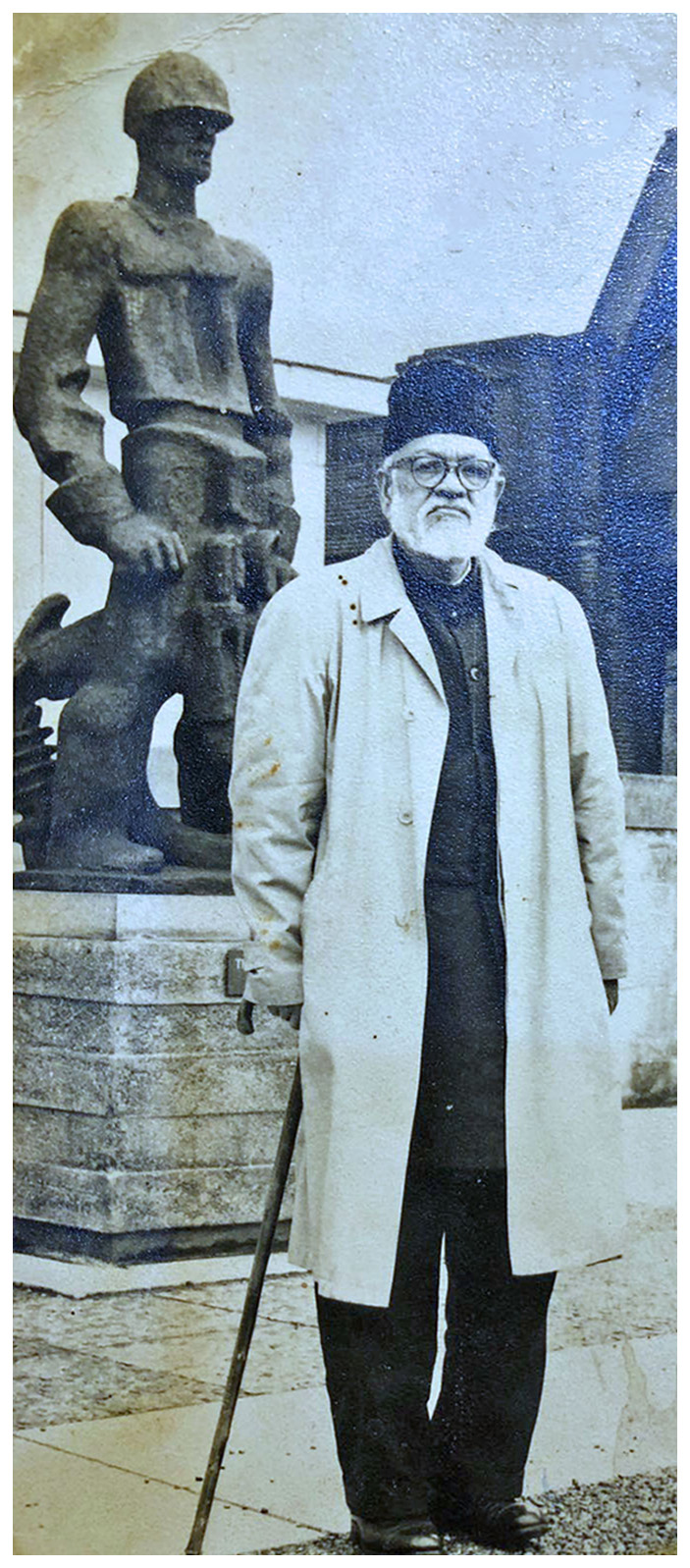
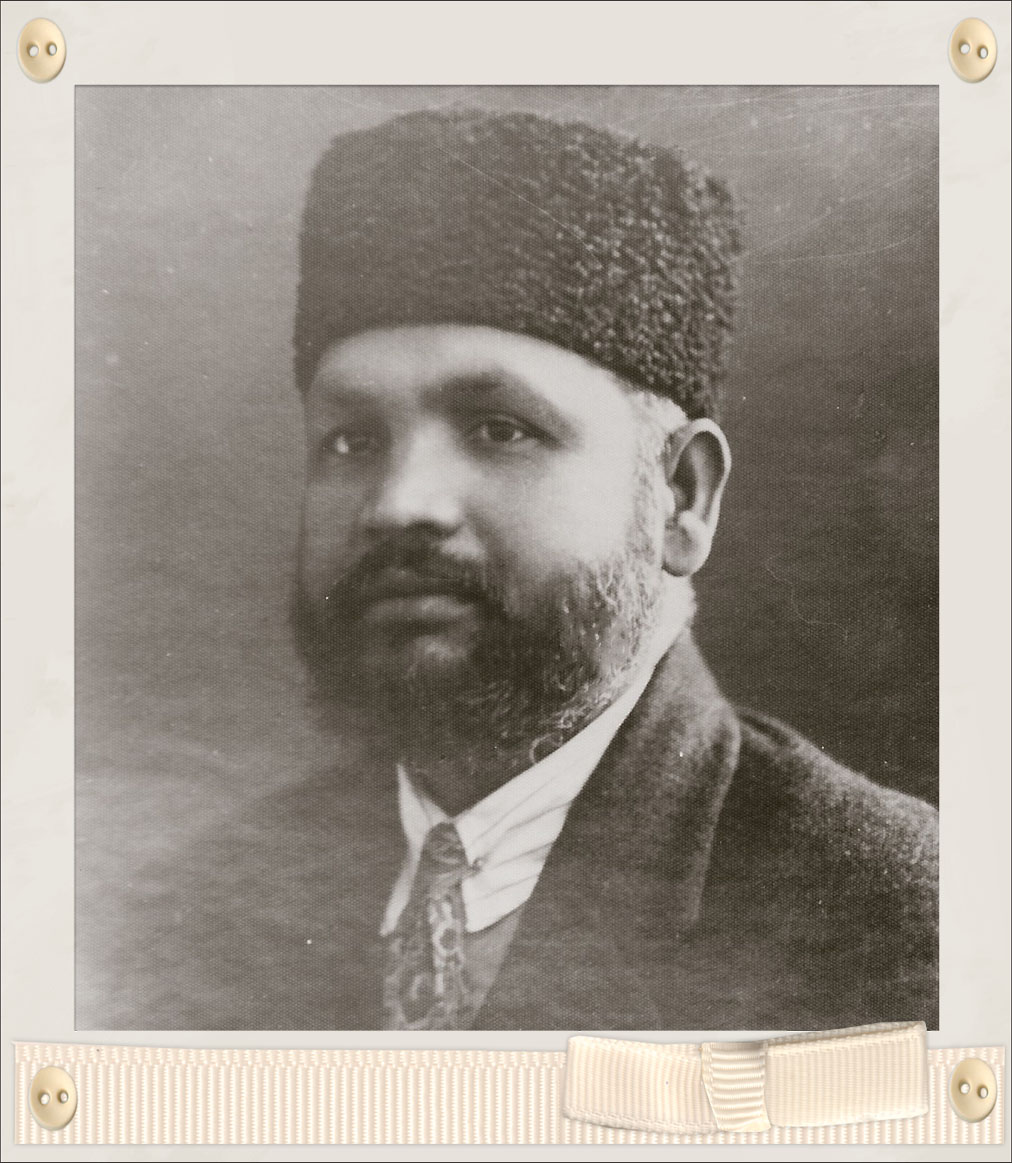
Muhammad Yakub Khan
The Christian-Muslim relationship presents one of the greatest paradoxes of history. For the last fourteen centuries, whenever a Muslim has mentioned the name of Jesus he has unfailingly done so with the words ”May God’s blessing be on him”. But how have Christian friends repaid this gesture? Their whole history is one unrelieved hymn of hate against Islam. The Prophet ﷺ of Islam, according to them, was a ”false” prophet. Muslims were ”infidels” who worshipped an idol of Muhammad. Islam was a religion of lustfulness and the sword. The Qur’an was the disjointed jumble of the kind of the common soothsayers’ jargon.
No prophet is mentioned in the Qur’an as often as Jesus. The highest encomiums are showered on him. His holy mother is described as the most righteous of women. His disciples (Hawari) are held up before Muslims as an example of self-dedication to God. His good name is vindicated against the mudslinging of contemporary Jews. It has been made an article of faith for a Muslim to accept Jesus Christ as one of the greatest prophets of God. Isa Ruhullah (Jesus the spirit of God) has become a part of the dictionary of Islam.
Anti-Islam Trend
Christian friends, however, have been harping on the same tune. Even in this mid-twentieth century, the tone may have softened down, but the substance remains the same. Islam stands on a much lower level compared with Christianity. The Prophet Muhammad ﷺ is dead, whereas Jesus is still alive. The Prophet’s revelation was verbal. In Christianity the Word became the flesh. God in person came to earth in the form of Jesus. The Quranic God rules by fear; in Christianity He becomes a loving Father. The Prophet ﷺ had no miracles to show. Jesus worked wondrous miracles. Islam is intolerant. Christianity is tolerance par excellence. This is the modern trend to show the superiority of Christianity over Islam.
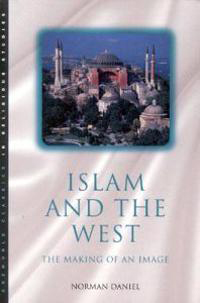
The abuses heaped on Islam, the Prophet and the Qur’an in Christian literature down the centuries send a shudder even through decent men and women in Christianity. One such modern writer, who has traced all these from the beginning and collected the same in book form, Islam and the West, feels ashamed even of reproducing that filthy stuff, and does so with apologies to the Muslim readers in the words:
Nagil il-Kufri laisa bi Kafirin
“The reproducer of blasphemy is not a blasphemer”.
Political rivalries, territorial ambitions and conquests widened this gulf. The armed encounter between the two faiths during the Crusades naturally could not be a helpful climate for better understanding between the two faiths. Muslim military penetration into Europe and centuries long domination over half of Europe could not but make the Saracens and the Turks the embodiment of barbarism to the European mind. Likewise, the recent still-lingering relationship between Christendom and the world of Islam on the level of colonialism made the Farangi the most hated person to an average Muslim.
Fortunately, history is now taking a new and happier turn. The dust of historical conflict between the Cross and the Crescent is subsiding. And in the clearer skies and the new horizons that are emerging, Christianity and Islam are taking stock anew of their respective bearings, and exploring a realistic view of the relationship in which they stand to each other.
Viewed in this new perspective, no two religions are found so close to each other in spiritual kinship as Christianity and Islam. The values of life that count, values but for which life ceases to be worth living are common to both Faith in God, doing God’s will, love of neighbour, faith in life after death, reward and punishment – these are the cornerstones of Christianity as much as of Islam. Above all, the deep devotion of a Muslim’s heart to the person of Jesus Christ is a strong tie that can weld the two faiths into a bond of friendship at the deepest level. Last but not least, there is the threat of the dark forces of a materialistic philosophy of life, corroding the very foundations of faith, which pose a common danger to both.
There is a growing awakening to this new world context that is emerging, calling for a reorientation of Christian-Muslim relationship. It would be the endeavour of all men of goodwill to seek and underline the points of contact between the two faiths, so as to bring them closer together. This reassessment and reorientation, to be worthwhile, must be realistic, based on a factual appreciation of the points of difference as well as agreement.
The Gulf
The biggest gulf that yawns between the two faiths is the divergent views of the Cross taken by Christianity and Islam. And we must be very clear on this fact. The Christian position on this point is dogmatic, beyond the pale of rational interpretation. That is what takes away the very basis of a common ground. If the Christian position on this point can be made susceptible to a rational approach – of which signs are not wanting – the main hurdle in the way of a closer spiritual comradeship between the two faiths would have been cleared. The true significance of the Cross is the crux of the question. But for divergence on this, Christianity and Islam are two sides of the same coin.
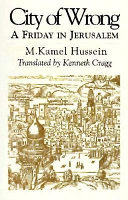
In this connection, the most notable contribution comes in the form of a remarkable, City of Wrong (A Friday in Jerusalam published by Geoffrey Bles), an English rendering by Dr. Kenneth Cragg of an Arabic book, Qaryah Zalimah by an Egyptian scholar, Dr. Kamel Hussein. The following lines are inspired by the belief that an objective quest of the truth about the Cross of Christ is the only way truly to promote better understanding between the two faiths, and, in that spirit, are devoted to a study of the points raised in the book.
City of Wrong is a most moving book, perhaps the first of its kind, which no one interested in the problems of right and wrong, good and evil, the ultimate norm of moral values, how these values may be trampled in the name of collective good, even in that of God and religion, can afford to miss.
It is a story of the crucifixion of Jesus Christ, told in the form of fiction, the theme being to turn the searchlight on the various factors – religious, political and social – caught up in that grim drama on that fateful Good Friday, which culminated in the conviction of Jesus Christ on a charge of heresy, and the sentence of death against him.
Whether, however, Jesus was actually crucified or not, whether somebody else in his likeness was crucified, as the common Muslim belief goes, or whether he in person underwent crucifixion as the Christians believe, is considered by the author immaterial to the theme of his story and is left untouched. The mere fact that a Teacher of such lofty moral stature as Jesus Christ should be sentenced to die on the cross is, according to him, enough of condemnation of the main actors, systems, standards and institutions that happened to be involved therein.
The author, Dr. Kamel Hussein, is a man of versatile genius – surgeon by profession, an educationist, a thinker, an author, philosopher, and a distinguished man of letters. The translation into English under the above title is by an equally distinguished man, Dr. Kenneth Cragg, Editor of The Muslim World and a Professor of Arabic and Islamics in various universities in America and the Middle East. The original was adjudged a masterpiece of literary art and awarded – the State Prize for Literature by the Egyptian Government.
The translation is equally deserving of public appreciation, inasmuch as it does not lose, as most translations do, the thrill and grip of the original, and is inspired by the sole motive to promote Christian – Muslim understanding. As the distinguished translator puts it in his Introduction, the idea in rendering the book into English is to provide a meeting point at the deepest level between Christianity and Islam and make the moral challenges in Qaryah Zalimah available to a wider English-reading public.
The feeling behind Dr. Cragg’s labour of love, we hope, will be reciprocated in the world of Islam. Too long have Christianity and Islam, paradoxically in violation of their own basic messages, frowned at each other, misunderstood and misjudged each other, and for that matter met each other in a bitter historical encounter. If there are any two faiths which are the closest to each other in a great deal that constitutes the substance of religion, these are Christianity and Islam. In the present-day world of ideological conflict, the two once again find themselves thrown into a common destiny. There is a growing realization that by pooling their moral and spiritual resources, Christianity and Islam can play a decisive role in the making of a new and a better world rooted in the concepts of a Divine dispensation and the sanctity of the human personality. That purpose, Dr. Cragg tells us, the Qaryah Zalimah should eminently serve.
A fateful Friday in Jerusalem
The plot of the story opens dramatically with a glimpse of the daily routine of life of the simple people of the city of Jerusalem years ago. When the day on that Good Friday dawned, it was just one more common day. The simple folk at sunrise, as usual, set about their daily avocations. The sheep boys drove their flocks to the neighbouring hillocks in search of fodder. The artisans opened their shops to ply their trades. Those who had nothing to do idled away their time in the streets. One topic of general interest which formed the gossip of the town was the preaching of this new Teacher, who taught a new gospel, and the heated discussions at the preceding night’s meeting of the Rabbis as to how to deal with his dangerous new preaching. Nobody, however, dreamed what big events were going to happen on that fateful day — events that would go down into history.
This air of the dramatic runs throughout the book from page to page and chapter to chapter, strewn with the most arresting of doings, heart-searching talks and profound philosophic discussions, revolting, scenes of man’s inhumanity to man, and, above all, the prostitution of the sacred names of God and religion by men of high scholarship and even deep piety. Indeed, the whole thing is a most devastating satire on the so-called religiosity, exemplified in the eminent Jewish rabbis, who sat in judgment on Jesus Christ, and in the name of religion perpetrated the worst crimes known to history. On the one hand, as the story paints them, these leaders of Jewry were so punctilious in the observance of their religion that for fear of defilement they would not enter the judgment hall of the Roman Governor, Pilate, but on the other hand, they saw nothing wrong in sending an innocent man to the cross – and a man of the gentleness of Jesus Christ who taught people to love even their enemies.
Terrible inhumanity in the name of religion
The irony of the whole thing is put in the mouth of Pilate, who is driven almost mad at the horror of being required to put an innocent man on the cross. He ”pondered in his palace on the trials and tribulations that afflict the lives of rulers and callousness required of them”. And he has a long discussion on the subject with a friend, a Greek philosopher, who just then happens to enter the palace. And when the latter starts a lengthy discourse on the rights and wrongs of the day’s doings, Pilate loses all patience, and in utter disgust, bursts out:
”Give me a rest from this philosophy of yours. It has been borne in upon me that we men of action can find no value in philosophy when any really serious issue confronts us” (p. 171).
And he goes on to utter the same indictment against religion, saying:
”Nor are the men of religion any better guides for us in the life of action than you are. What they have traditionally to say about truth and error, good and evil, is fine talk so long as it remains tradition, creed and faith. But it all becomes vague and ambiguous when the time for action arrives. Don’t you realize that the Jews, most meticulous as they are in following the doctrines of their estimable faith, yet consider the lighting of a candle on the sabbath a heinous crime? Crucifying the preacher of this new gospel, however, is duly positively enjoined by loyalty to religion and nation!” (p 177).
And in utter desperation and confusion of mind, Pilate says all he could do in the face of this failure of both philosophy and religion to give any clear guidance was to do what his Roman tradition dictated. His philosopher friend, who still goes spinning elaborate moral theories, he cuts short, saying:
”I have no wish to divert you from your search. But what I am after is guidance. I used to think I had reached it by the way of religion, or religion and reason. But what the people of Israel have done today in the name of religion has destroyed every vestige of my hope for guidance there. From now on I shall seek it no more. I will remain a simple Roman soldier doing what is enjoined on me by the principles and traditions of my nation and by the consensus to which Rome has come” (p. 175).
And that is the end of the story, so far as Pilate is concerned. He goes ahead with his duty as a Roman, brushing aside all qualms of conscience, and pronounces the grim judgment to put Jesus on the cross.
At this point the scene drops on the story, so far as Jesus is concerned. The author’s purpose, to expose the bankruptcy and inhumanity of some most sacrosanct human institutions, has been sufficiently served without pursuing the story to its bitter end, and giving the reader a glimpse of the scene of the actual crucifixion. This abrupt finish to the story, however, leaves the translator unsatisfied. In his Introduction, he calls this a big snag in the story as a work of art in leaving a big moral issue involved in the Cross of Christ enshrouded in darkness. He puts down this suppression of the most vital link to the author’s understandable hesitation to tread on this delicate ground as to what actually happened to Jesus after the pronouncement of judgment against him, the issue being the subject of much controversy in the House of Islam.
Crucifixion story as given in the Qur’an
This controversy within the House of Islam, the translator tells us, stems from the Qur’anic words: wa lakin shubbiha Lahum, which, he says, is susceptible grammatically of two different interpretations, leading to two different views as to the fate of Jesus after conviction. This is how the author introduces the subject:
”It may be well at the outset to clarify briefly the sum of what the Qur’an, the holy book of Islam, has to say on the Cross of Christ. The pivotal passage is that in Surah 1V, 156, which reads:
وَقَوْلِهِمْ إِنَّا قَتَلْنَا ٱلْمَسِيحَ عِيسَى ٱبْنَ مَرْيَمَ رَسُولَ ٱللَّهِ وَمَا قَتَلُوهُ وَمَا صَلَبُوهُ وَلَـٰكِن شُبِّهَ لَهُمْ وَإِنَّ ٱلَّذِينَ ٱخْتَلَفُوا۟ فِيهِ لَفِى شَكٍّ مِّنْهُ مَا لَهُم بِهِۦ مِنْ عِلْمٍ
إِلَّا ٱتِّبَاعَ ٱلظَّنِّ وَمَا قَتَلُوهُ يَقِينًۢا
An-Nisa (The Women) 4:156-157
’They (i.e. the Jews) say we killed the Messiah, Isa (Qur’anic name for Jesus), son of Mary, the Apostle of God. But they did not kill him, nor did they crucify him. It seemed so to them. Those who had altercations on this matter are dubious about it, and in fact in the absence of sound knowledge are following conjectures. The sure fact is they did not kill him. On the contrary, God raised him to Himself, God the strong and the wise’ ” (p. x).
Commenting on the Quranic words wa shubhiha Latium, the Translator says:
”The Quranic text is enigmatic, since in Arabic the ’hidden’ pronoun in the passive verb, translated ’made to seem so’, may refer to crucifixion (‘it’) or to Jesus (‘He’). In the first case the meaning would be that death by crucifixion ’seemed to happen’ but in fact did not. The victim was Jesus in person, and he was Himself actually and physically nailed to the Cross. But He did not there succumb. When taken down from the instrument of death, He had not in fact expired. Subsequently in the tomb, He revived, and was ‘spirited away’ (quite physically if the phrase may be permitted) by the disciples” (p. II).
Among the orthodox circles, however, the Translator goes on to say:
“The pronoun in question is taken as personal and relating to Jesus. It means that He was not killed nor crucified, not in the sense that He did not succumb and die by crucifixion, but that he never came into the position of a victim. The ’seeming’ was not a ’death’ (only apparent) on His part, but a mistake in identity, seemingly ordered and arranged by God’s intervention, on account of which another victim, having all the personal appearance of Jesus, was by error condemned and executed as If he had been Him” (p. 11).
Crucifixion of a double was an anti-climax
The Translator is not at all satisfied with either of the above two views of the event of the crucifixion. To take his objection to the second view, he considers it as an anti-climax, fizzling out the whole significance of the Cross and its challenge to the conscience of humanity. We cannot do better than reproduce in extenso how his mind reacts to this story of some double of Jesus being put on the Cross:
“Is not the entire moral significance, here so movingly argued, spiritually jeopardised, perhaps in a way evaporated, if the encounter never really happened? The question takes us not only to the heart of this history but to the heart of theology Jesus’ devotion and readiness to die arose from His fidelity to His message, and this in turn from His relationship with God. Is God then properly to be thought of as frustrating the climax of that devotion? Does Jesus, insisting as He does upon loyal obedience unto death, remain the valid spokesman of a Heaven that intervenes to save Him when He would not save himself? Is a love that suffers to the uttermost the truly Divine pattern of wrong’s retrieval and man’s peace with God? Or is the really Divine thing the attitude of self-saving which runs flatly counter to the heart of the teaching of the Sermon? Or in crude brevity: on which side is Heaven? The answer involves the triangular situation that exists both in this book and in the history that generates Christianity, between Jesus, His contemporary opponents and the Divine will. It would appear to the Christians that the whole logic of City of Wrong is that the mind of Jesus is the mind of God. To believe Him rescued at the last, while a sufferer, innocent of His role in the world, expires in His stead, is not only an anti-climax. It jeopardises the integrity of a single whole, the totality of the whole Christ in His import for mankind. What is this darkness in which the world is darkened during the three hours of a Friday afternoon? Is it, or is it not, a darkness in which love is redemptively at grips with sin? Or a darkness in which a mistake of identity works out its bitter way before an onlooking Heaven? Only when the shadows that remain around this question arc dispelled does the darkness itself become luminous. Yet to be reverently and wistfully within those shadows, as the author and his kinship of readers are, is to be ’on holy ground’ ” (pp. 23, 24).
According to Dr. Cragg, this simply does not fit in either with the theme of the story or the role of Jesus on the stage of history, as the bearer of a new dispensation of God’s love for mankind. Here is a great moral Teacher, he tells us, who creates a commotion by his bold revolutionary cry, denouncing all that was sham and cant in the religiosity of the day, preaching love of God and man, and cheerfully bearing sufferings and sacrifices in the cause of Truth. Here is a man who stands undaunted before the frenzied fury of the Jewry, facing all manner of indignities, persecutions, tortures with fortitude, even racing the prospect of death with the sublime resignation: “Thy will, not my will”. For such a great character to think in terms of saving himself when the supreme moment of mounting the Cross comes it simply does not make sense. With these reflections, the Translator dismisses the version of Jesus’ double having suffered crucifixion as untenable.
Shubbiha in the sense of mistaken death
As regards the other view that the doubt arose not out of mistaken identity but out of mistaken death, the Translator does not say where, according to him, the flaw lies. He contents himself with saying that it is not the orthodox view. This again is not the whole truth. Eminent scholars throughout the history of Islam have rendered mutawaffika as mumituka – i.e., “I (God) will cause you (Jesus) to die a natural death” (Bukhari 65:12) That was the view commonly in vogue among the Prophet’s Companions, as is borne out by Abu Bakr’s public utterance on the Prophet’s demise. Reciting the Qur’anic verse that Muhammad ﷺ was but a messenger of God and all the messengers before him had passed away, he consoled the Muslims who were in a distracted state of mind on hearing about the sad event.
وَلَقَدْ كُنتُمْ تَمَنَّوْنَ ٱلْمَوْتَ مِن قَبْلِ أَن تَلْقَوْهُ فَقَدْ رَأَيْتُمُوهُ وَأَنتُمْ تَنظُرُونَ
وَمَا مُحَمَّدٌ إِلَّا رَسُولٌ قَدْ خَلَتْ مِن قَبْلِهِ ٱلرُّسُلُ أَفَإِي۟ن مَّاتَ أَوْ قُتِلَ ٱنقَلَبْتُمْ
عَلَىٰٓ أَعْقَـٰبِكُمْ وَمَن يَنقَلِبْ عَلَىٰ عَقِبَيْهِ فَلَن يَضُرَّ ٱللَّهَ شَيْـًٔا وَسَيَجْزِى ٱللَّهُ
ٱلشَّـٰكِرِينَ
(The Qur’an Al-Imran:143-144)
This is conclusive evidence to prove that the idea of Jesus being alive never existed in the early days of Islam, and that it is a latter-day infiltration.
The “Azhar” view of Crucifixion
In recent years, no less an authority than the Rector of the greatest seat of Islamic learning, the Azhar University of Cairo, Professor Mahmud Shaltut, has expressed the same view. In demand for an authoritative fatwa (verdict) as to the validity or otherwise of the common notion among Muslims that Jesus was still alive somewhere in heaven, he, after fully thrashing out the question in the light of the Qur’an and the Hadith, totally rejects the view. The following extracts should suffice to show what the authoritative, contemporary orthodox view is:
”The word tawaffaitani in this particular verse (Falamma Tawaffaitani i.e. “When Thou caused me to die”. The Quran 5:117) primarily means natural death which is known to everybody. The Arabic-speaking people understand this and only this meaning of the word with reference to the context. Therefore, had there been nothing else to indicate the end of Jesus in this verse even then it would have been improper and wrong to say that the Prophet Jesus was alive, and not dead…
“So, one fails to understand how the word heaven is deduced from the word towards Him (ilaih). By God! it is an outrage on the plain exposition of the Holy Qur’an, and such an offence is committed simply on account of belief in such stories and narratives which are devoid of accuracy, not to speak of their established authenticity. …
“To sum up:
- There is nothing in the Holy Qur’an, nor in the sacred traditions of the Prophet ﷺ, which authorizes the correctness of the belief to the contentment of heart that Jesus was taken to heaven with his body and is alive there even now and would descend therefrom in the latter days.
- The Quranic verses about Jesus show that God had promised to cause him to die a natural death, then to exalt him and save him from the mischief of the disbelievers, and this promise had certainly been fulfilled. His enemies could neither kill him nor crucify him, but God completed the span of his life and then caused him to die.” (Al-Risalah of Cairo, Vol. 10, No. 402, p, 515. Translation of the full text published in The Islamic Review for September 1961)
(To be Continued)
The Light – February 1, 1962