THE LIGHT OF PAKISTAN
زیارت گاہ اھل عزم و ہمت ہے لحد تیری
کہ خاک راہ کو بخشا ہے تو نے راز الوندی
The Man Who Made History and Geography
The Beloved Babaji of the Masses
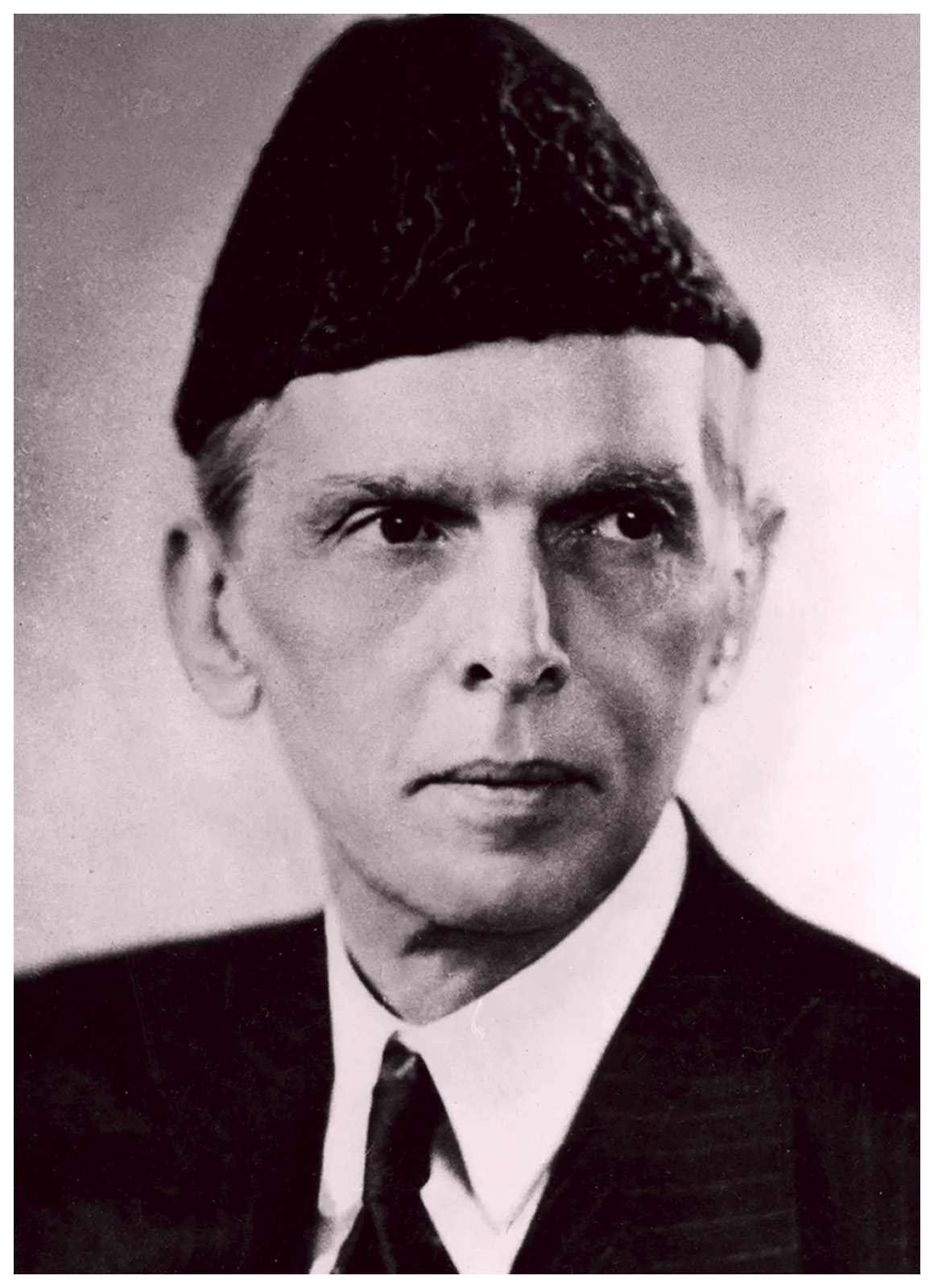
Contemporary history has seen the rise of many a leader of men who in their day gripped the imagination of their people and shone on the political firmament of the world as so many supermen. In the midst of this galaxy of great men of our times, Quaid-i-Azam Muhammad Ali Jinnah stands head and shoulder above all the rest.Hitler and Mussolini, when the tide of fortune turned against them, were deserted and denounced by their own people. Stalin who still survives the hand of oblivion rules more by fear than love. Even Bapu Ji, the gentle apostle of non-violence met a violent death at the hands of his own people. Not so, Babaji, as Muhammad Ali Jinnah was affectionately called by the teeming masses of Muslims. He ruled the hearts of his people and inspired them with a love and devotion which no set-back or adversity could bedim or dimmish.
In the darkest days which the birth of Pakistan brought along with it, a tragedy which would have brought the greatest of potentates or dictators to the dust at the hands of his own people, this tall, spare, skinny figure not only commanded the confidence and affection of his people; he stood in the midst of these darkest clouds that have ever overcast the destiny of any people in history as the solitary beacon of faith and hope and ultimate triumph over these forces of darkness.
Even those millions of Refugees who survived the well laid out plans of wholesale extermination of Muslims, as soon as they set foot on the Wagha Border, famished, starving, reduced to mere skeletons, shouted from the depths of their hearts Quaid-i-Azam Zindabad! And now when the news of his sudden collapse was sprung upon the world, the Muslim nation throughout this sub-continent ran into hysterics of sorrow and grief over this snatching away of their beloved leader.
The streams of men and women that passed by his dead body, as it lay calm and serene at the Governor General´s House, to catch a parting glimpse of the man they had loved and adored did so with heavy hearts and tearful eyes. Even the burly Pathan, Sardar Abdur Rab Nishter, as the reports said, wept by the deathbed of his chief like a child. To say nothing of Muslim, even top-ranking British officers like the C-in-C and the naval Head of Pakistan were the pictures of gloom as they sat at the funeral of their chief. So marvellous was the charm that this grand old man exercised over anybody and everybody that came into contact with his magnetic personality.
Where lay the secret of this all-dominating sway which he exercised over the hearts of men – even of those who were opposed to his politics. The secret was really no secret. It was his downright sincerity of purpose, the spotless cleanliness of weapons that he used, his uncompromising stand for what he believed to be just and fair and true, and above all his iron will to stand and fight and fall for and by his principles that won him love of his comrades and the respect of his opponents.
Quaid-i-Azam Muhammad Ali Jinnah was a man who lived up to his principles. He called upon his people to make every sacrifice for Pakistan. And in his own person he set the example of that sacrifice. He spared neither time nor energy, nor comfort, nor fame in the high cause he had set before himself. So attached and devoted was he to the ideal of Pakistan and to the objective of making it one of the front-rank Powers of the world that it will be a mere statement of fact to say that Jinnah was Pakistan and Pakistan was Jinnah. And he actually laid down his life in the service of Pakistan, ignoring the warnings of his doctors that he must take complete rest if he wanted to save his life. But he chose to save Pakistan rather than his own life. It was a heroic death that he met in the service of his people and the State of Pakistan. Death advanced towards him inch by inch. The way he worked at his desk, day in and day out, laying plans for the consolidation and advancement of Pakistan, he knew it meant sure and imminent death. But for a man of honour like Jinnah there was no running away from it. Never in the whole of his life of strife and struggle had he known any turning of back. Always he had been a straight fighter. And this dignified pose of unflinching stand by duty and honour he maintained even in the face of death. And he met his death with the cool calculation of a scientist who courts death in order to extend the boundaries of truth and knowledge and with the courage of a true soldier who stands by the flag of his country in the face of heavy odds and lays down his life in the thick of the battle. It was, really speaking, a martyr`s death that he met in this fight for Pakistan.
Pakistan is no doubt a very great gift of Quaid-i-Azam Muhammad Ali Jinnah to the Muslim nation. But this gift pales into insignificance before the greater gift which he has made to human culture and civilization at large by the high ideals of human rights and liberties which he espoused all his life, for which he fought all his life and fought with perfectly clean weapons, and for which he did not shrink to make the supreme sacrifice. This, to our best judgment, is a far greater contribution of Quaid-i-Azam Jinnah to the onward march of Islam in this country and in the world at large than the largest Muslim State itself which he has given us. Pakistan is a very great boon indeed. But Jinnah the man is greater by far as a heritage which he has bequeathed to us.
A leading Congress English daily of New Delhi, in its obituary article on the death of the Quaid-i-Azam under the caption “Architect of Pakistan” pays him an unstinted tribute as a man with a “stout heart and clean hands.” “Whether a friend or a foe,” says the paper, “one has to pay him a tribute for he has made history.” The Quaid-i-Azam has no doubt made history and that by itself should win him a place of eminence in the hall of history. But he has made two other things which give him a unique position among the great men of history. In addition to history, he also made geography. And this is a very great thing. When he launched his campaign for the partition of the country, in very high quarters he was met with the taunt, “You cannot change geography.” But he did change geography, adding a new country to the map of this world. But, above all, what constitutes a contribution of abiding value to human advancement, he set up a very high code of political morality and a very high example of devotion to the cause of human freedom and human well-being.
In his early days when he had not yet parted ways with the Congress he was described as the “Ambassador of Hindu Muslim unity.” Subsequently the tongue of propaganda painted him as a “communist”. The fact is he was never a “communist”. His human sympathies knew no distinction between Hindus and Muslims. Ever since the birth of Pakistan, his one foremost concern had been to see that the minorities were treated justly and fairly, even generously. He never wanted anything but peace within and peace without – especially with the sister Dominion of India. An “Ambassador of Hindu Muslim unity” he remained to the end of his days.
Pakistan has been left an orphan by the death of the Father of the nation. But it has nothing to fear only if it is true to the spirit and ideals of the Quaid-i-Azam. His message to the Muslim nation has always been Unity, Faith, Discipline! This is the torch that he has handed down to us to guide our steps along the rough and tumble of national struggle that lies ahead of us. And so long as, we keep this torch burning in full flame, we shall, God-willing, march onward and onward towards the great Destiny that Babaji had visualized for Pakistan. And his spirit will he watching over us and our struggle to win for Pakistan a place in the sun as the guardian angel of Pakistan.
Is the Quid-i-Azam really dead? Certainly not. The flame he kindled in the bosom of the nation is an undying flame – the flame of freedom, of justice and fair play, of devotion to duty, of the surrender and sacrifice of the self at the altar of truth and honour. Such a man never dies. He lives in the hearts of the teeming masses of Muslims who always looked up to him and found in him their never-failing guide, friend and philosopher. And in the hearts of generations yet unborn shall he live as the one man who gave his all so that Islam in this subcontinent may be saved from annihilation.
The best and only worthy monument that we can raise to the memory of Quaid-i-Azam is to keep the torch of freedom, of honour, of duty and of sacrifice that he, while laying down his life, placed in our hands. Jinnah was the light of Pakistan. That light has gone out. But the light of faith, hope, courage, duty and sacrifice that he kindled in his own life is an undying light and shall abide with us as long as we are true to these high ideals.
Let the flame of this light spread from town to town and village to village throughout Pakistan. And nothing would give greater solace to the soul of the beloved Babaji than to see his people marching ahead from one destiny to another with this imperishable torch of truth and freedom, of unity and discipline, in their hands.
Muhammad Yaqub Khan
(The Light – 24 September 1948)