The Ataturk

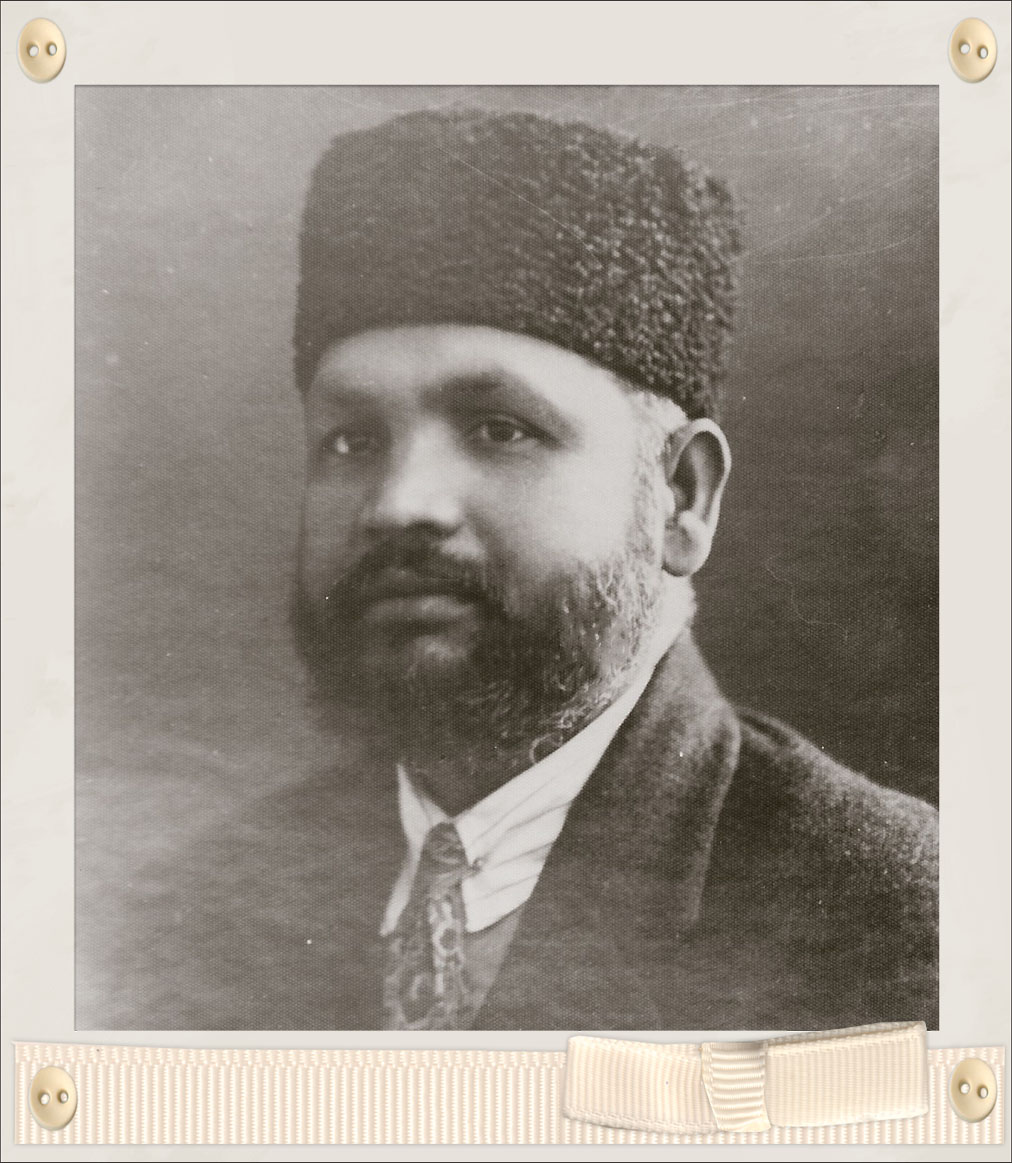
Mustafa Kemal Ataturk
(1881 – 1938)
The death of Ghazi Mustafa Kamal Ataturk has rung the curtain down on a career that was at once historic and romantic.
No other man, not even any of those known as dictators, has played as great a role in contemporary history as the Ataturk. In fact, he changed the entire course of history and were it not for his meteoric rise, the history, not of Turkey alone, but of the whole of the world of Islam, would have taken quit a different turn.
Just at time when Mr. Lloyd George, the then British Premier, was planning to drive the last nail in the coffin of the sick man of Europe by letting the Greek scourge loose upon the smiling fields of Asia Minor, where the Turk, driven bag and baggage from the soil of Europe had taken refuge, and just as he was heard jubilantly shouting that what the crusaders had failed to achieve, had at long last been accomplished, the Hand of God was busy forging a force that was presently to smash to pieces the dark designs of the Welsh Wizard. That force was none other than Mustafa Kamal who had actually been declared an outlaw and a prize set on his head.
The drama that followed is full of thrills and sensations. While British aeroplanes were buzzing day and night over Constantinople, while even the Sheikh-ul-Islam had been made to sign a fatwa declaring Kamal as a rebel who might be shot at sight, while the capital was honeycombed with spies to track down the wanted man and all the high-ways and bye-ways leading out were strictly guarded – how Kamal and his band of gallant comrades made good their escape through this well-laid-out trap, the dangers they encountered in their attempt to outwit the enemy, the hair-breadth escapes they had from their would-be captors should form a fit material for a most sensational novel or film. In fact, the story has been told by that gifted daughter of Turkey, Halida Edib Khanum, the famous novelist, in her book in Turkish entitled “The Shirt of Fire”. Thus was the greatest of romance woven with the greatest of history, with Kamal as the central figure, the hero.
Throwing dust in the eyes of British spies and cordons of soldier, Kamal makes a dramatic appearance on the scene of Anatolia where the Greek hooligans were playing havoc with the life and honour of the peasantry, as if out to satisfy an agelong grudge, sparing neither age nor sex. “By the soul of my mother,” he took his historic vow, standing at the grave of his mother with his sword unsheathed and surrounded by his comrades, “this sword of mine shall not go back into the sheathe unless I have wiped the Fatherland clean of the enemy.” This was the cry of an anguished heart, not only of Kamal, but of the whole of the Turkish people and as such found a re-echo in every town, village and hamlet. The sturdy sons of Anatolia rallied in their thousands to Kamal`s standard. And crushing was the defeat inflicted on the Greeks, while nothing was left for the Wizard of Downing Street but the wringing of hands and gnashing of teeth.
That is why we said it was the Hand of God that did it. While sure death was staring them in the face, it fell to the lot of Kamal to become the instrument of Providence and lead the campaign of his peoples’ deliverance. If miracles have not ceased to work, it certainly was something of a miracle to rescue his people from the very jaws of death. And in a short while the ” Sick Man ” was once more on his legs even more virile than before, capable of twisting the tail of the British Lion itself at Chanak (Çanakkale) and Lausanne.
The tongue of propaganda however now began to wag. The man who had saved Islam was painted as having little love for Islam. The abolition of the Khilafat, of Purdah, the change of dress and script were exploited to alienate the sympathies of the world of Islam from him. The Indian Mulla who puts more value on long beard and short trousers was taken in by this propaganda, forgetting that the man whom providence had expressly chosen for the deliverance of that greatest bulwark of Islam, must have had more of the essential fire and fervour of Islam in him than the dry-as-dust piety of the Mulla.
To our mind, it is in his reform more than on the field of battle that Mustafa Kamal shines at his best. It is here that we find in him, not a mere soldier but a great nation-builder, The first thing he did – and this speaks a lot for his insight into the ills of Islam – was to give a short shrift to the Hodja (the Mulla). This by itself should suffice to show that Kamal had some grasp of Islam. He could see that the Mulla was a walking libel on Islam and so long as he was there, his people could make no headway. And when once convinced of this, he was as undaunted in dealing with him as with the Greeks. He banned Mullaism on pain of death and those who could not be reclaimed were freely given the rope. The wisdom of this step was abundantly proved by subsequent events. In Afghanistan one Mulla, the Shoar Bazaar, was responsible for the overthrow of the King and setting back the hands of the clock. That fate must have befallen reborn Turkey, had she not been blessed with a Kamal instead of an Amanullah. Purged of this chronic pest, she settled down to a life of progress, undisturbed. In dealing with the Mulla in the way the way he did, Kamal, rather than betray any lack of enthusiasm for Islam, displayed a keen grasp both of Islam and its difficulties. And Indian Islam must take this leaf out of his book if it is ever to regain true Islamic vitality.
That Mustafa Kamal was no mean student or lover of Islam is amply borne out by his subsequent activities. He appointed a special committee of scholars to bring out a standard translation of the Quran into Turkish, so as to make the Word of God accessible to the meanest Turk in his own language. This may not look anything like piety but in fact it was a great service of Islam. He ordered that after the prayers the Imams, who must be properly educated, trained and certificated must give the congregation a Turkish rendering of the Arabic passages recited. Many a times he was seen stop his car by a small mosque, when the Azan fell into his ears, walk in like a common man, say his prayers and quietly go out. The Saidabad Pact, the recent-most achievement of Mustafa Kamal which, welded four Muslim Powers—Turkey, Iran, Iraq and Afghanistan – into alliance must give the lie to the propaganda that he had cut himself adrift from Islamic sympathies.
The moment he had a breathing space from setting his own house in order, the first thing he did was to address himself to the cause of Islamic solidarity the world over. On the top of this comes his deathbed message to the world of Islam, exhorting his brethren in faith to seek salvation in the footprints of the Holy Prophet ﷺ, his gallant and noble companions and the life of strife and struggle which they led. This can be the cry only of a soul that is Islamic to its deepest core.
To the Turk, Mustafa Kamal was rightly the Ataturk, the Father of the Turks, the title conferred on him by a grateful and devoted people. But to the world of Islam in general, he was no mean bulwark. His death therefore has naturally plunged the whole of the world of Islam in sorrow. While sharing that universal sorrow at the death of this great champion of Islam, we would only add: Let us find consolation in the thought that it has not been a death in vain. It is a death that has given life to a whole people, a death that has breathed new life into the dead bones of Islam.
May his soul rest in eternal peace.
(The Light -Wednesday, November 16, 1938) M.Y. K.