TALK ON ISLAM – BBC
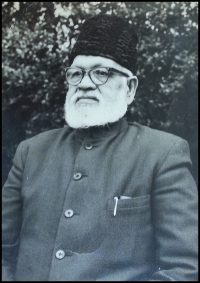
Mohammad Yaqub Khan
(Text of the talk given on the B.B.C. London on September 30 by Maulana Muhammad Yakub Khan, Imam of the Shah Johan Mosque, Woking, England in the series “Four ways of Life”)
“Wherever there is a Muslim community, even behind the Iron Curtain, you find their religious life revolving round these five pillars of Islam which Dr. Cragg has described.”
“There is one more principle, however, which I would add. This is the principle that the revelation of God’s truth can be given to all, so all founders of revealed religions are accepted. The Qur’an makes this incumbent on a Muslim. The names of the Biblical prophets, in particular, are spoken with deepest reverence among Muslims.”
To come back to the five pillars, prayer, is the greatest daily spectacle. In a Muslim country you would see the people when the call goes out five times a day, giving up their work, going to the Mosque, making ablutions and then offering prayers. They stand in straight rows – women in separate rows with one man, called the Imam, standing in front leading the prayer. For the midday prayer on Friday the huge mosques in towns like Istanbul are filled to capacity and those who don’t find a place spread their prayer-mats on the streets outside.
”During the month of Fasting – the Ramadan – the whole population is astir at dawn to take their only meal of the day, and volunteers beat the tom-tom to awaken everyone in good time. They cannot break till sunset, and then every household has some special delicacy prepared. As the last rays disappear, they help themselves to dishes on the tables. At the end of Ramadan there is the festival of Bairam (Turkish for Id), when Muslims put on their gala clothes and after attending prayers and a sermon in great crowds, they all embrace each other and wish each other happy Bairam”.
But the greatest human concourse of all is the pilgrimage to Makkah, which every Muslim of means is required to take at least once. Here Muslims from all parts of the world come together, dressed in the same pilgrim’s dress and go through the same ritual for a number of days. Because of the same simple dress and the same religious ceremonies no distinctions of race, colour, language, birth or position appear – there is a sense of universal human fellowship. When a Muslim leaves his home for Makkah his friends and relations garland him and take him in a procession to the Railway Station. And when he returns, they welcome him the same way.
Almsgiving, Dr. Cragg has described, but I might say that it is both compulsory and optional, and the compulsory is assessed at 2.5 % of all one possesses: it was kind of poor-tax.These observances are not an end in themselves. They are meant to induce inner purity, consciousness of God and human sympathy. Without these, the Quran warns, they carry little merit with God. But nothing can be done without God’s grace. A Muslim looks on God’s grace as the very breath of life. He never sets his hand to anything without invoking God’s blessing and you will find the words Bismillah – that is In the Name of God – on the lips of every Muslim. He recites this before eating and after eating he offers thanksgiving. In fact, he invokes God’s blessing for every detail of daily life – even going to the bathroom. Islam makes good deeds indispensable for salvation but the capacity to do them is attributed to God’s grace, and this comes ultimately even to the rescue of sinners.
Conference of Science and Religion
Commenting upon the Conference on “Science and Religion” at St. Peter’s College, Oxford in July last, in which the Imam of the Shah Jehan Mosque Woking participated, the same Journal writes:
Many of the 170 people attending the “Science and Religion Conference” organised by the Delaware Laboratories at Oxford in July spoke of the impression made upon them by Mr. Arabindo Basu of Durham University, Mr. Maung Ji and the Imam Yakub Khan, speaking from the Hindu, Buddhist and Muslim points of view respectively. The session during which they talked (arranged by the World Congress of Faiths – W.C.F.) was described by more than one person as “the most vital and inspiring part of the conference”.
The Imam’s Call to the Re-discovery of Faith
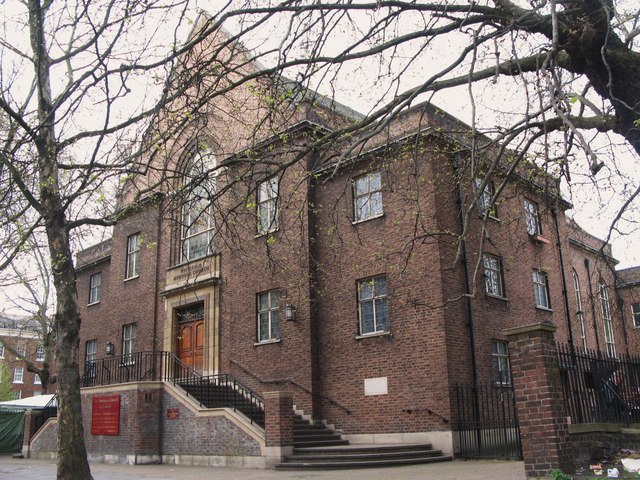
Over 200 people attended the inspiring annual London Service for Peoples of All Faiths at the Whitfield Memorial Chapel, Tottenham Court Road, on May 27th. The Service was beautifully conducted by Dr. Burkill. The readings were given by the Ven. Saddhatissa (Buddhist monk), the Rev. Herbert Richer (Hebrew) and by a Sikh (I believe for the first time at one of our services) Gyani Kasar Singh from the Sikh Temple in London.
The address by our friend and member of the Executive, Muhammad Yakub Khan, Imam of the Woking Mosque, made a profound impression of spirituality. The keynote was faith in God and the re-discovery of man’s lost faith within himself. Unless mankind, said the Imam, inspired by and applied to daily life the spiritual values taught by the prophets and sages of all religions, darkness would descend upon the world. We must progress to a state when humanity as a whole would experience the presence of God in its very midst. The Imam reminded us that he was present at the inception of W. C. F.(1936) and of the great debt of gratitude owed to Sir Francis Younghusband World Congress of Faiths for founding a movement to kindle the light of truth in a unity of brotherhood.
(The Light – October 24, 1959)