SIX GREATEST MEN IN HISTORY
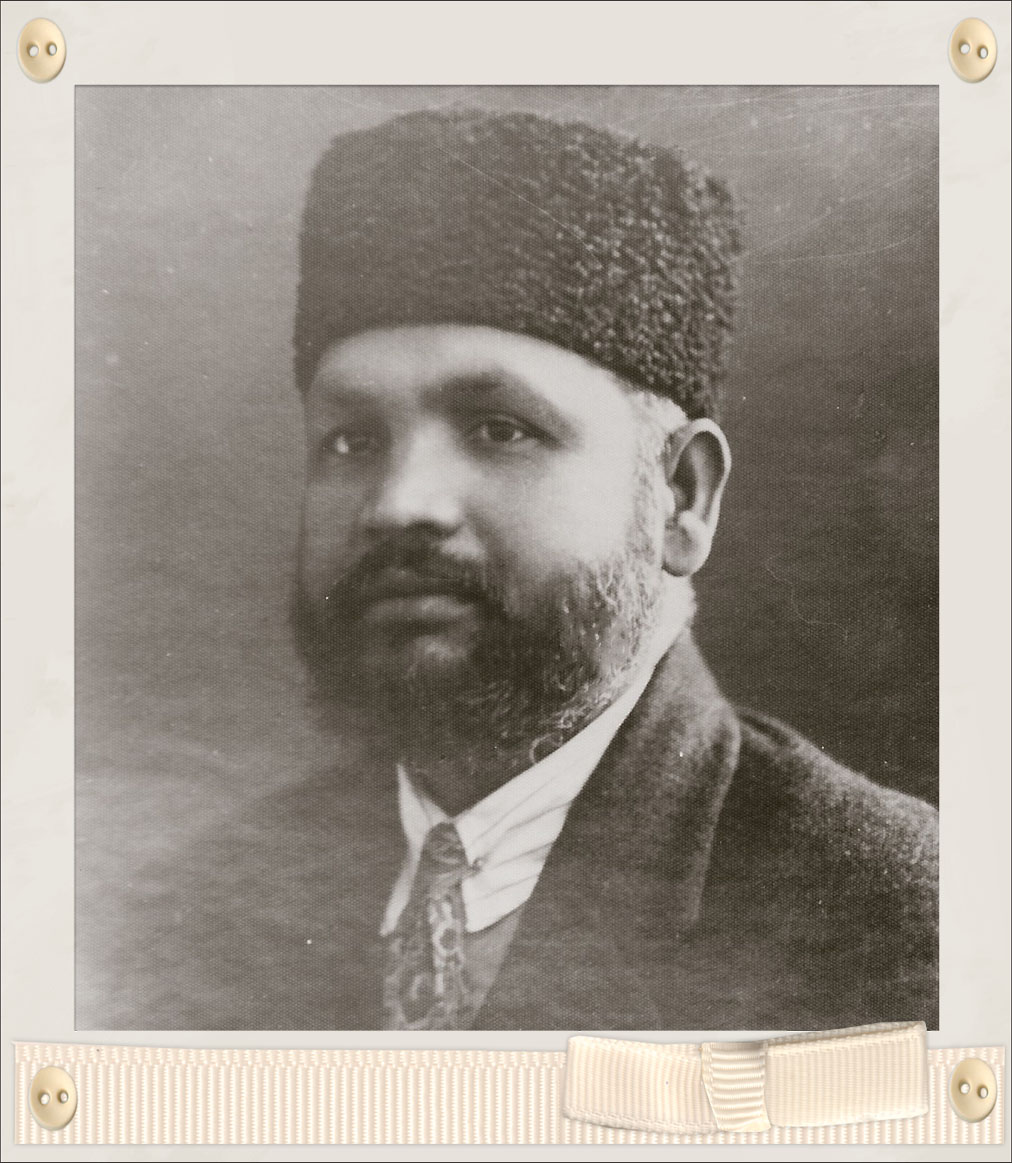
Mohammad Yakub Khan
H. G. WELLS, author of the Outline History of the World, gives the world, in the Strand Magazine, a list of the half-dozen outstanding figures in history—outstanding, we are told, in point of character and influence on mankind. Among others—kings, conquerors, scientists, artists, thinkers, philosophers—he also summons from their Olympian heights personalities such as Moses, Jesus, Muhammad ﷺ, Buddha and Confucius, and puts them into the witness-box for cross-examination. And then, down he comes on them with his verdict from his high seat of judgment which he arrogates to himself for reasons best known to himself.
Bernard Shaw—that writer of name and fame—rightly calls the question idiotic. It is much more, I should think. It is arrogant to the extent of ludicrousness on the part of a historian—at best a chronicler of men and matters—to go out of his way to apply his Lilliputian measuring-tape to such giants of humanity—those that have left an imperishable impress on the sands of Time. It requires a kindred soul—a great soul that has played this game of life himself, a soul that has been through the rough and tumble of life—to be able to obtain a gaze at the face of these men of Himalayan greatness. Greatness alone can duly appraise and appreciate greatness.
Once in the lifetime of Muhammad ﷺ there arose a dispute between a Jew and a Muslim as to the superiority of Moses or Muhammad ﷺ — of the one over the other. The Prophet reprimanded the Muslim, saying, ”Do not exalt me even over Jonah.” To be sure, it requires a Muhammad ﷺ to gauge the forth of a Moses. Sir Oliver Lodge, who also contributes to the symposium on the question, hits the nail on the head when he observes that he would rather leave the ”attempt to estimate the signs of true greatness to those who are nearer the mountain-top themselves.”
Nevertheless, it must be confessed, Mr. Wells has been quite tactful at his job. He knows his readers well enough, and so it does not take him long to allot the topmost place. Jesus done with; he comes to scrutinize the rest. Moses, he brushes aside light-heartedly. ” There is hardly any evidence that . . . Moses. ever existed ”; as if the Israelite lawgiver were in any way less historical than the one who came to fulfil his law. And Confucius? He fails to come up to the mark, as ” his teachings lack the universality of Jesus’ teachings and Gautama’s ”; obviously forgetting, or perhaps conveniently overlooking, that the Master’s mission was not more universal. ” I am not sent,” he said, ” but unto the lost sheep of the house of Israel,” and even went so far as to say, ” It is not meet to take the children’s bread and to cast it to dogs.”
Comparisons are always odious, and especially so when instituted between such luminaries of moral and spiritual firmament. Islam enjoins equal veneration for all these Prophets from the Lord, be he Abraham, Moses, Jesus, Buddha, Krishna, or Confucius. Says the Qur’an (ii. 136) :— Say : We believe in Allah and (in) that which has been revealed to us, and (in) that which was revealed to Abraham and Ishmael and Isaac and Jacob and the tribes and (in) that which was given to Moses and Jesus, and (in) that which was given to the prophets from their Lord ; we do not make any distinction between any of them, and to Him do we submit.
Thus, it is not for a Muslim to set about comparing these sons of God as if they were so many horses on a racecourse. When, however, Mr. Wells comes to Muhammad ﷺ, his temper seems to get the better of his sense of proportion. He indulges in reflections at once un- merited and uncalled for. It is about these that I want to say a few words. Of the Qur’an he says ” Nor am I one of those who find the Koran wholly inspiring and splendid. I own it in two translations, and I have made diligent effort to like it, but I am unable to lash myself into a glow of admiration.”
Neither space nor occasion permits of my giving Mr. Wells, in this article, anything like a full view of the simple charm of Qur’anic teachings. I would content myself with giving him just a glimpse—say, by way of a sample. Take the very verse already quoted, which enjoins universal belief in and equal respect for all the world prophets. Could you produce a peer of that in any human or Divine code of life? And, I say, if a Universal Brotherhood of Man, to a dim sense of whose necessity the world has already awakened, is an ideal grand and noble, could you do without this as the first and foremost corner-stone ?
Come again to another :- Surely those who believe and those who are Jews and the Sabeans and the Christians—whoever believes in Allah and the last day and does good—they shall have no fear nor shall they grieve (Qur-an, v. 69).
Could you honestly conceive of a greater breadth of vision, a loftier truth? Does it not strike at the very root of what has been in the main responsible, all through the ages, for the bloodthirsty spite of man against man, viz. the self-illusion of racial or creedal superiority? Salvation depends not upon what denominational insignia you wear, but upon how you comport yourself in workaday life, in your relation to God and to man—in a word, upon deeds, not creeds. To say nothing of how far such a view goes to strengthen the sense of personal responsibility in man, thereby uplifting the moral tone of society, its effect in removing racial and religious prejudices is marvelous. Pray, let us have the like- of it, if Mr. Wells has come across any in the’ course of his vast and varied studies.
This, too, is the exclusive distinction of the Qur’an—yes, the selfsame Qur’an for which he could not ” lash himself into a glow of admiration.” Into details, I am afraid, I could not go in the brief space of an article. This single pair of gems should suffice, I believe, for Mr. Wells to see at a glance—he need not go so far as lashing himself—that the Qur’an deserved a better word than he has been pleased to give it.
One can understand Mr. Wells’ inability to see the worth of the Qur-án: he is ignorant of its language. He owns it in translations, and translations could not impart to him anything of the dignity and majesty of the original. When, however, he comes to Muhammad as a figure in history, his reflections are inexcusable. Here at least one would have expected him—a historian of pretensions—to deviate, just for once, so far as Islam is concerned, into fairness. But his judgment on one whom friend and foe are at one in acclaiming as ” the most successful of all the Prophets and religious personalities,” is unfair in the extreme.
This is what he says:— There is too much of the clay of human weakness mixed with the finer elements in Mohammed’s ﷺ character. He had too many wives and had too much trouble with them. Allah was too often called upon to intervene with a special revelation designed to extricate the Prophet from domestic difficulties. He was vain, egotistical, and filled with hot desire. I do not place him among the greatest of human figures.Facts and figures, however, tell a different tale. At every step of his eventful life Muhammad ﷺ was weighed but never found wanting. Under critical situations such as made even that Great Teacher
1 An exhaustive treatment of a subject such as this must needs require volumes, considering the vast and varied roll the Prophet of Islam played in shaping the destiny of man. The work—which will be of the nature of a standard work running into several volumes—has, I understand, already been taken in hand by the Imam, Khwaja Kamal-ud-Din.
2 Enc. Brit., vol. xi.; Koran.
of Nazareth cry, ” Lord! Lord! why hast Thou forsaken me,” Muhammad’s ﷺ equanimity may be judged from his words of consolation, in the face of enemy swords and spears, to his sole companion in the cave: ” Grieve ye not! For surely the Lord is with us.” Again, mark the human milk of his nature! Where Jesus, when oppressed and persecuted, gave vent to that sublime sentiment, ” Father, forgive them, for they know not what they do,” Muhammad ﷺ, under similar ordeal expressed perhaps a sublimer one: ” My Lord! Guide my people, for they know not what they do.” Jesus was no doubt tried, in addition to persecutions, with a strong temptation, which he manfully resisted ; but it was, after all, a temptation in a vision’ by the Devil ; whereas Muhammad ﷺ had to face the trial in fact, in right earnest. Persecutions having failed to wean him from his mission, his enemies offered him all that coarse ambition can conceivably long for—kingship, riches and the choicest woman ; but mark the dignified contempt with which he spurned at all these :—
Should you place the sun in my right and the moon in my left hand, my life mission I will never give up until it has triumphed, or I have perished in the attempt.
Now a word as to influence on mankind. Here Muhammad ﷺ stands at unrivalled heights of his own. When once a person came in contact with him, he never forsook him all through his life. Zaid, his freedman, when offered, at his father’s wish, the choice to go home or stay on with the Prophet, gave preference to the latter. In the case of Muhammad ﷺ, Mr. Wells would in vain search for a Judas who sold his Master for thirty pieces of silver. Not only was there no betrayal of him on the part of his associates, there was no lack of devotion to his person. Unlike Jesus’ disciples, who thought discretion to be the better part of velour, bolting off at their Master’s crucifixion, Muhammad’s ﷺ companions defended his life with a contemptuous disregard of their own. All these are facts of history, not enshrouded in the mist myth. It is therefore all the more surprising why a historian of Mr. Wells’ standing should have lost sight of them when allotting marks.
” He had too many wives,” goes on the criticism. The objection might suit the lips of a petty propagandist or a vulgar zealot, but surely not those of a man of Mr. Wells’ learning and enlightenment. A man who leads a bachelor life, spotlessly chaste, right up to the age of twenty-five, in a hot Arabian climate, a man who in such prime of youth marries a widow fifteen years his senior, and a man who lives up to the good old age of fifty with a widow thus married—is it not wicked to find fault with a man of such abstemious habits, on this account. Who with a grain of sense would for one moment entertain the idea that towards the fag-end of his life—seven years in all—a man of such disciplined passions would all of a sudden relax the rigid simplicity of his life and marry for the sake of marriage? Nobility would see nothing but nobility in an unimpeachable character such as Muhammad ﷺ.
How rightly G. Bernard Shaw observes: —
Had Mohammed been crucified before he ever had to spend a farthing of public money or control a day’s public work, and had Jesus seen the Roman and Jewish power melt before Him and been made King of the Jews in earnest instead of in mockery, Mohammed would have been the pure unstained martyr and Jesus the soiled ruler and conqueror.
True greatness, says an Arabic proverb, is that which commands acknowledgment even at the hands of opponents. I should not like to conclude without reproducing an extract from Bosworth Smith’s estimate of one on whom, long since, fell Carlyle’s choice of ” Hero as a Prophet.” Unlike Mr. Wells, Mr. Bosworth Smith did not depend on translatioris for his knowledge of Islam but got it direct from original Arabic sources. This is how that great Orientalist of Cambridge fame sums it up in his Mohammed and Mohammedanism: –
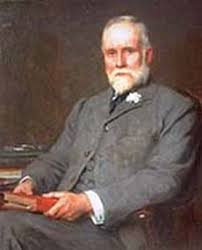
Rev.Bosworth-Smith(1839-1908)
Head of the State as well as of the Church, he was CESAR AND POPE IN ONE, BUT HE WAS POPE WITHOUT THE POPE’S PRETENSIONS AND CAESAR WITHOUT THE LEGIONS OF CAESAR. Without a standing army, without a bodyguard, without a palace, without a fixed revenue, if ever any man had the right to say that he ruled by a right Divine, it was Mohammed ; for he had all the power without its instruments and without its supports.He ROSE SUPERIOR TO THE TITLES AND CEREMONIES, the solemn trifling, and the proud humility of Court etiquette. To hereditary kings, to princes born in purple, these things are, naturally, enough, as the breath of life ; but those who ought to have known better, even self-made rulers and those the foremost in the files of time—a Caesar, a Cromwell, a Napoleon—have been unable to resist their tinsel attractions. Mohammed was content with the reality; he cared not for the dressings of power. THE SIMPLICITY OF HIS PRIVATE LIFE WAS IN KEEPING WITH HIS PUBLIC LIFE. … the contemporaries of Mohammed, HIS ENEMIES WHO REJECTED HIS MISSION, WITH ONE VOICE EXTOL HIS PIETY, HIS JUSTICE, HIS VERACITY, HIS CLEMENCY, HIS HUMILITY. . . By a fortune absolutely unique in history, Mohammed is a threefold founder of a nation, of an empire and of a religion. Illiterate himself, scarcely able to read and write, he was yet the author of a book which is a poem, a code of laws, a book of common prayer and a Bible in one, and is reverenced to this day by a sixth of the whole human race as a miracle of purity of style, of wisdom and of truth. It was the one miracle claimed by Mohammed—his standing miracle he called it: and A MIRACLE INDEED IT IS. . . . What more crowning proof of his sincerity is needed? Mohammed to the end of his life claimed for himself that title only with which he had begun, and Which THE HIGHEST OF PHILOSOPHY AND THE TRUEST CHRISTIANITY WILL ONE DAY, I VENTURE TO BELIEVE, AGREE IN YIELDING TO HIM—THAT OF A PROPHET, A VERY PROPHET OF GOD.
(Islamic Review – February 1923)