RELIGION AND POLITICS
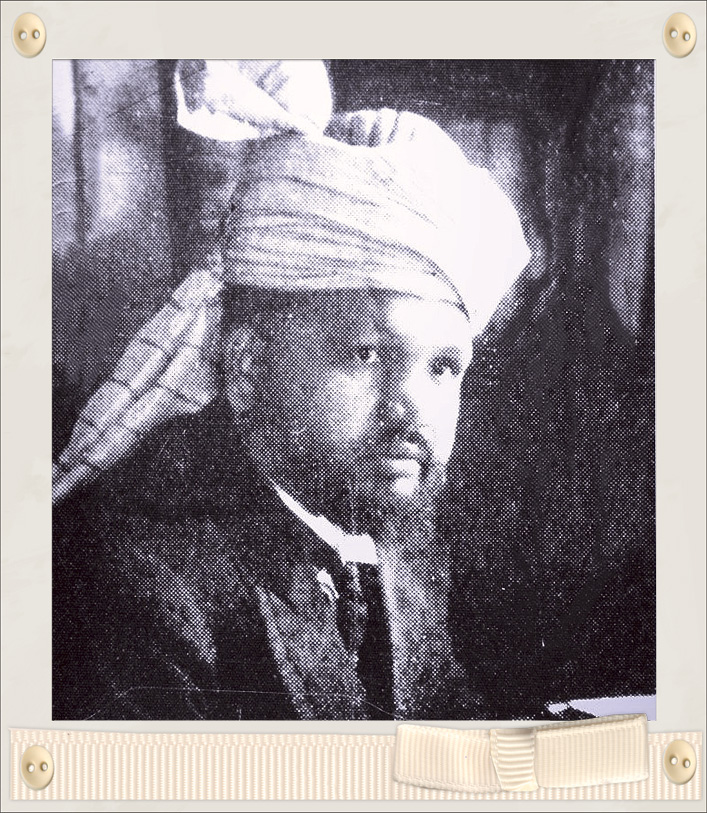
DISCUSSING the present position in India in its issue of July 18th, the Westminster Gazette attempts to gauge the true measure of support that the Caliphate movement commands among the Indian Muslims. The paper doubts the genuineness of the enthusiasm manifested on this account, and believes that ” much of the agitation is worked up.” It is at a loss to understand why a religious tinge be given to what is a plain political issue. ” Even so moderate a book as India in the Balance, by Khwaja Kamal-ud-Din, Imam of the Woking Mosque,” the Gazette adds with astonishment, ” persistently confuses the religious and political aspects of the Caliphate.”
Religion and politics! What on earth has the one got to do with the other? Such seems to be the psychology of the contributor. We come across the same frame of mind when we read an account of our ’Id-ul-Azha celebration in the same paper. The reporter was surprised to find that the Imam’s sermon —a purely religious affair—touched on matters absolutely temporal. How should the rulers of the world discharge their obligations towards the ruled, how may peace be secured and the happiness of humanity promoted, were things which he calls ” a spice of politics blended with an exposition of the four attributes of Allah.” But a reference to the farcical nature of the Genoa and the Hague Conferences he considers absolutely out of place in a sermon—” a political thrust.”
Such a mentality as regards the inter-relation of religion and politics is in no way a matter of surprise to us. We can well appreciate the viewpoint of those who, brought up under the influence of the Church, can see nothing in common between the two—those with whom religion begins on Sunday and ends the same day. Such, however, is not the Islamic conception of religion. Religion, in the world of Islam, is not a Sabbath-day institution, nor is it limited to the four walls of the house of worship. Religion is life, the whole of life. Its call is incessant, its field universal. In the day or at night, in the street or at home, in the field or factory, any time and anywhere, religion is the sole moulding force with a Muslim. He knows no such thing as the Lord’s Day and weekdays. To him every day is equally the Lord’s Day, full as it is with opportunities for doing good. Religion, in brief, is a mode of life, and as such co-extensive with the entire range of man’s life. There is no conceivable form of human activity but has a religious significance of its own. A Muslim divine is thus quite within his legitimate province when he discusses the why and wherefore of things, be they social, economical, political or what not. In fact, religion, divorced from life, is a contradiction in terms. We cannot do better than reproduce in extenso the conception of religion as outlined by the well-known theosophist, Mrs. Annie Besant Says the learned journalist in her New India, issue July 19th, under the title ” India and Islam”:
How far is it true that religion and politics should be kept apart? Is it even possible that they can be separated? For the truly religious man, religion permeates every thought and every action of his life. Religion is not a ” thing ” apart, it is an atmosphere. It is not a collection of doctrines, but an attitude towards life. A Hindu, a Buddhist, a Christian, a Muslim, may all be religious men, and their attitude towards life will then be similar. A religion is an intellectual presentment of spiritual truth, and formulates certain aspects of that universal Truth into doctrines; if the doctrines are imposed by an authority external to the man—of teacher, of book, of law—they become dogmas. These definitions are merely for the purpose of clarifying discussion, as so much futile discussion arises from misunderstanding of words.
It is noteworthy that the Yogis, the Mystics, of all religions bear witness to similar experiences when they attain their goal, reaching not the ” knowledge ” but the ” realization ” of the unity of the embodied and the Universal Spirit. But those who, belonging to a particular religion, see the aspects of truth by the intellect, and clothe them in the special raiment of words adopted by the Founder of their religion, who saw the One Truth in the region of the Spirit, but was compelled to expound it in the language of the intellect and the emotions to the less evolved people about him, quarrel over their separate religions. In a country wherein separate religions prevail, those religions are necessarily kept apart from party politics, the varying viewpoints from which the organized civic life of the people is seen, and that life is necessarily seen in a different angle from each viewpoint. But Religion as an atmosphere, as an attitude, cannot be severed from National life; it must judge all measures in their relation to the Oneness, and all morality by its accord or disaccord with the one Will that shapes evolution, the ” Power that makes for Righteousness.”
All comprehensive as the sphere of religion is, a limit must nevertheless be set to the province of a religious expounder, for the simple reason that being but human, he can best attend to only one thing at a time. To dabble in all things would perhaps end in accomplishing none. Division of labour is a principle that holds good as much in the case of religion as of any other branch of human activities. It is, no doubt, for the religious reformer to subject the moral implications of a situation—social, economical, political or any other—to the acid test of ultimate principles of truth, and to promulgate his findings broadcast. But to go beyond that would perhaps mean an encroachment upon the sphere of those better qualified to cope with the problem. He must expose and condemn wrong, for instance, wherever he may find it, but to prescribe ways and means to redress or remove it may better be left to one who is an expert in that particular branch. Social problems can best be worked out by a social expert and political by a political. Should there be a combination of all these in one and the same person, so much the better. But, humanly speaking, our limited energy is hardly a match even for one grand object, such as the research and promulgation of religious truth undoubtedly is. It is wiser to do one thing well than many in a slipshod manner. It is in this sense that the Imam, in his Foreword to India in the Balance, draws a line between religion and politics, not in the sense that the one has nothing to do with the other. Politics is perhaps the best field for the practical application of religious truths. Religion is the very salt of life—of all life.
M.Y.K.
(The Islamic Review, October 1922)