PREDESTINATION AND FREE-WILL

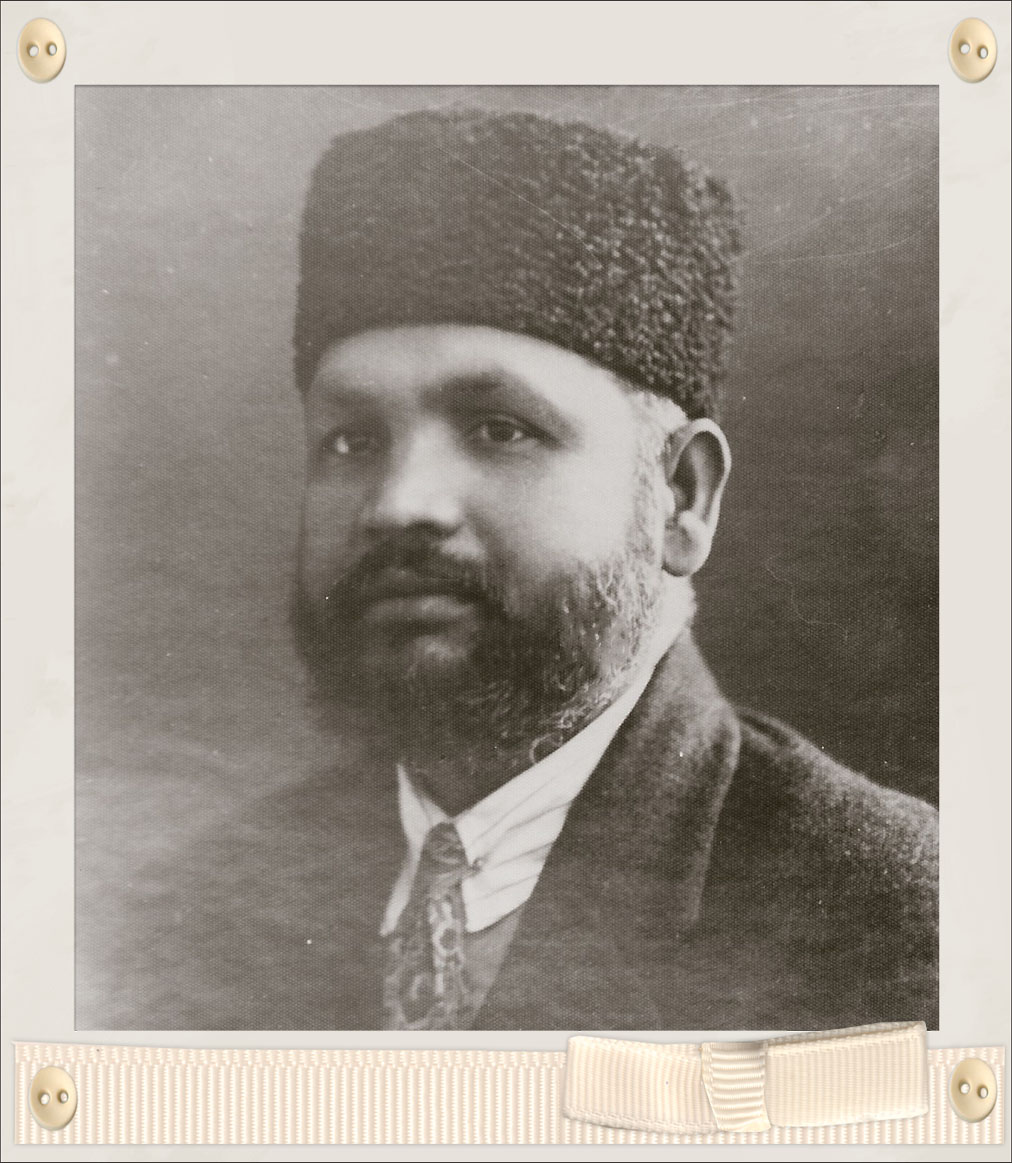
Mohammad Yakub Khan with Woking Mission Staff led by Khwaja Kamal-ud-Din
[Below we reproduce the text of a letter to the Editor of The New Age, by M. Yakub Khan.]
SIR, Dr. Nicholson’s review of Syed Ameer Ali’s ” Spirit of Islam,” which appears in your issue of February 22nd, fails to do justice to Islam as well as the learned author. In fact, in certain respects, it betrays a surprising lack of grasp—surprising, because one would have expected better of the learned ”lecturer in Persian in the University of Cambridge” and the author of Studies in Islamic Mysticism. May I trespass on the indulgence of your columns to put in a few words in this behalf?
Calling attention to the Syed’s assertions regarding Muhammad’sﷺ devotion to knowledge and reason, this noted Orientalist contends that ”statements of this kind can only be supported, by quoting, not the Koran, but certain sayings attributed to the Prophet. . . .” The italics are mine, and meant to point out that, whatever his verdict as to the authenticity or otherwise of the Prophet’s sayings, his scholarly pen should not have slipped into these words. Surely the doctor must have studied the Koran, and even a cursory skimming over its pages could not have failed to impress him with one idea—that, above all, the Book is, from cover to cover, one earnest appeal to human reason. This is no place to array quotation after quotation; these may make a pretty volume by themselves, and I must be brief. ” Do you not, then, reflect?”, ” Why do you not think ? ”, ” Would, they had but known,” ” 0 ye, wise ones ”—such are the repeated exhortations made. ” Lord, Grant that I may grow in knowledge,” is the prayer that Muhammadﷺ himself is told to ask. ” That he (the Prophet) may teach them the Book and Wisdom,” is described as the very Mission of Muhammad’s appearance. And in the same vein says the Book, ” Whomsoever is granted wisdom is granted much good.”
The problem of the freedom of will is another tangle of which the criticism would have done well to keep clear. Here, the comment betrays its own confusion of perception when it calls it incompatible with predestination and on that account holds Islam, which preaches both, side by side, guilty of inconsistency. It is, as I said, a case of a confusion of ideas. The doctor laid hold on a popular notion that came his way without ascertaining for himself how far it is borne out by the Koran, to which he attributes it—I mean the notion commonly known as fatalism. As a matter of fact, in Islam, there is no such thing as fatalism. The Koranic term, ” Taqdir,” on which this alien connotation has been thrust, is not susceptible of any such interpretation. Let us turn to the Koran for the explanation of the Koranic term:
” And the Sun runs on to a term appointed for it; that is the Taqdir ’ (ordinance) of the Mighty, the Knowing.” ” And as for the moon, we have ordained (lit. made its Taqdir ’) for its stages, till it becomes again as an old dry palm branch ” (xxxvi. 38, 39).
This is the Koranic definition of ” Taqdir,” which, in a nutshell, means just this: Everything in nature is subject to the reign of Law; and who can deny the truth? Man, a part and parcel of the same nature, has laws for himself, laid down by the Hand of God. Need I illustrate the plain point? We must, for instance, use our eyes to see, our ears to hear, our legs to walk with; and likewise, there are moral and mental laws to regulate the spiritual aspect of our nature. This is the reality of the matter. The principle is as much Islamic as scientific, and in no way inconsistent with the freedom of will. Freedom of will means freedom of choice, which does not necessitate freedom from law or ” Taqdir.” Subject to the Law, obeying ” Taqdir,” we yet enjoy freedom of choice. Walk, we must with our legs—this is the limitation of the law; but whether we do walk or not, is left entirely to us—this is the freedom of will. Law and freedom are thus not inconsistent, and when Islam preaches both together, it does the right thing. According to the Koran, God refrains from any interference with the free exercise of will:
” Surely, We have shown him (man) the way: it is for him to be thankful or unthankful ” (lxxvi. ” And upon God it rests to show the right way . . . and if He were to exercise His own Will, He would guide all unto right ” (xvi. 9).
Then comes the commonplace objection to polygamy. Surely this would have formed a fitter weapon in the armory of a petty propagandist rather than a Litt.D., who must know better. Briefly, polygamy is not an Islamic institution. Islam does not enjoin it, but only permits it as an abnormal provision to meet abnormal situations. Even then, it is restricted with a proviso—which the doctor has chosen for his attack—that makes it well-nigh impracticable. Equity in provision, in care, in attention, in comfort, in treatment—this is the restriction which places it beyond the range of a man of common moral caliber. Of course, equality in love is not demanded; for that is psychologically impossible, as says the Book:
” And you have it not in your power to do justice (in the matter of love) between wives, even though you may covet to ; (all you can do is) be not disinclined (from one) with total disinclination ; so that you leave her, as it were, in suspense . .” (iv. 129).
So far as practice goes, you will find not one out of ten thousand Muslims with a second wife. Could you say the, same of your so-called monogamous society?
YAKUB KHAN.
(The Islamic Review – May 1923)