MORAL PATTERN PAR-EXCELLENCE Part 1

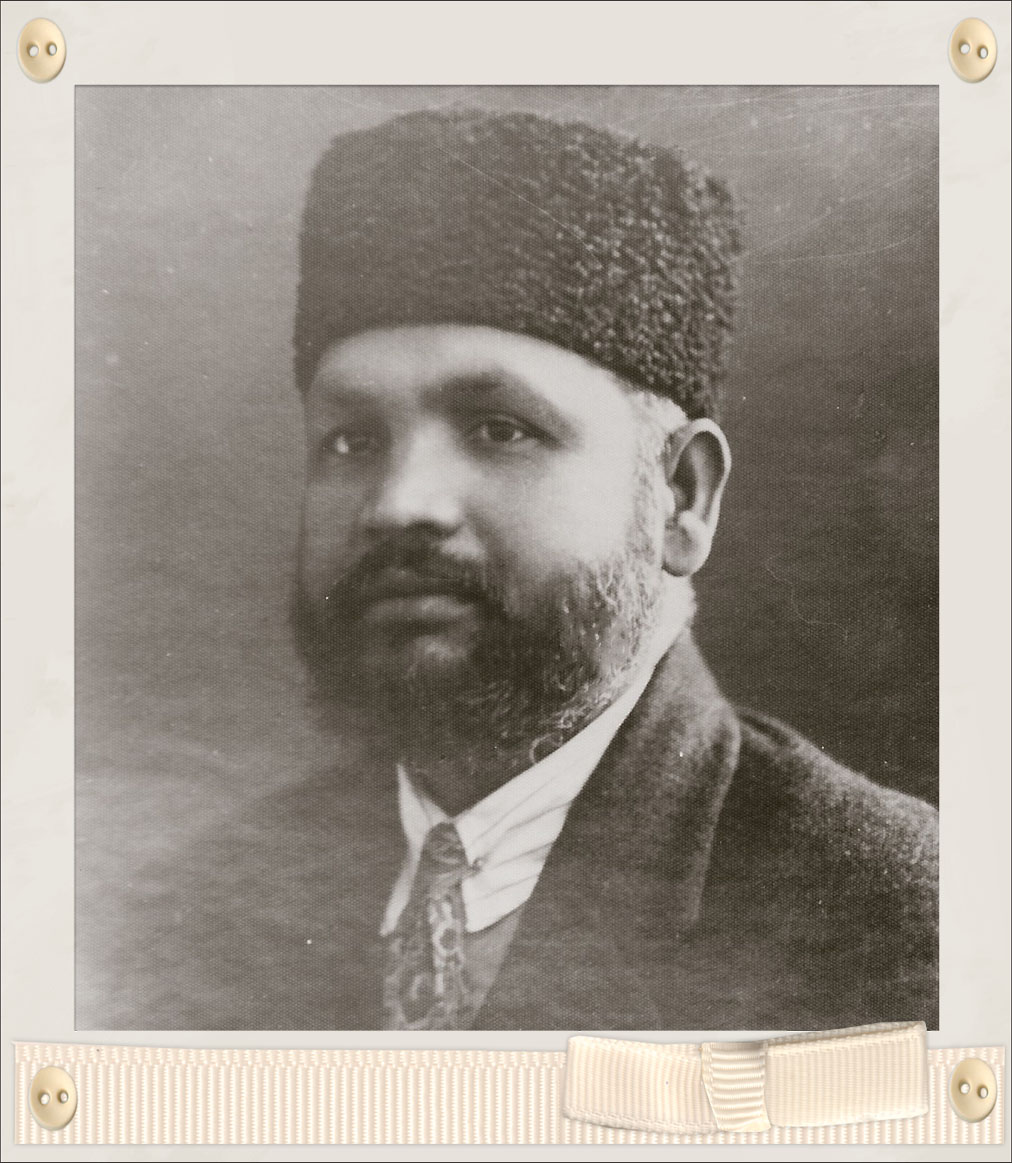
M.Y.K. – Imam, The Woking Mosque
لَّقَدْ كَانَ لَكُمْ فِى رَسُولِ ٱللَّهِ أُسْوَةٌ حَسَنَةٌ لِّمَن كَانَ يَرْجُوا۟ ٱللَّهَ وَٱلْيَوْمَ ٱلْـَٔاخِرَ وَذَكَرَ ٱللَّهَ كَثِيرًا
”Verily, in the Apostle of Allah is the best of pattern for you.”—The Holy Quran.
(Al-Ahzab (The Confederates) 33:21)
Man, they say, is a bundle of imitations. There is much of truth in the assertion. The instinct of imitation is seen at work at every stage of human life. It plays a remarkable part in making man what he is. What sort of habits, what form of manners and what type of character one may ultimately form depends in a very large measure upon the kind of pattern one has had before him. Do we not daily see our schoolchildren, so vividly bearing the impress of their teacher’s ways and manners? In fact, they model their movements, their gestures, their tone, even their dress sometimes on those of their teachers; for he is the ideal, the superman before them.
With advancing years, the blind imitation is sublimated into conscious inspiration which still forms a potent factor in regulating the course of one’s life. In every walk of life, man is subject, as usual, to such external influences. Constituted as he is, he cannot afford to dispense with the need of a model, to draw inspiration from, especially in an undertaking of an arduous nature in the sphere of moral evolution, in particular, which is so characteristically an up-hill task, in ninety-nine out of a hundred cases, it is well-nigh impossible to make a fair headway, unless there is a concrete example to inspire one at every step. In moments of darkness and despair, of trials and tribulations, one must have the footprints of a fellow brother that has walked before along that steep path or man is apt to give in. When downcast and dejected in the face of what appear to him to be insurmountable obstacles, he takes heart when he beholds another like him having braved the same difficulties before him, summons his energy afresh and manfully shoulders the wheel.
The influence of a model being so important a factor in the moral development of man. Divine Providence that has taken good care to provide for man’s physical wants could not be indifferent to this need of his nature. And as a matter of fact, God has been no less careful about his moral welfare. From the very dawn of life, He has been raising such models of virtue who should serve him as beacon-lights in this stormy ocean of life. They were one and all the moral ideals for the people among whom they were raised. Each one of the noble bands appeared at a time when dark clouds of evil and corruption overcast the moral horizon of the world. With their personal example of purity and goodness, they uplifted the generation from the depths of degradation to which it had sunk. They have each left us a rich legacy of moral examples, which is to this day a source of inspiration to us. Every one of this noble band of Prophets, in whatever country and to whatever people he was deputed, has left us footprints on the sands of time which infuse fresh enthusiasm in our drooping spirits.
Inspiring as the example of each and every Reformer undoubtedly is, it is unfortunately only a partial example. There has not been a single one of these racial Teachers who alone can suffice by himself to serve as a guide in the hundred and one aspects of this complicated struggle of life. In David, we have the example of Kingship, in Joseph, of a Minister of State, in Joshua, of a general, in Jesus, of a teacher of tender morals, but not one of them constitutes an all-comprehensive model. Home life, for instance is one of the most essential aspects of our life. Should sweet relations obtain among the various members of a family, the household is converted into a veritable heaven. The very word home is in that case a treasure of the happiest associations. But that same home may degenerate into a hot bed of misery and discord, if the husband, the wife and the children should disregard their mutual obligations. An example, therefore, to regulate domestic life is of vital importance to the happiness of man. But would it not be futile to look for any such guidance in the person of Jesus, who, so far as we know of him through the Gospels, never entered into matrimonial relations? Again, war has been another important phase of human life, ever since the dawn of social life. How a war might be averted, under what circumstances it has to be waged, how should one behave in the course of fighting towards the combatants, the prisoners, the females, the children, the aged, these and quite a host of such details must need be illustrated in the life of a Model Teacher or the result would be horror, misery and desolation as was witnessed during the two World Wars.
It is obvious that the manifestation of a particular moral virtue presupposes an appropriate set of circumstances. The virtue of forgiveness, for instance, can come into play only when one possesses the power to avenge a wrong, when one’s tormentors are thoroughly crushed and thrown entirely at one’s mercy. Forgiveness under such circumstances alone is worth the name. But where such a punishment is withheld merely for lack of the requisite power to punish, little credit can be claimed for the exercise of clemency. Likewise, a destitute, powerless man can hardly boast of humility. Suitable occasion for the display of this moral quality presupposes the possession of wealth, power or position. Sa’adi the great Persian sage, has aptly remarked that:
گدا گر تواضع کند خوی اوست
زگردن فرازان تواضع نکوست
Humility looks graceful only in the Mighty ones, in a beggar it is a matter of habit
It is a fact of history that the lives of pre-Islamic Prophets did not cover a very rich diversity of situations. Their moral examples, therefore, of necessity, cover but a limited sphere of human life. As a matter of faith, we do hold, that given the necessary opportunities, one Prophet would have acquitted himself as well as another. That is what the saying of the Prophet ﷺ that if Moses and Jesus had been placed in his position, they would have done what he did, connotes. But unfortunately, they were never placed in all the diverse situations of life and consequently only a few traits of their personalities were brought out. This is why as human society went on developing, Prophet after Prophet was raised to meet, the growing needs. The growing needs of humanity could no longer be met by the example of a foregoing Prophet and hence the necessity for a fresh one to arise. The Jewish race, for instance, long downtrodden under the heels of the Pharaohs had all manliness crushed out of them and were given to all the base and mean qualities that are born of political servitude. Their condition called for a Teacher like Moses with his teaching of “an eye for an eye, and a tooth for a tooth.” The need of the day was to rub some manliness in a degenerate people. The gentle virtues of forgiveness of enemy would have been quite out of place in case of a timid and cowardly people as the Jews of the day had become. Subsequently, however, when same people attained to great power and mighty kings and conquerors were born among them, the evils which crept into the changed society were of a different variety, calling for a different treatment. With the attainment of worldly power, they became haughty, hard-hearted, stiff-necked, given to letter-worship and formalism instead of the true inwardness of religion. These social conditions called for a Teacher who should administer them a dose in the gentler virtues of humility and forgiveness. Hence the appearance of a Teacher like Jesus with his emphasis on love of neighbour, and forgiveness to the extent of offering the other cheek if someone slapped you on one. It is the prevailing social conditions that determined the pattern of a religious Teacher.
The Prophet Muhammad ﷺ appeared at a crossroad of history when mankind stood at the threshold of a new epoch. In every sphere, the old world was dying, and out of its womb was taking shape a new world and a new era. In the realm of geography, the world was to shrink to the size of one country and racial diversity to give place to a merging of mankind, their customs and cultures, hitherto unknown to history. Hence the need for a Teacher with an all humanity outlook whose teachings should meet the needs of this new complex world, with its complicated problems. In the Prophet of Islam ﷺ we find the rise of such a World Teacher and in the Quran a message suited to the conditions and demands of the modern age. In the Prophet’s ﷺ personality also, we find an all-comprehensive model to serve as an inspiration in a vast variety of situations. The situations he was placed in covered every aspect of human life. From a helpless orphan boy to a mighty Head of State he had to pass through a large variety of situations, which brought out the mettle of his character in all its facets. Once a neglected orphan, then a persecuted citizen, again a soldier and a general on the battlefield, a lawgiver sometime, again a friend, a foe, a husband, a father, a conqueror and a ruler, there is hardly any sphere of human life in which the Prophet Muhammad ﷺ was not placed. And to every one of these he brought a lustre which shines undimmed at this distance of time. He is as good a model to a poor man in the hut as to a prince in the palace. A humble labourer and teacher find as much of inspiration in him as a general on the field of battle or a statesman in his cabinet, A son, a father, a husband, a friend, a foe, an-ally there is an object-lesson in his life for every one. This is what made him the Perfect Model for humanity. For this reason, the Quran describes him as one in whom the Divine blessing reached its culmination and as a mercy unto all the peoples of the world.
What mankind needs in grappling with the problems of life is a practical example of a full, good, useful, successful, happy life lived in the fear of God and fellowship of men. Good precepts and sweet sermons cannot carry us very far. In Prophet Muhammad ﷺ we have a Teacher who practised what he taught. Other religious Teachers no doubt must have lived up to their teachings. But unfortunately, their life stories have been so lost in myths, legends and folklore that for lack of historicity they can provide no inspiration in work-a-day life. In the Prophet Muhammad ﷺ we are fortunate in having his life events recorded in the minutest detail with historic authenticity. And hence the value of his example as an inspiration in the problems, obstacles, frustrations, pitfalls, oppositions, disappointments, success and smiling fortune that is the lot of all men.
There is not a single teaching that has come down from the Prophet Muhammad ﷺ but we find it fully implemented in his practical life. So strict was the conformity between his teaching and practice that Hazrat Ayesha, when asked what kind of morals and manners he had, replied: Kona Khulquhu Quran i.e., his morals were just what the Holy Quran is. In other words, whatever he did was in complete accord with the teachings of the Quran. Now, this is a characteristic in regard to which the Prophet Muhammad ﷺ enjoys a distinction not met with in any other religion. His own life, every incident of which has been so carefully preserved, gives us the most authentic interpretation of his teaching the Quran. Here there is little room, therefore, for the kind of creed and dogma differences and dissensions that we find in other faiths. This accounts for the fact that while all other revealed religions are so deeply divided and subdivided into sects and schisms, the faith of Islam retains to this day its original integrity. There are differences among Muslims, but all these relate to minor points. So far as the fundamentals are concerned, they are the same, among all schools and shades of thought in Islam. Strictly speaking, there are no sects in Islam in the sense in which we find them in other religions: the reason is that a teaching illustrated through practice leaves no room for ambiguity of interpretation and hence the unanimity of the entire Muslim world on the basic teachings of their faith. This is not the case in any other religion. Since the practice of the Teacher is not available to throw light on the real significance of what he taught, we meet with schools of thought diametrically opposed to another.
What makes the confusion worse confounded in the case of other religions is that nothing remains in our hands of the life stories of their Founders except a few hearsay incidents, compiled long after they were no more. They Must undoubtedly have set up the highest of models to their people and lived up to their teachings. But we simply don’t know anything about it that can be regarded historic and authentic. Their examples, therefore, in the form as they have come down to us, carry little conviction, and hence their lack of inspiration and driving force. Perhaps there was a Divine purpose underlying the obliteration of the true teachings of these Prophets as well as of their life records. Nature helps preserve only what is useful and when it ceases to be so, it is against its law of economy to perpetuate it. The teachings of racial Prophets served their purpose in their day, and became outmoded with the growth of society and the new demands it brought. A curtain of oblivion was therefore drawn on them. The limited nature of their teachings suited the requirements of the particular age. At the advent of the Prophet Muhammad ﷺ human society had reached a stage of development when, thanks to scientific inventions and fast means of transport, all racial and national barriers were to crumble down, and mankind was to be merged into somewhat of a single community. It was in the fitness of things, therefore, that a common humanity so evolved should have a common Teacher who should weld them into a universal brotherhood. That was the significance of the advent of the Prophet Muhammad ﷺ, who came with a message for the whole of the human race. This is no empty claim. It is amply borne out both by his perfect teachings and his all-comprehensive example. The Quran contains a complete guidance to meet the needs of the highly evolved state of society of the present day. Unlike other scriptures, it has to this day been immune against the corrupting influences of the lapse of time. Its teachings have come down to us intact to the smallest diacritical point. Nor is there the slightest apprehension that any corruption may in future creep into its pure text. Apart from the modern printing facilities which ensure the perpetuation of the Quranic text as it is, the Quran has been preserved in the form of human memories. There are thousands of “Huffaz” in all Muslim lands who have committed it to memory. This is a distinction which is the monopoly of the Islamic scripture alone. No other scripture was ever committed to memory by a single man. This is a safeguard beyond the reach of the worst ravages of time. Even if a revolution sweeps the world or wipes off the entire documentary record of the world, the Quran shall yet survive such a universal annihilation. Thus, to all human calculations the security of the teachings of the Prophet Muhammad ﷺ has been guaranteed for all time to come.
The Quran and the Prophet’s ﷺ life-story, both authentic and historic, are the two imperishable sources of Divine light and inspiration. No seeker-after-truth who earnestly seeks God and wants to lead a life in accord with His will, can do without this twin beacon of light in this otherwise dark and dismal world sunk deep in the sordid pursuits of the flesh.
(The Light – 24 october, 1958)