MEANING OF PAKISTAN
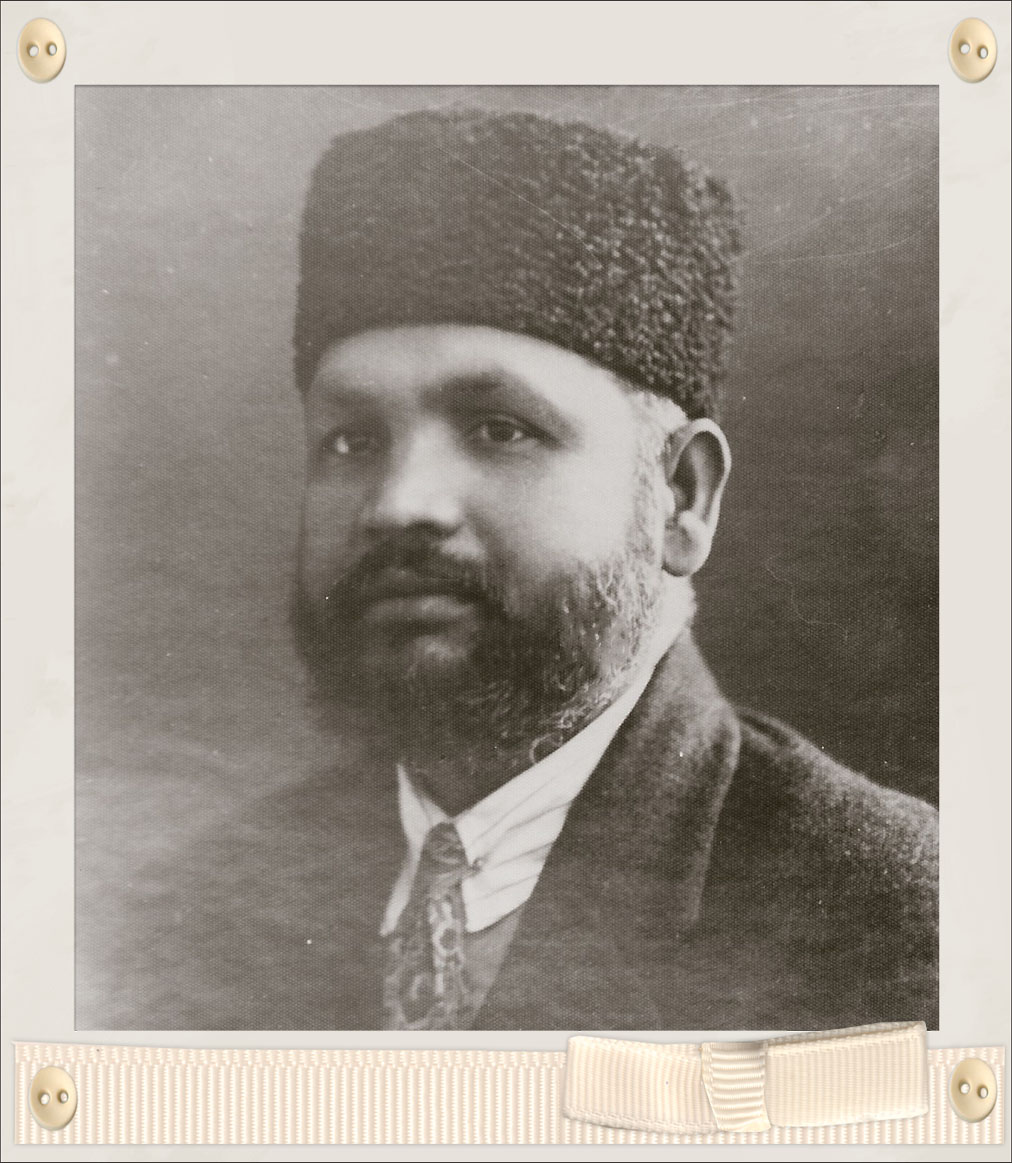
Mohammad Yaqub Khan
Editor: The Light
وَمَآ أَرْسَلْنَـٰكَ إِلَّا رَحْمَةً لِّلْعَـٰلَمِينَ
“We have not sent thee, 0 Prophet, but as a mercy to the whole of mankind.” – The Quran.
Pakistan has been understood by different people to mean different things according to their tastes, outlook on life and cultural background. To the average man it means freedom from slavery to foreign rule and the Muslims own rulership – a matter naturally for jubilation and rejoicing. A Maulana-looking man whom the present writer had the fortune or misfortune to have for a fellow-passenger in a Lahore omnibus had his own meaning to put on Pakistan. This venerable old man, wearing a flowing beard and pious appearance, had under his arm a small bundle-like thing wrapped up in a sheet of cloth. As he stepped into this crowded bus a Hindu passenger, when jolted, chanced to brush against the bundle. The Maulana forthwith flew into a fit of rage. His fury knew no bounds. “Are you blind?” he shouted. “Don’t you see that this bundle contains the Holy Quran? Well, just wait. Now you people will get a danda both from above and from below. So far you did as you pleased. Times have now changed. This is Pakistan now! Now you will have your hands cut.” So, this was the Maulana’s definition of Pakistan. Another Maulana here in Abbottabad where the writer is sojourning for the summer is preparing to celebrate Pakistan in his own way. “Let August 15 dawn,” he goes about threatening people “and I shall see how people don’t come to the mosque for prayer. With a durra in hand, I shall make a round of the town and administer the durra right and left. That is how I shall teach them that Pakistan has come.” This is another version of Pakistan typical of the Maulana class as a whole with whom the whole joy and glory of Pakistan consists in seeing people’s hands amputated and their backs striped with holy durras.
فکرِ ہر کس بقدرِ ہمّتِ اوست
This may be the popular and ecclesiastical conception of Pakistan; but we are afraid, this is poles asunder from the correct Islamic attitude which has been so succinctly summed up in the verse at the top: “We have not sent thee (O Prophet ﷺ) but as a mercy unto the whole of mankind.”
When, after 13 long years of incessant barbaric persecutions which the Prophet ﷺ and his comrades suffered at the hands of the foes of Islam, opposition to Islam was finally crushed and the Prophet ﷺ entered Mecca, the enemy stronghold at the head of his army, let us study how these earliest standard-bearers of Pakistan celebrated the advent of Islamic rule. Right in the midst of this so-called triumphal march of the army of Islam through the capital town of the enemy, the Prophet ﷺ who was leading this procession mounted on a camel was seen Prostrating on his camel’s back before God Almighty in humble thanksgiving for the victory which He had vouchsafed to the Truth of Islam. There was no vaingloriousness, no vulgar demonstrations of power and pomp which mark such occasions. And what was the treatment he meted out to the ring leaders of his erstwhile blood-thirsty enemies? There was no brandishing of swords, no emission of fire and brimstone.
لَا تَثْرِيبَ عَلَيْكُمُ
(Yusuf (Joseph) 12:92)
He proclaimed, i.e., “This day there shall not be so much as a reproach against you.” Mark the contrast to the way the so-called civilized nations of the world in this twentieth century treated their German enemies when top-ranking Nazi leaders were handed over to the hangman or condemned to penal servitude. From Mecca to Nuremburg is a far cry indeed. There is no comparison between the two. The one came as a “mercy unto mankind”; the other symbolizes the cult of brute force. This is the true meaning of Pakistan. Pakistan must be a mercy to the Muslims as well as to the non-Muslims. Under the flag of Islam there must be no discrimination between Muslim and a non-Muslim and the justice and beneficence of the rule of Islam must extend to all alike.
When the Holy Prophet ﷺ despatched Má az-bin-Jabal as governor to Yemen what was the Instrument of Instructions that he gave him?
“These People of the Book,” he told him, “Are a gentle-hearted folk. Give them good tidings! Don’t frighten them!” “And see!” went on the Prophet ﷺ “that you touch not their property.”
This was the State policy of Islam, dictated in no dark chamber of secrecy but given orally in public on the high road as the Prophet ﷺ accompanied by a whole procession of Muslims went out to see this Governor-designate off on the route to Yemen. This is the meaning of Pakistan – respect for the feelings of others and scrupulous security of their life and property.
The history of early Islam is ablaze with this light and glow of the most humanitarian principles which Islam stood for and which the rule of Islam was meant to implement. Umar the Great, whose very name was a terror to a corrupt official of the State, or an official given to an indolent and luxurious ways of life, personally carried bags of foodstuffs to destitute homes on his own back – and at the dead of night when nobody was about to see it. Rulership meant service of the people; it meant relieving suffering, distress, and poverty. In Pakistan there must be no man who does not get two square meals a day. Pakistan must mean a struggle against poverty, against ignorance and against disease.
It is sad to reflect how badly out of shape this out and out humanistic system has been distorted with the result that the non-Muslim dreads the very name of Islamic rule. And the blame is ours. We have so enmeshed ourselves in petty unimportant details that we have lost sight of the high mission, the great destiny that Islam stands for. It is like losing the wood in the trees. Did not the Prophet ﷺ sum up Islam as “Glorification of God and kindness towards the creatures of God”? Did he not say: “A Muslim is one from whose tongue and hand fellow-men are safe”?
Non-Muslim friends ask: What is Pakistan rule going to be like? They shudder in their shoes at the thought that it may be a “theocracy”. They must have very fantastic notions about theocracy. And they have perfectly good reasons to dread this kind of rule. The fault is ours. In precept as well as in practice we have taken good care to paint Islam in the most frightful colours. The present writer still vividly recollects how a highly educated Thiyya doctor in Travancore State, newly converted to Islam, took a sudden fright when he saw a rather biggish knife in the writer’s handbag. He thought it was meant to circumcise the converts. This was many years ago. The Thiyyas who are a well-educated schedule-caste community had revolted against caste tyranny and declared to join Islam or Christianity. They favoured Islam but the local mullas had set up an insurmountable hurdle in their way. They had given them to understand that if they embraced Islam the first thing they shall have to do would be to submit to the surgical operation of circumcision but for which they could not be admitted into Islam. It was quite a tough job to reassure them that in the case of grown-up converts this was not essential for admission into the fold of Islam and it took a long course of lectures to disarm their fears on this score. The converted doctor also collaborated with the writer, went from place to place with him and addressed meetings of his kinsmen, explaining the human equality they would enjoy in Islam. Though quite convinced as to the futility of the fear-complex of circumcision he could not help shrinking as his eye-fell on the knife in the writer’s bag. “You too” he exclaimed, “are carrying a knife to circumcise converts with!” And instinctively he stepped back quite a good few pace to a what he considered to be a safe distance. To the Thiyya Islam was circumcision and circumcision was Islam.
This is what we have done to that great humanitarian message. Islam meant primarily to promote and foster fellow-feeling between man and man, to solve the many big problems, social, economic and spiritual that confront mankind, to combat evil, injustice and oppression and to elevate and uplift the down-trodden masses. A message which in the words of the Quran is meant first and foremost, to bring mercy to mankind at large has been reduced to a cult exciting nothing but horror in the minds of others.
Our rejoicings over the fact that the chains which bound us for a century and a half have been shattered, that the nightmare of slavery which weighed us down with its dead weight has all of a sudden been lifted and once more we are as free as the sea-breeze of Karachi where the sweet breeze of freedom will be officially set in motion in a few days, are perfectly natural and legitimate. But in the midst of these celebrations, let us not forget that Pakistan is more of a call to duty, a heavy responsibility, a trust and a commission than a mere matter for jubilation. It is said of Umar-bin-Abdul Aziz, another God-fearing typically Islamic caliph, that when he was elected to this exalted position, he had to be supported to mount the pulpit to address the audience. Rulership was a heavy load, he said, and its crushing weight suddenly transferred to his shoulders had hardly left him strength to rise on his legs.
lt is in this spirit, a spirit of humble thanksgiving to God Almighty coupled with a sense of very grave responsibility that we must hail the dawn of this great event in our lives. Over a thousand years ago, the sands of Sind witnessed one such phenomenon when Muhammad Ibn Qassim for the first time unfurled the flag of Islam here. Today, after many a fluctuation of fortune, after many an up and down of history, that same Crescent once more proudly looks towards India across these very sands. This is a historic event. We may justly feel proud that this time it has fallen to our lot to raise the flag of Islam at this historic spot. But we must not forget that the responsibility it devolves on us is equally great.
This Flag of Islam which is to replace the Union Jack throughout Pakistan on August 15 is a Flag with mighty traditions. Viewed back in retrospect through the dim centuries, quite a host of great men and great deeds will be found clustering around it. A whole cavalcade of illustrious figures of history – saints, heroes, warriors, generals, statesmen, monarchs, emperors, philosophers, scientists – crowd upon the eye of imagination as one looks at this Crescent and star bespangled green Flag. Wherever this Flag has gone, peace, prosperity, humanity, civilization have flowed in its wake. From Cordova to Baghdad, it shed light and lustre wherever it went. It is these great traditions that we inherit along with this historic flag.
Pakistan means this high historic heritage – heritage of the great and glorious traditions of Abu Bakr and Farooq, of Khalid and Tariq on the one hand and of Averroes and Avicenna on the other. It is these long-faded traditions that the builders of Pakistan have to re-discover and revive. In the midst of rejoicings let us not forget this only real aspect of Pakistan that matters. Heavy is the task that awaits us, if we are to be true to these traditions. Pakistan is a call to every one of us whether a politician or a minister, a soldier or a sailor, a scholar or a businessman – a call to rise above all petty considerations, personal or doctrinal, to catch a correct glimpse of this high, broad, humanitarian and chivalrous conception of Islam and strain every nerve to build up Pakistan into a State worthy of these great traditions.
This, in plain language, is the one and only meaning of Pakistan. And in our rejoicings on August 15 over the establishment of Pakistan, we must not forget to catch hold of this inner spirit and basic urge of rulership in Islam. It is in the light and glow of this spirit that we must set about building Pakistan. Modern conditions have brought, problems of their own along with them which builders of Pakistan will soon be called upon to face and solve. We may tackle these problems according to modern methods by all means. But for the spirit we must look back to that golden era of Islam when rulership meant service and uplift of the people, when peace and prosperity reigned and light and learning flourished wherever the flag of Islam went.
(The Light – August 15, 1947)