MATERIALISM AND ATHEISM REFUTED (PART 1)
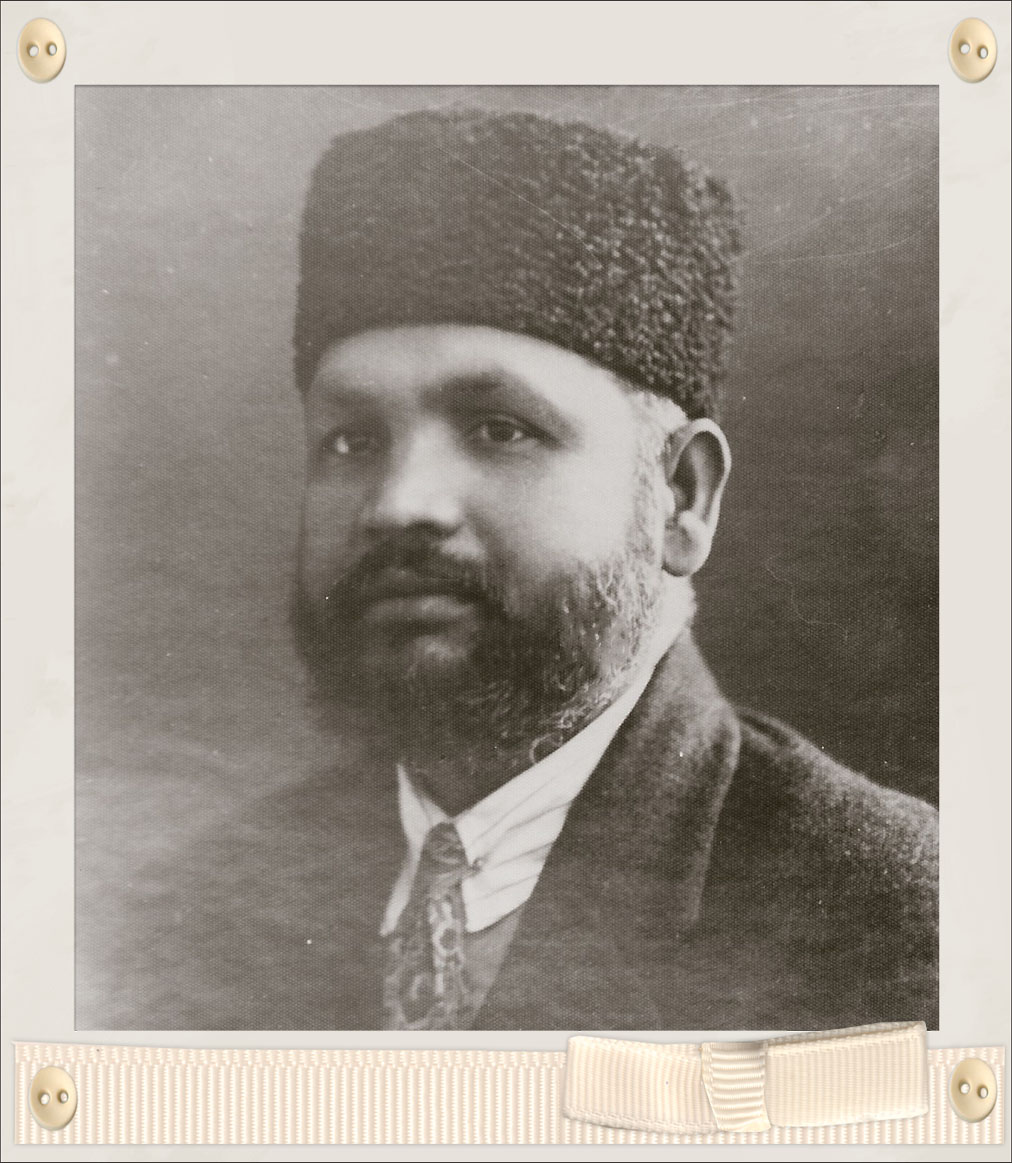
Mohammad Yaqub Khan
Editor The Light
How do we know that we have a Soul?
Conceptions about soul and body
According to the oldest and most general view of human nature, man consists of two parts – soul and body. The soul, however, is himself: the body belongs to him. He is essentially soul; the body is his box of tools. To soul belong conscience, will, reason, love. As soul, he is free; as soul, dwelling in body, he is limited. Body helps the soul and is its servant; but at the same time, holds it in and shuts it up. Soul aspires upward to God and heaven; body draws it down to earth and time. This has been the general belief of Chinese, Persians, Hindus, Greeks, Romans and Jews – in ancient times and in modern times – of Christians and Muslims of savages and civilised, of philosophers and peasants. Almost all believe naturally that there is an immaterial principle in man – something which cannot be seen, touched, heard – something not to be perceived by the senses, but only known by consciousness – something which remains when the material envelope is dissolved and separated, which continues as a disembodied spirit when the body has returned to the elements.
One proof of this widespread opinion is the general belief, in all ages and all lands, among the common people, of the existence of ghosts. There never has been a nation or age in which the ignorant have not believed, more or less, in the possibility of ghosts. But if there is nothing in man but body, nothing can possibly remain after the body is dissolved. If one believes, therefore, that a ghost is possible, though he may not believe that one ever returned, he must believe in soul. Hence it appears that a belief in soul has not prevailed among the educated and learned alone but seems to have come to the ignorant and uneducated also, by a kind of instinct. But the wisest of our have also believed in soul since they have believed in a continued immortality after the dissolution of the body. Socrates and Plato – the greatest thinkers of antiquity – teach the existence of soul as independent of body, and perhaps as the source of body. The great religions of the world have taught the same – those of Egypt, Greece, Rome; those of Zoroaster, Buddha, Confucius, and Muhammad ﷺ. All have agreed in the doctrine that man consists of soul as well as of body. They have taken different views of the nature of soul but, in some sense, all have accepted it.
Construction of the Body
The body itself is something more than matter. Particles of matter, however united do not by themselves make a living body. Where there is life, and growth, making a body, there must be a living soul to give unity to these elements. The particles of matter in every human body come and go. We have none of the material atoms in our body to-day which we had a few years since. From whence, then, does the unity of the body come? What continually makes of these elements one and the same body? nothing which we see – nothing which the surgeon’s knife, searching every organ, can discover – nothing which the finest chemical analysis can detect. Yet there must be some power there, gathering, moulding, distributing the carbon oxygen and lime, organising them, and preserving, year after year, one and the same organic form. Compelled by these facts, Aristotle says that while man has a rational soul, every animal has a living soul, and every plant a vegetative soul.
The most obvious proof of its existence, and that which has probably produced this widespread belief in the soul, is the unity of all organised and living beings. In such beings, all the parts are correlated, to use an expression taken from Kant. This philosopher says, that in a living body, the cause of the mode of existence of each part is contained in the whole. Death leaves each part free to pass through changes belonging to itself alone. Cuvier gives a similar definition of the living body. Every organised being, he says, forms a whole: a close corporation in which every part acts in relation to the action of other. If it is a carnivorous animal its teeth, its claws, its organs of motion, its senses, its digestive organs, are adapted to this end. A living body grows, not by juxtaposition (as is the case with a stone), but by intra-susception, or growth from within life is a power which resists chemical laws which begin to take effect on the body as soon as death arrives. Even if life has a physical basis; in a peculiarly organised substance, this does not explain the unity of a body. What carries on that which may be called ”the vital vertex” or perpetual exchange of particles; the old being taken away, and new ones put in their place? There is a unity to every organised and living body, which is not in the separate parts, nor in the separate parts taken together. It is nothing which the senses can perceive, which chemistry can detect – nothing possessing material properties. Then it is not anything material.
Unity of the living being
It may be said that we find occasionally an apparent unity in a physical body, in which the particles come and go, but the same form remains; and yet where no one suspects the existence of a soul. For example, a cloud sometimes remains stationary over the top particles of aqueous vapour of which it is composed are rushing into it on one side, and out of it, on the other. So, there are found on the surface of a glacier, deep wells called moulins, which always keep the same position, though the particles of ice are moving steadily on, day by day, at the rate of one or two feet every twenty-four hours. But in these cases, the unity comes from external physical forces, which can be observed, when the aqueous vapour, in an invisible state, is carried by the wind against the side of the mountain, it is obliged to rise in order to pass over it. When it reaches a certain height, the temperature is such that it is precipitated, and becomes visible. Passing on it crosses the summit, descends on the other side, and arrives at a higher temperature as it descends the mountain side which causes it to evaporate, or become invisible. External forces create or preserve the unity of the living body. That is something action on it from within; and this something escapes all the tests which detect physical facts and laws.
Materialistic view of soul
Nevertheless, there has almost always been a minority which has taken a different view and declared that there was nothing in man but matter, and the result of matter. The Sadducees among the Jews, the Epicureans among the Greeks and Romans, the Materialists in modern times, have so thought. They argue in this way: ”We are certain of the existence of matter, but not certain of the existence of anything else. We know that we have a body: we do not know that we have a soul. The existence of soul is therefore a hypothesis; and an unnecessary one, because all Mental phenomena may be accounted for, as resulting from matter. If body can separate blood into bone and muscle; or it can digest food, and make chemical compounds of the air why can it not also produce thought and feeling? If the liver can secrete bile, why may not the brain secrete ideas? Till we find out all that body can do, and reach its limit, why think that there is anything more? Let us be contented with one cause until more are found to be necessary.”
Certain facts of experience seem also to confirm the views of Materialists. For example, when the body is well and strong, thoughts and feelings are also sound and healthy; when the body is sick and weak, the mind is weakened too. When the body grows old and feeble, the memory is impaired, the judgment is less vigorous, the feeling grow torpid. When the body dies, there is nothing more seen or known of the man. “As far as we know, the man has also come to an end,” says the Materialist; denying, of course, all the accounts of spiritual appearances. A stone falls on your head, and a little bit of the skull presses on the brain. All thoughts immediately stop and remains suspended until the surgeon comes and trepans the skull and removes the pressure. Instantly thought, feeling will return. “Does not this show that the soul is the result of the body?” asks the Materialist.
The Immaterialist’s rebuttal
“By no means,” replies the immaterialist, “It only proves that while the soul is connected with the body, it cannot do its work without it. Deprive a skilful carpenter of his tool-chest? The body is the tool-
chest, which the soul uses; it is helpless without it; but it does not follow from that that the soul is the result of the body. That the soul, in this world can do nothing without its body, no more proves, that the soul comes from the body, than the fact that a surgeon cannot operate without his instruments proves the surgeon to be the result and growth of his instruments. The soul is in full activity thinking, feeling, acting. An extra drop of blood in the brain stops all this thought in a moment. True. And so, an astronomer is making some great discovery through his telescope. A film of mist comes over the object-glass. His discovery stops in a moment: all his power comes to an end. But you would not say that the astronomer was the result of the telescope because he cannot act without his telescope. Why, then, argue that the soul is the result of body, because it cannot act without the body.
The soul is like a musician sitting at his organ and drawing from it delicate and delicious music. But the instrument grows old, the bellows refuse to supply the air to the pipes, the pipes crack; the keys are out of joint. The musician no longer can play as before. As the organ gradually grows old, weak, dilapidated, out of tune, the power of the musician seems to grow weak too. At last, the organ refuses to give a sound. It stops. The musical power stops too, at the same time. Do you infer from that that the musician is dead, or that he is only a property of the organ? No. Give him a new instrument, and you will see that his power is as great as ever. So, when the human body grows old, the brain becomes feeble, and we cannot recollect as we once could; we cannot think as we once could. That is because the instrument of thought, love, memory and imagination has decayed; that is all. Give the soul a new instrument, a spiritual body; and it will be seen that its power is the same as ever.
Materialists’ rejoinder
The Materialists say, “We are certain of the existence of matter not of spirit. We know that we have a body; we do not know that we have a soul.” I deny the fact. I assert that we are no more certain of the existence of body, than we are of the existence of soul. All we know of body is its properties that it is, hard or soft, square or round, sweet or bitter, coloured or colourless, fragrant or inodorous, having taste or insipid. Just so we know the qualities of soul that it is something which thinks, remembers, hopes, fears, loves and hates, chooses and refuses. I am just as certain that I love that I think, that I chose, as I am that I can touch, taste, and smell. I know my thought as certainly as I know my sensation.
You say, we know what matter is, but do not know what soul is. What, then, is matter? All you can say is, that which we perceive through the senses, that is matter. Matter is that which I can see with my eyes, taste with my tongue, touch with my hands, smell with my nose, hear with my ears. Very well But I cannot touch a thought, or taste a feeling, or smell a resolution, or measure the size or my hope and fear. Then these are not matter, but something else. Then there is something else in the world besides matter; and something of whose existence we are just as certain as we are of the existence of matter.
M.Y. Khan
The Light – January1, 1960)