Love Thy Enemy – Part 3
The Man who Lived It
”Lord! Forgive them, for they know not what they do.”— Jesus on the Cross.
”Lord! Guide my people, for they know not.” — Muhammad ﷺ at Uhad.
”Steep is the peak where dwells the goddess of Love and narrow and dreary the track leading up to her. Numerous the ravines that must be traversed, numerous the cliffs that must be surmounted; numerous the heights that must be scaled, numerous the stumbling blocks and pitfalls that must be avoided. The would-be pilgrim must have extra-ordinary sturdiness of legs and daring of heart to rough it all. In theory, the Quran has done all, possible to do to make the task as light as possible. It has furnished us with glasses, as already discussed, through which whole mountains of obstacles shrink into mole hills. But when it comes to actual doing, we feel as if our heart would give way. Weak as we are, we want something more than cold logic to give us the necessary push and go. We must have a kick to start. Where to get that kick from? Obviously, from some living throbbing example rather than from a page of cold print. The thought that someone else before us has actually tread along that risky rocky path fills us with hope, with courage and with aspiration. What one man has done, another can do, we say to ourselves and we take heart and carry on. Where to look for that example, for that inspiration?
Here again, Islam has not left us in the lurch. Not only does it give us a detailed chart of our route ; it also places before us, as if on a cinematographic film, the life-drama of the hero who actually braved the rough and tumble of that route. And there is only one such hero, the hero of Islam, whose footprints the pages of history have taken care to pre-serve along all those ups and downs. No doubt, there are some other figures too. But unfortunately, they are mostly either too dim or too legendry to carry conviction and hence, to inspire. One such figure we see shine even at this long distance of time at Calvary. ”Lord! Forgive them,” we hear him murmur to His God on behalf of those that sent him to the Cross, ”Lord! Forgive them, for they know not what they do.” We find him at the summit of that glory of the spirit—Love of enemy. We admire him. We adore him. And we wonder how he managed to accomplish that great feat. We hunt up the pages of history to trace his footsteps on the long and arduous journey in the hope, that on the stages we are passing through, they may be of cheer and inspiration to us. But alas, we did so in vain. History tells so little. And on the topic of this, when we are told that he was God in the garb of man, this means another bucket of cold water on our spirit of emulation. Of course, nothing is impossible for God. It is not for us, poor mortals, to aspire to those heights. We feel inspired when we see that another like ourselves has done a great thing. But if Jesus was Divine by nature, as alleged, he could be no example to me… I want a man like unto me to show me the way and set me the example. A deer may have swiftest of legs, but that does not in the least prompt me to imitate her.
Comb the pages of history, of all ages, of all nations and you will find there is but one man who answers our purpose. It is Muhammad ﷺ, the hero of Islam. ”I am a man like unto you,” he calls out to us all and as such, as one of us, gives us a practical lesson in love which has never been surpassed. It is not only a side glance or a partial view that we have of him. It is a full-size portrait. From an orphan child to the spiritual as well as temporal overlord is certainly a long way. And all through, we find his soul attuned to but one key—love of man. As a citizen, as a friend, as a foe, as a son, as a father, as a husband, as a soldier, as a general, as one vanquished, as one victorious, as one oppressed and persecuted, as one loved and venerated, as a workman, as a legislator, as a king—he was thrown in a multitude of diverse situations, but was never found wanting in that dominant trait of his character—love of man. Love was the keynote, the song, the burden of his sweet, rich, eventful life. Before, however, I come to present that picture of love in its perfect loveliness, let me give you just a glimpse of its ravishing beauty.
Let us, for a while, recall the ghastly scene at the field of Uhad. A relentless enemy, 8000 strong, out to crush Islam and its founder at the point of the sword! Of the thousand, ill-recruited and ill-equipped men of Muhammad many have already fallen. And he, Muhammadﷺ , has become the target of the attack from all sides. His friends, however, were made of manlier stuff than those of many preceding Prophets. They do not bolt off when they see their Master knocked down, lying in dust, wounded and bleeding. They take him in a ring and repel with their lives all attacks on him. Showers of spears and arrows that pour in thick and fast, in vain seek to get at Muhammad ﷺ. They find an adamantine wall of men to ward them off.
Let us search the bleeding Prophet’s heart at this most critical juncture of his life. Perhaps more critical than the Cross of Jesus. In the case of Jesus, perhaps all hope of rescue was not altogether lost even to the last. Jesus knew, Pilate, in his heart of hearts, did not approve of his execution.
While actually on the Cross, he was still expecting, it seems, to be saved—” Eloi Eloi Lama Sabaktani,” ”Lord! Lord! Why hast Thou forsaken me!” But Muhammad ﷺ at Uhad is literally in the jaws of death. His blood! —that is the one cry of a formidable and unscrupulous foe. The Prophet’s own dear uncle has been slain, even his liver torn out and eaten up. Most of his friends are weltering in their own blood. He himself has been wounded and knocked down. Death is staring him in the face. There is not the ghost of a chance of escape, not the least hope of quarter at the hands of his blood-thirsty enemies. Ah! this is a far more ghastly picture! But let us at this most horrible hour, probe the depths of Muhammad’s heart. What do we find? Any anxiety on his own account or on that of his friends? Does he at that critical juncture think of himself and ask God to save him? No, it is the same love of his people that we find left in his heart to the exclusion of everything else. And what kind of love? Nothing lukewarm, nothing abated. He is not content with, Lord! forgive them, for they know not what they do. Forgiveness is at best something negative. And his heart was overflowing with love for his enemy even in proportion to their thirst for his blood. ”Guide, my people! you hear him pray in low whispers, as he lies on dust, besmeared in blood, ” Guide, my people! For they know not. This is ”Love thine enemy.”
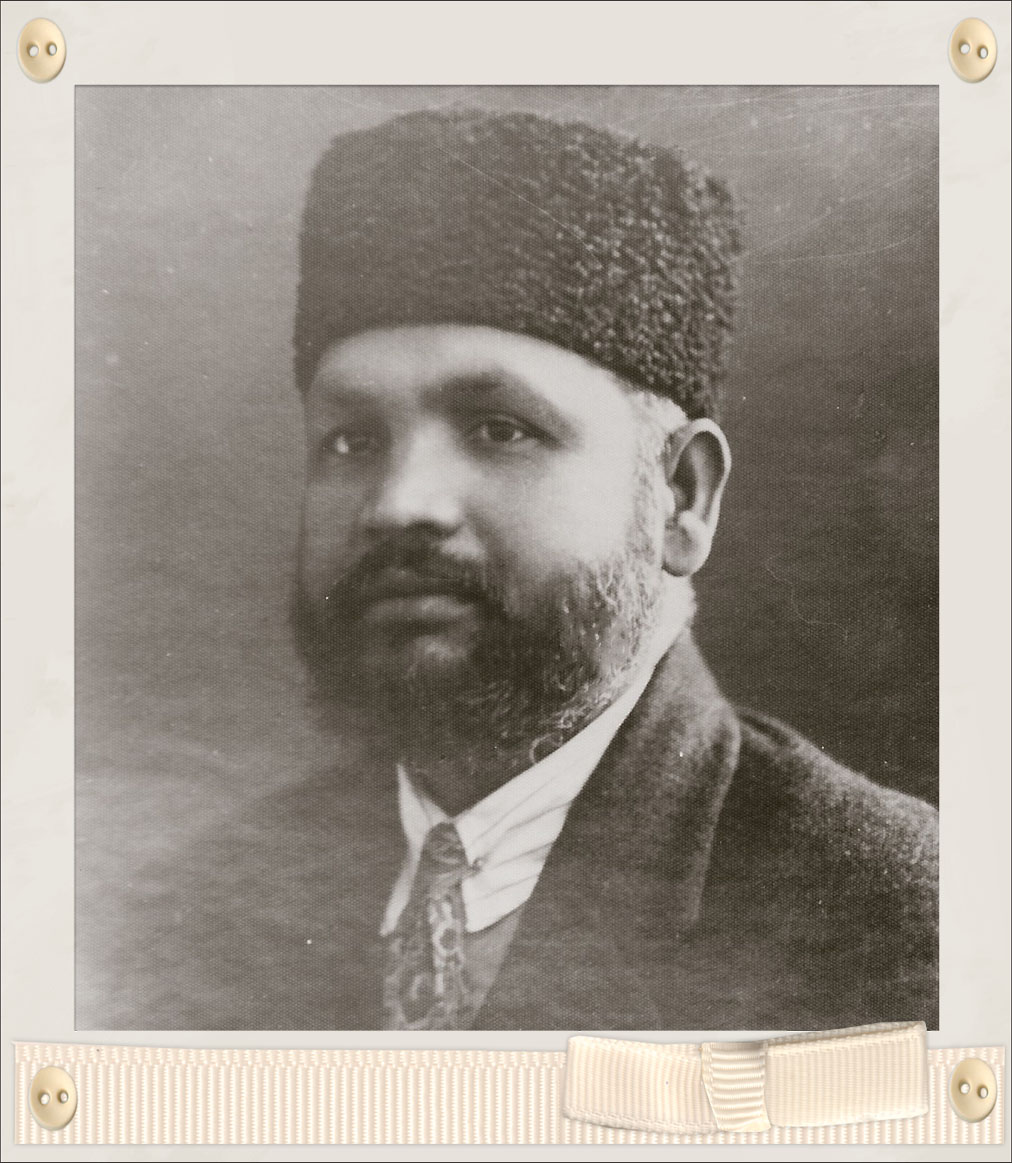
(Text of a lecture by the Editor Mohammad Yakub Khan at the Mohammadan Hall, Mochi Gate, Lahore on 11 january 1925 – Honourable Dr. Mian Sir Muhammad Shafi, K.C.S.I., C.I.E, Co-founder All India Muslim League, Presiding)
The Light – February 16, 1925. (To be continued)