LOVE THY ENEMY – Part 2

Mohammaden Hall, Lahore
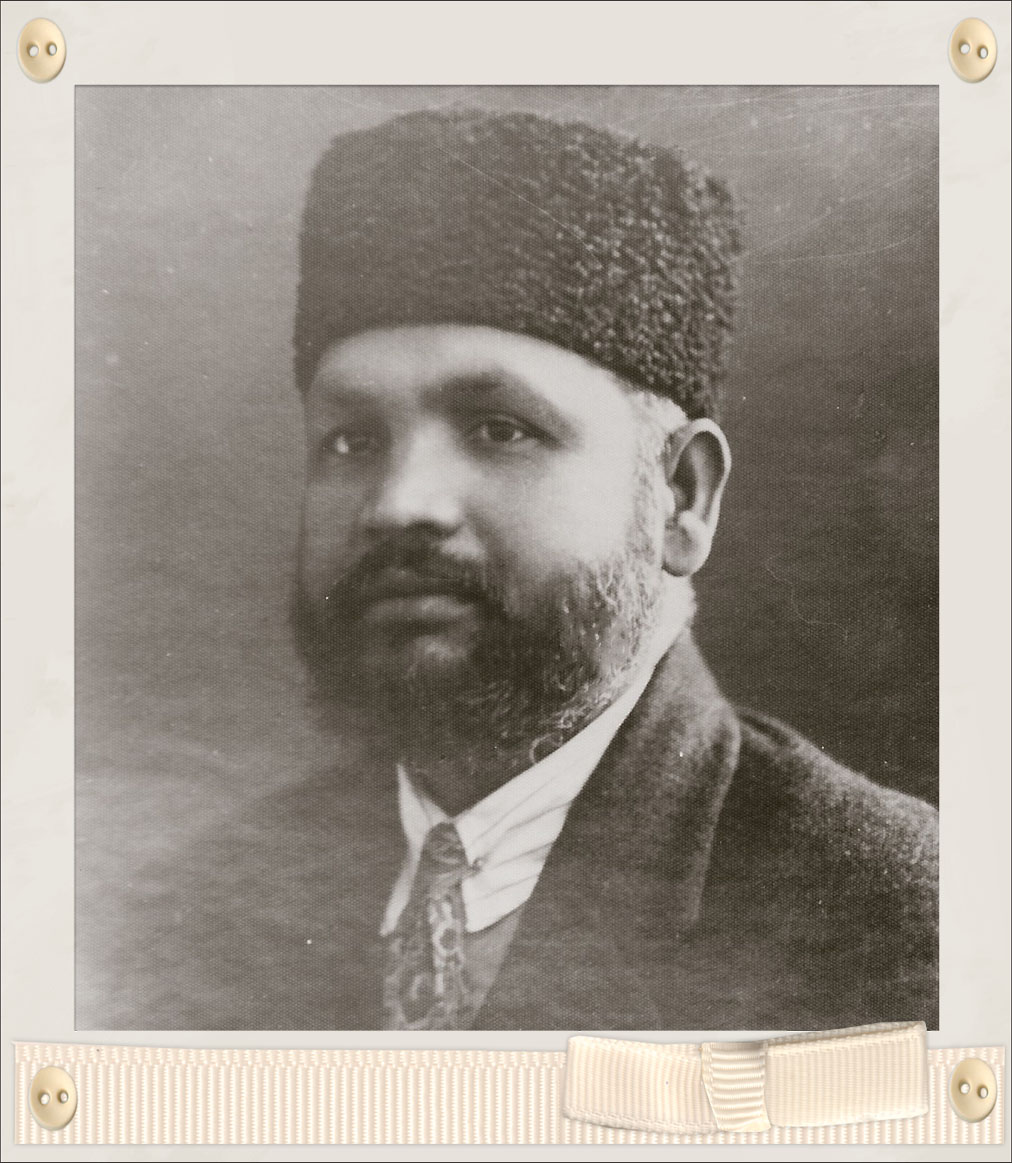
(Text of a lecture by the Editor Mohammad Yakub Khan at the Mohammadan Hall, Mochi Gate, Lahore on 11 january 1925 – Honourable Dr. Mian Sir Muhammad Shafi, K.C.S.I., C.I.E, Co-founder All India Muslim League, Presiding)
The voice of the Christian Church, as we have seen, does not help us very far. Mere faith in Jesus’ living up to this lofty ideal and that too on one occasion and under particular circumstances, is not enough to bring the Kingdom of Heaven to this old earth of ours. What we do want is guidance as well as example to suit the numerous, diverse and variegated conditions of human life. For this, we in vain, hunt up the pages of pre-Islamic scriptures or religious history. Jesus’ own teaching is inadequate and unauthentic; his own life-record is meagre and mythical. From the voice of the Church of Jesus, therefore, let us turn to the voice of Jesus himself who tells us : ”I have yet many things to say unto you, but ye cannot bear them now. Howbeit when he, the Spirit of truth is come, he will guide you unto all truth.” (John 16: 12, 13.)
This ”Spirit of Truth,” as Jesus characterized him and of whom he foretold that he would bring ”All Truth” to humanity, sprang from the wild sands of Arabia—as if from the very bosom of Nature herself. And what do we find here? A guidance, a Divine Code intact to the very letter in its original purity. ”This Quran,” says a Western critic of Islam ”is as much the word of Mohammed ﷺ today as the Mohamedans believe it to be the word of God.” Ah! It is here that I can look for the best prescription to enable me to love my enemy. Here again, I find, to inspire me, full sketch of the man who lived up to the high ideal all his life. Let us see how far our hopes in this direction are justified.
The Quran does not go about the work in a slipshod quack-like manner. It proceeds on scientific lines. It dissects the whole mass of our passions, examines the nature and working of each and prescribes antidotes accordingly. What is it, it asks, first of all, that stands in the way of love between man and man? Anger. Well before love can have its fullest, unrestricted play in the heart of man, antidotes must be prepared to neutralize the force of anger. And what are those antidotes? This leads it to enquiry into the root-cause of this passion of anger. And what does that root cause turn out to be? To put it in a nutshell, the question of ”mine” and ”thine.” Whenever there is encroachment on what I consider to be mine, the passion of anger in me is set ablaze. Well, here is the right diagnosis, the germ of the disease. How to extinguish that flame—that is now the question of questions in a variety of ways. First of all, it lets loose a whole flood of cold water on this volcano of wrath within us by overhauling the whole conception of ”mine.” The things this earth to which I so tenaciously cling as “mine”, are only متاع الغرور a deception. Things that are really ”mine” are those it calls الباقيات الصالحات the good deeds that are imperishable. If I am a king on a throne, it is not the kingdom that is ” mine.” It is the way, good or bad, in which I acquit myself in that capacity that is ”mine.” It is the opportunity that is ”mine.” And it is beyond the power of mortal hands to encroach upon that. If I am a nobody somewhere in the slums of humanity, I have no cause to bear any grudge against the king for his power and pelf. For it is not in these that his real riches lie. Nor need I grumble at my own humble station. The things that are really his are the opportunities for good. 1 have got my opportunities for good just the same. In the things therefore that really matter, we are all equally rich, and none can in any way deprive another of the right to do good. To elucidate the point still further, it is like this. Supposing, there are a number of boys whom you want to count you numerals up to one hundred. And you supply every one of these with different materials with which to do the counting. Some you furnish with pebbles, some with pieces of gold. Do you think there is any disadvantage to the first or any advantage to the latter for the simple reason that the material is different? Certainly not. It is the opportunity for counting that is of only account and all have it just the same. The boys with the pebbles may do the counting aright and win the honour, those with gold-pieces may be taken up with the glimmer and glitter of the material they handle, miss the counting and get no honour. Such is the real significance of ”mine” in the Quran. To this effect goes a saying of the Holy Prophet ﷺ –
الدنیا مزرع الآخرة
—This world is a tillage for the life to come. Just as in a farm, we grow crops and reap the harvest, even so in this worldly life. The various situations in which we find ourselves placed are so many farms for growing our spiritual crop. And every one of us has got a square deal in this respect. Pilate got an opportunity to grow the crop of justice, but he did not grow it. Jesus got the opportunity to grow the crop of suffering for truth and he did grow it. Who is the richer of the two? Surely not Pilate but Jesus who did grow the crop.
یوم الاصطفاء یوم الابتلاء
Another saying of the Holy Prophet brings out the same point, the same conception of ”mine.” The day of tribulation, it means, is the day of purification. Ibtila means purifying gold by putting it into the crucible. Even so is the philosophy of adversity in Islam. It is a purgatory, a machine to purify man of all dross and alloy, and to transform him into burnished gold. Which of the two was the really better of the two, the wealthy, and powerful Quraish or the helpless Muhammad in adversity? Such is the outlook of Islam on this life. Islam has revaluated ”mine” and ”thine” not in terms of things of this world ever which we dispute and wrangle but in terms of opportunities for good and these latter are beyond all encroachment, beyond all dispute. Thus, it has laid the axe right at the root of all outburst of anger. But this is not all. Like a skilled physician the Quran administers us a most potent potion, an admixture of all possible ingredients having the same efficacy. It does not simply say: Get hale and hearty. It takes us step by step to that great height. Before we can love, we must cease hating. One cause of mutual hatred as already discussed, has been eradicated. But some supplementary means to that end are also adopted. Friday after Friday, we are reminded from the pulpit.
إِنَّ اللّهَ يَأْمُرُ بِالْعَدْلِ وَالإِحْسَانِ وَإِيتَاء ذِي الْقُرْبَى
God enjoins justice, doing good to others and giving others as you give your kith and kin. Now mark the stages! In what scientific manner have they been laid down!The lowest is to do justice, not to encroach upon one another’s rights. This is the minimum. The next higher is to do good to others. And the highest and the last is to do good to others as spontaneously as to your dear and near ones. Again, the same scientific arrangement is visible in the words:
وَالْكَاظِمِينَ الْغَيْظَ وَالْعَافِينَ عَنِ النَّاسِ وَاللّهُ يُحِبُّ الْمُحْسِنِينَ
”Those who suppress their wrath, and forgive people, and Allah loves the doers of good to others.” What natural gradation in the evolutionary course! Unless you lead the novice through these, you cannot take him up. These are the various exercises that a would-be-Sandow of the soul must go through, before he can aspire to come out a full-developed giant of the spirit, capable of living up to Love thy enemy.
Having eliminated the causes of friction and ill-will between man and man, the Quran proceeds more on constructive lines. All those ideas are put into our head that are necessary to foster in humanity that sentiment of mutual love. Our common humanity, common brotherhood under the common Providence of God—these are impressed on us by the Quran as by no other Book. Our God is not only ”our Father which is in Heaven” but —رب العالمین The Lord of all.
We are all the children of the same God, members of the same family. He is interested in all of us alike. The various races and tribes are only for the sake of identification –
إِنَّا َجَعَلْنَاكُمْ شُعُوبًا وَقَبَائِلَ لِتَعَارَفُوا
“We have made you tribes and clans for identification’s sake.”
The East and the West both are equally dear to Him —
رَبُّ الْمَشْرِقِ وَالْمَغْرِبِ
“The Lord of the East as well as of the West.” Rich and poor, male and female are equal in his eye –
اِنَّ اکرمکُم عنداللہ اتقاکم
“The most respectable of you in the eye of God is the most virtuous of you.”
Difference in skin, language, habits, customs are only secondary things. In essence all are one and the same —
يَا أَيُّهَا النَّاسُ انا خَلَقَنا كُم مِّن نَّفْسٍ وَاحِدَةٍ ً
“O ye people! surely, We have created you of the same essence.”
All have been equally blessed with spiritual gifts as with physical—
ما من امۃ الا خلا فیھا نذیر
“There has not been a nation, but a warner was sent to it.”
Nay, furthermore, we must profess faith in all those Prophets raised at any time, at any place –
وَمَا أُوتِيَ النَّبِيُّونَ مِن رَّبِّهِمْ لاَ نُفَرِّقُ بَيْنَ أَحَدٍ مِّنْ رسلہ قُلْ آمَنَّا بِاللّهِ
”Say we believe in… whatever was given to the Prophets from their Lord. We make no distinction between them.”
And the religion which has been chosen for humanity has been given a common name — الاسلام submission to the Lord. Budhist, Jew, Christian, Hindu, whoever submits to Him is a Muslim.
Thus, the Holy Quran has drawn upon every driving power whether in the head of man or in his heart to eradicate selfishness and anger out of him, to give him a higher outlook on life and a wider range of sympathies. Under such overwhelming cumulative influence alone is it possible to rise by gradual steps to that highest of spiritual glory: Love thy enemy.
(THE LIGHT, January 16, 1925) (To be continued)