Love Thy Enemy (Part 1)

Mohammaden Hall, Lahore
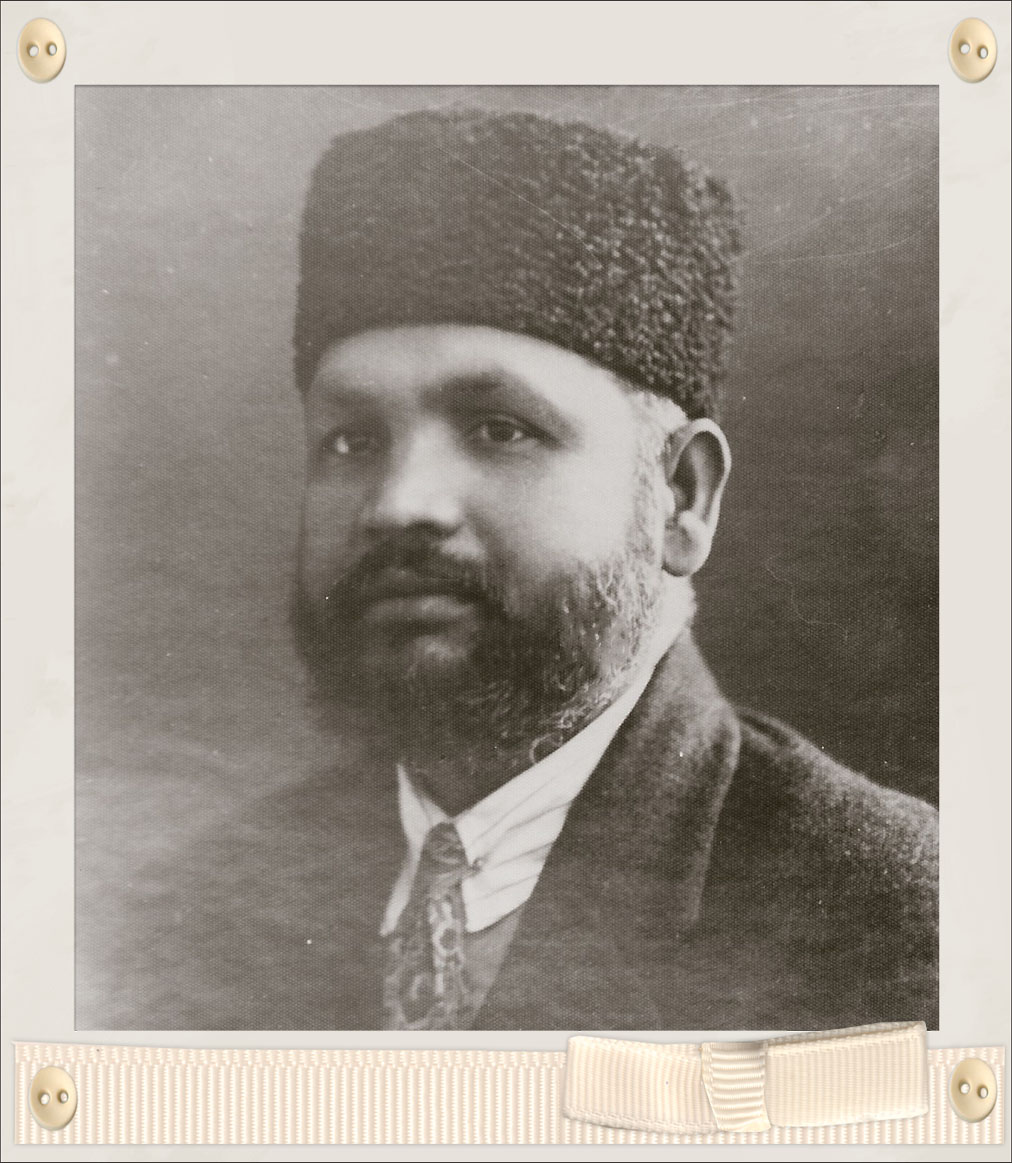
(Text of a lecture by the Editor Mohammad Yakub Khan at the Mohammaden Hall, Mochi Gate, Lahore on 11 january 1925 – Honourable Dr. Mian Sir Muhammad Shafi, K.C.S.I., C.I.E, Co-founder All India Muslim League, Presiding)
In these times of unprecedented strife and struggle, of unprecedented greed and selfishness, when like Cain and Able, the sons of man are running at one another’s throats with all the ferocity of the denizens of the forest, when materialism reigns supreme, when any idea of a living God is clean out of the game of life—in times such as these and in environment so surcharged with everything low, base and sordid, what a relief, what a solace, what a charm to turn to the lovely, beautiful, glorious picture which these enchanted words, Love thy enemy, call to the “mind’s eye”. As if the very contrast lends grace, dignity and brilliance to the landscape. A bright gem set is ebony dark, and the rays of lustre appear all the more dazzling. Some such is the weird influence of this sweet expression, Love thy enemy. No sooner do these gentle words drop into our ears than we feel transported, as if by the mere touch of a magic wand, to regions where there is nor care, nor anxiety, nor woe, nor worry, nor tears, nor heart-aches, nor hail nor storm, where human sores get automatically cured and human wounds, of themselves, healed. Such is the enchanted land to which we feel transported—a land over-flowing with milk and honey, a land rich in roses and verdure, a land of peace and plenty where everyone loves everyone else and everyone is having the time of his life. Ah! This is that sweet ’dream land they call Utopia! This is the much longed-for Millennium! After all, after all, we seem to say to ourselves, we have got to it.
A pleasant dream! A sweet vision! But, alas! as evanescent as a dream, as illusory as a vision. Hardly a moment have we breathed in that fragrant atmosphere when there comes a rough, rude shake of the rugged realities of life. The spell is over, the charm broken. We wake up, we rub our eyes and to our disappointment, to our dismay, what do we find instead? The same din and dust, the same rough and tumble, the same greed and grudge, the same cry and clamour, the same clash and clatter. Streams of blood instead of milk and honey! Rob thy brother, instead of Love thy enemy!
Now the stern question before us is, Are we any the better for the sweet sermon, Love thy enemy? No. Is the world any the better for that soft platitude? No. Can that council of perfection make us perfect too? No. It is one thing to say, it is another to be. And between saying and being there lies a vast sea of doing. As to the sublimity of the teaching, there could be no two opinions. There is no religion worth the name but holds up the same high ideal before man. Do good to others, love thy enemy—this is the sum and substance of every, message from God, whether given through Krishna, Buddha, Jesus or Mohammed. The last of this noble band, when asked, What is religion, O Messenger of the Lord, epitomized the entire bulk of his teaching into just two expressions: Glorification to the Lord and kindness to His creatures. But any teaching, however noble, must remain a dead letter unless steps are taken, unless measures are adopted to make it part and parcel of our being. It is like sermonizing to a sickly person to be hale and hearty. That would not do him much good. What he wants is a diagnosis of his ailment and that done, a prescription suited to meet the particular needs of the case. Deleterious elements in the system must be eliminated and things useful to it introduced. The patient must undergo a regular systematic, scientific treatment, and then and then alone can he get hale and hearty. Or again, it sounds like telling an apple-seed to grow big sweet luscious apples. The seed must be properly sown, watered, manured, tended and a thousand and one other rules of horticulture must be observed before that tiny seed can grow into a plant, bear foliage, bear flower and ultimately accomplish its highest destiny of bearing apples. Even so the heart of man. The seed of love is there embedded in it by the hand of Nature, but before it fructifies, it must be nurtured in accordance with certain set laws of the spiritual growth of man. So, the question is not whether man ought to love his enemy. The question is how can he love his enemy. How? —this is the crux of the whole question.
In reply to this all-important question, we hear two voices. One from the Church that today goes after the name of Jesus: the other from Jesus himself. The first would take us at one single spring to that climax of spiritual evolution. Have faith in an event in history, it tells us, that a certain righteous person was sent to the cross by his enemies, and yet his heart was as full of love for them as ever. Even when at that moment of supreme agony, these were the sublime words on his lips: Lord, forgive them, for they know not what they do. Noble sentiment this! And so long as humanity is not shorn of the last spark of nobility, it shall take its hat off to that heart overflowing with the milk of human love.
There is no Mussalman but bows in reverence to that greatest man of his day and invokes the blessings of the Lord on his great name. But when all is said and done, the question remains, greatly developed muscles. But is mere faith in the fact enough to give me that prowess. His example may inspire me to do the like. But that much is surely not enough. That inspiration must be supplemented by illumination as to how he managed to accomplish all that. I must have his chart of exercises before me. I must get into his skin and observe the tremendous amount of will-power he brought to bear on his daily exercise. What appears so simple is the result of long, laborious and patient process. More faith in the fact, that A is a multimillionaire will not make a millionaire of me. His millions are hard won. They are the product of a long chain of causes and effects. I must have the whole process from beginning to end before me. And my progress must proceed along the same weary way, step by step, stage by stage, till I win my way right up to the top. Jumping is not in the course of Nature. All evolution is by degrees slow and steady and besides the necessary inspiration to manfully tread my way, I must also know the various stages through which I must pass. Even so in spiritual evolution. I must advance step by step, if I am not to lose my ground and break my neck. I must have the whole of the drama of the life of my exemplar enacted before my eyes. The last episode alone would not do. I want two things—inspiration as well as guidance and these I must have at every step of my onward march. But, alas! when I turn to the dusty pages of pre-Islamic religious lore and religious bigotry for such guidance and such inspiration, I do so in vain. Almost the whole of the Scriptural records of the world are, to my disappointment, more or less folk-lore, half-truths, mutilated, adulterated. To speak nothing of Scriptures of hoary ”antiquity such as the Vedas, records even comparatively” recent have lost their original purity. Higher criticism tells us that out of the whole lot of the Gospels, only five, verses are Jesus’ own and that too probably. Can I depend for guidance on such record? Certainly not. Nor do I find the life-records of the numerous heroes of humanity. They are mostly enshrouded in mystery and whatever of them has come down to us, is at best, too meagre to build upon.
(THE LIGHT – January 16, 1925)