ISLAM AND THE WESTERN SCHOLARS
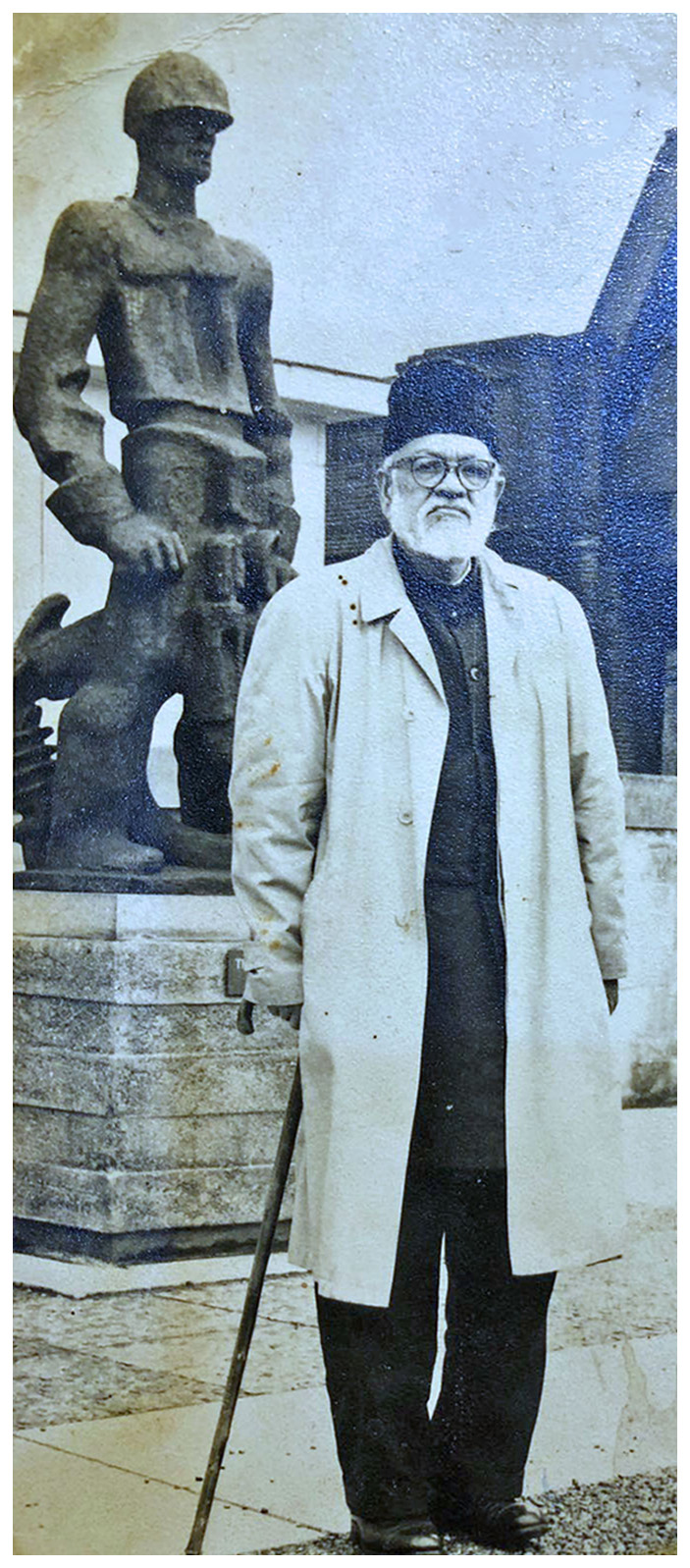
Muhammad Yaqub Khan
For a considerable period, Europe was unaware of Islam and its institutions, but if any attempt was made to learn about this faith, strange, fearful and superstitious notions overtook the minds of its people. In the middle of the 17th Century, the era of European culture and civilization, as it is called, thought and action were freed, and persons interested in things Oriental made honest but misdirected efforts to know Islam from original sources. Choice of books fell to Christian authors who were the subjects of Muslim governments. Thus, their information was based on the works of non-Muslim writers who were ignorant of the Arabic language and original writings. Those literary men devoted themselves to mould deliberate fictions into veracious records. Margoliouth complains about the numerous motives used in fabricating so many traditions that a historian is always a victim to serious errors.Next to them were those who were well-versed in history, philosophy, and the Arabic language, but who knew nothing about Muslim theology and law. Their bold assumption of their deep study of the language led them to criticize unhesitatingly the Faith and its Founder. The writings of Daniel, Luther, Melanchthon, Spanheim, de Herberts and Maracci are full of abuse and disgusting vituperation. Dean Prideaux is another hopeless writer—uncompromising and intolerant.
The great German writer, Sachau, whose vast knowledge is undeniable, while writing on the subject of Islamic principles in the preface of Alhind by Beruni, made references that shocked even his admirers who began to doubt his identity.
Dr. Sprenger, in the words of the writer of the ” Essay on the Life of Muhammad,” has adopted an exaggerated style and his mind is so much occupied and warped by prejudice and bigotry that ill become any writer, more specially a historian. To Sir William Muir his work appeared to be based upon erroneous assumption and ” wanting in dispassionate research and candid investigation, inasmuch as its author has likewise taken his subject-matter from an ill-adjusted and confused mass of puerile traditions.”
Noldke, who studied the Qur-an specially, showed extreme ignorance and prejudice in his article on the same in Encyclopaedia, Vol. XVI.
Palmer, in spite of his deep study and aptitude for research, fared no better than other men of lore.
Margoliuth made religious efforts to attach significance to fables and he has left a curious collection of falsehood which gives him no credit. ” The number of motives,” he says, ” leading to the fabrication of traditions was so great that the historian is in constant danger of employing as veracious records what were deliberate fictions.”
Even Sir William Muir, who is reputed to have written one of the best books on the life of Muhammad, fails to convince Margoliuth who accuses him of confessedly Christian bias.
Excessive condemnation of Islam and its Founder by Christian writers has had a reaction in the birth of writers of uninfluenced integrity such as Edward Gibbon, Godfrey Higgins, Thomas Carlyle and John Davenport who have laboured hard to vindicate the honour of Islam and the Holy Prophet.
Gibbon writes:
” The wars of the Muhammadans are sanctified by the Prophet, but among the various precepts and examples of his life, the Caliphs selected the lessons of toleration that might tend to disarm the ’resistance of the unbelieving. Arabia was the temple and patrimony of the God of Muhammad; but he beheld with less jealousy and affection the other nations of the earth. The polytheists and idolaters, who were ignorant of his name, might be lawfully extirpated, but a wise policy supplied the obligations of justice and, after some acts of intolerant zeal, the Muhammadan conquerors of Hindustan have spared the pagodas of that devout and populous country. The disciples of Abraham, of Moses and of Jesus were solemnly invited to accept the more perfect revelation of Muhammad ; but if they preferred the payment of a moderate tribute, they were entitled to the freedom of conscience and religious worship.”
Godfrey Higgins says:
” Nothing is so common as to hear the Christian priests abuse the religion of Muhammad for its bigotry and intolerance. Wonderful assurance and hypocrisy! Who was it that expelled the Moriscoes from Spain because they would not turn Christians? Who was it that murdered the millions of Mexico and Peru and gave them all as slaves because they were not Christians? What a contrast have Muhammadans exhibited in Greece! For many centuries the Christians have been permitted to live in peaceable possession of their properties, their religion, their priests, bishops, patriarchs and churches and at the present moment the war between the Greeks and Turks is no more waged on account of religion than was the late war between the Negroes in Demerara and the English. The Greeks and the Negroes want to throw off the yoke of their conquerors, and they are both justified in so doing. Wherever the Caliph conquered, if the inhabitants turned Muhammadans they were instantly on a footing of perfect equality with the conquerors. An ingenious and learned dissenter, speaking of the Saracens, says,’ they persecuted nobody; Jews and Christians all lived happy among them.’
” But though we are told that the Moriscos were banished because they would not turn Christians, I suspect there was another cause. I suspect, they, by their arguments, so gained upon the Christians, that the ignorant monks thought that the only way was by the Inquisition and the sword ; and I have no doubt that they were right as far as these wretched powers of answering them extended. In the countries conquered by the Caliphs the peaceful inhabitants, whether Greeks, Persians, Sabeans, or Hindus, were not put to the sword as the Christians have represented but, after the conquest was terminated, were left in peaceable possession of their properties and religion, paying a tax for the enjoyment of this latter privilege, so trifling as to be oppressive to none. In all the history of the Caliphs, there cannot be shown anything half so infamous as the Inquisition, nor a single instance of an individual burnt for his religious opinion, nor do I believe, put to death in a time of peace for simply not embracing the religion of Islam. No doubt the later Muhammadan conquerors in their expeditions have been guilty of great cruelties which these Christian authors have sedulously laid to the charge of their religion; but this is not just. Assuredly religious bigotry increased the evils of war, but, in this the Muhammadan conquerors were not worse than the Christians.”
Davenport affirms:
” Muhammad imposed tribute and exacted ransoms, but in every instance – respected the religious beliefs of the conquered, always, it is true, recommending his religion, but never enforcing its adoption by law ; thus carrying into execution what he had written in the Qur-an, ” Say unto the blind (in spirit), Embrace Islam and you shall be enlightened.’ If they are rebels, you are only charged with preaching unto them, God knoweth how to distinguish His servants.
”Muhammad’s successes in this instance principally arose from the clemency and moderation he showed to the Christians from whom he claimed only a moderate tribute. Thus, when he returned to Medina, he left in the country he had subjected every heart astonished at the clemency of his religion.
”It is expedient to cure men of this prejudice, viz., that Muhammadan is a cruel sect, which was propagated by putting men to their choice of death or the abjuration of Christianity. This is in no wise true, and the conduct of the Saracens was as evangelical meekness in comparison with that of popery, which exceeded the cruelty of the cannibals.”
Religious rancor, racial hatred and political motives are the causes, besides others, which are responsible for malicious propaganda made against Islam. The prejudiced second-hand reports of the opponents of the Faith have actually deceived those who came after and there are very few books on Islam whose authenticity is not questioned.
” In writing the life of our Prophet,” says Sir Syed, ” or in tracing out ecclesiastical history, very few European writers have devoted to their subject that degree of patient research and enquiry due to its importance. On the contrary, actuated, it is to be feared, by prejudice and enmity, they willfully blinded themselves to the light which glared in upon them, and thus proved the truth of the saying, ’ None are so blind as those who will not see.’
”In dealing with different branches of theology, viz., Hadith, or Sayings of the Holy Prophet, (2) Siar or Ecclesiastical history, (3) Tafsir or Commentary on the Holy Qur-án and (4) Fiqh or Muhammadan Law, our intention is solely that of tracing out the right path for the guidance of future critics on our religion, since many, ignorant of the circumstances which accompany our theological literatures, have indulged in the bitterest invectives and sarcasm at the expense of our religious books, an example too often blindly followed by succeeding writers.”
(The Islamic Review,May 1941 – To be continued)