India`s Two Nations
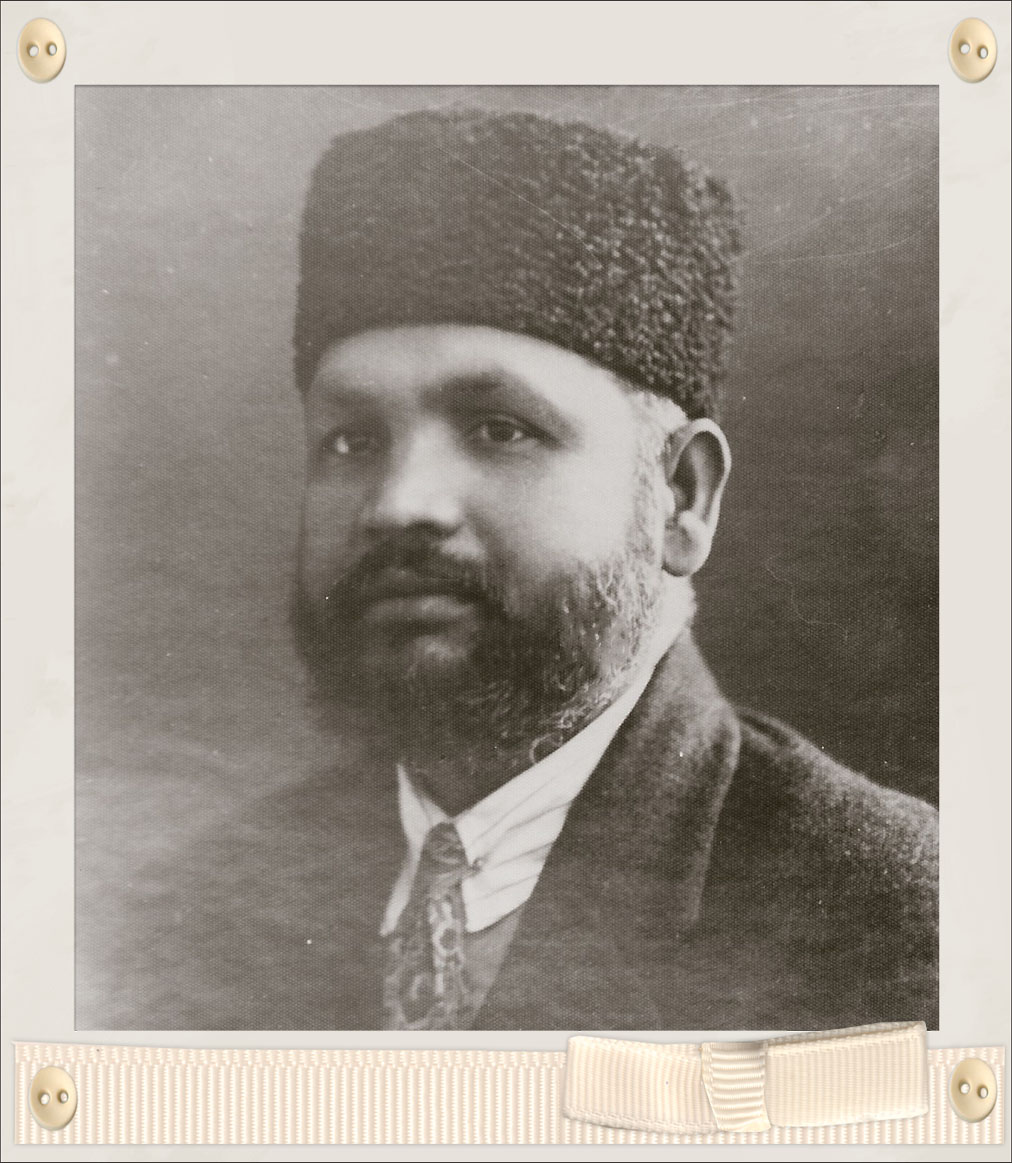
By Muhammad Yaqub Khan
(The Light – september 1, 1939)
Mr. Jinnah’s observation in the course of a speech at Bombay that Hindus and Muslims are two different nations has once more brought this much-vexed question to the fore.This is what he said:
“The cultures of the two communities, Muslims and Hindus, are so different that the one having powers naturally tries to run the other down. In such a country comprising different nationalities, a democratic system of parliamentary Government is an impossibility.”
Now this is a fact which no Indian, Hindu, Muslim, Sikh or Christian can honestly deny. It may be deplorable. It may indeed stand in the way of India´s progress. It is none the less there as a stern reality and a statesman who sits to devise a system of Government for India can ill-afford to ignore this reality. The daily lives of Hindus and Muslims run into two absolutely different channels. Although living as next-door neighbours, they are more apart from each other than any other two-people in the world. What Kipling said of the East and the West is far more true of Hindus and Muslims. The fact is so obvious that it needs no elaboration. The gulf between the two may be judged from the commonplace yet significant fact that a Hindu considers the very touch of a Muslim as a pollution. By his very religion and up-bringing he detests the very touch of a Musalman and an article of food, the moment it is touched by a Muslim, becomes gall and wormwood to a Hindu. The common cries of “Hindu water” and “Muslim water” met with at everyone of the thousands of railway stations over the length and breadth of the country are a daily proclamation, as it were, that India is inhabited by two nations so widely at variance with each other that they would not even drink from the same jug of water. This exclusiveness, if not hatred, penetrates every department of life. To say in the face of this that there is but one nation in India is to belie the hard realities of daily life.
The Hindu cannot be blind to this reality of the Indian situation. But with him a common nationhood is a paying proposition under a democratic constitution. He happens to be the majority community and a democratic Government means the rule of the majority. That is the reason why from a political platform or in the press he shouts to claim the same man as a co-national whose very touch in his daily life he abhors as an abomination. The sudden solicitude that he has been trampling for centuries past – and by the sanction of his religion at that – was also due to the same motive. He moved heaven and earth when there was a move to treat the Depressed Classes as a separate community. With the 80 million of untouchables gone out, the Hindu community would lose the status of the majority community. That explains the anxiety of Hindus to keep within their religion those whom they would not allow even a footstep beyond the threshold of their temple, those whose ears, if the sacred words of the Vedas happen to fall into them, must be filled with molten lead. Likewise, they are anxious to impose a common nationality on the Musalmans whose mere touch they regard as a pollution. A common nationality would mean their own domination over the Muslim minority. The Harijan Movement of Mohatma Gandhi and the much-vaunted Congress slogan of a common nationhood have a definite value for them in terms of political power. The one is necessary to keep the Hindu community as a majority community; the other to ensure the rule of the majority. The humanitarianism behind the first and the patriotism behind the latter are mere pious poses. The Harijans and the Muslims are men pawns in the game of Hindu domination – the first to give the Hindus the majority, the others to give them the majority rule.
Mr. Jinnah`s observation that democratic system of Government is unsuited for India was made an occasion for much adverse comment. Writing in the Civil & Military Gazette of Lahore, one Hindu correspondent advances arguments which are absurd on the face of them. He reminds Mr. Jinnah of one of his recent statements criticising the present constitution as undemocratic, vesting larger powers in the Governor-General than those of Hitler. How in the same breath, he asks, does Mr. Jinnah now declare democracy as unsuited for India? This shows the hollowness, if not insincerity of Hindu criticism of the Muslim view-point. Mr. Jinnah certainly did not mean to wrest Hitlerian powers from the Governor-General in order to vest them in a permanent religious majority of the Hindus. And since the Hindu community is out to monopolize those dictatorial powers vis-à-vis the Muslim community, Mr. Jinnah is up in arms against them as he was against the British. His position is perfectly consistent. He does not want domination, whether of a Governor-General or of the Hindu community. The co-called democracy is really no democracy, as it tends to perpetuate the domination of the Hindus over the Muslims. That is what Mr. Jinnah is up against. The other argument advanced by the writer is equally funny. It tells Mr. Jinnah that all his life he had been a Congressman and the Congress has ever stood for democracy. How can he now denounce democracy? The writer conveniently shuts his eyes to the other side of the point he has raised. It is exactly because Mr. Jinnah has been a Congressman for a long time that he was able to find the Congress out. His long contact with the Congress convinced him that although the Congress preached democracy, that democracy meant Hindu domination and so he parted ways with it.
Maulanas Muhammad Ali and Shaukat Ali were once the leading figures of the Congress. They fought under the Congress flag for the freedom of the country. When, however, they perceived that the freedom they had been fighting for was to be freedom for the Hindu community alone whereas to the Muslims, it would only mean the substitution of the British by the Hindu domination, they said good-bye to the Congress. That is the disillusionment which has made Mr. Jinnah, an ex-President of the Congress also stand-up against the Congress politics. The critic further observes that religion has no longer much hold on the Hindus and Muslims. Why then divide India into religious communities? That religious hold is growing lax is true but religious prejudices are growing stronger and stronger. Perhaps there has never been more blood-shed over cow-slaughter than during these days. There are Hindus now who no longer regard the cow as sacred. There are some who even enjoy a beefsteak occasionally. But if a Musalman should kill is own cow, these very liberal Hindus would like to draw his blood out. Religion may no longer be there; but religious hatred is still there. In fact, the religious hatred was never so violent as in these days and with every step along the devolution of power on Indians, these flames of hatred are fanned stronger and stronger. The writer looks forward to the day when the lives of Hindus and Muslims would be governed by science. A new culture is taking shape, a scientific culture, common to all mankind. We fail to see much hope in that direction either. After all European people are just now leading the van of scientific civilization but there is certainly no love lost between the Germans and the French. With every advance in scientific achievement, they grow in bitterness against each other. Science can teach us subjugation of matter but not of the self. In fact, it makes the self of man all the more unbridled. The age of science and scientific culture, therefore, may even intensify the Hindu-Muslim struggle. At any rate it is something which is yet in the womb of future, whereas political adjustments between Hindus and Muslims can only be on the basis of present-day conditions. And taking those conditions into consideration, Mr. Jinnah is certainly right in saying that the Hindus and Muslims are two separate nations and the parliamentary system of Government which pre-supposes a common nationality, a common language and a common culture is an impossibility.
What can be the best alternative to the parliamentary system of Government is quite a different question. This much must be at once conceded that however much one may wish for a common nationhood in India, no such thing exists at present. In all frankness it must be conceded that Hindus and Muslims are two different nations, whose interests clash with each other as those of any other two nations. Until such time when the present-day prejudices should die out, and the idea of a common nationality should take a firm hold on the Indian mind, the present system of majority Government cannot possible work smoothly. It must mean the subjugation of the Muslim minority for all time to come to the Hindu majority. Mr. Jinnah has truly voiced the mind of the whole of Muslim India in saying that such a system is an impossibility and no Musalman will agree to it. The sooner this fact is conceded by the sister community the better. Honesty is certainly the best policy in politics as in business. We believe much of the communal bitterness is due to the refusal of the Hindus to recognise this fact. A frank recognition of the fact that the Musalmans in India are a nation unto themselves would pave the way for a better understanding between the two communities and in the atmosphere of mutual goodwill and respect, an alternative to the present system of Government may be found which may justly and fairly safeguard the interest of both the major communities.
(Courtesy aaiil.org)