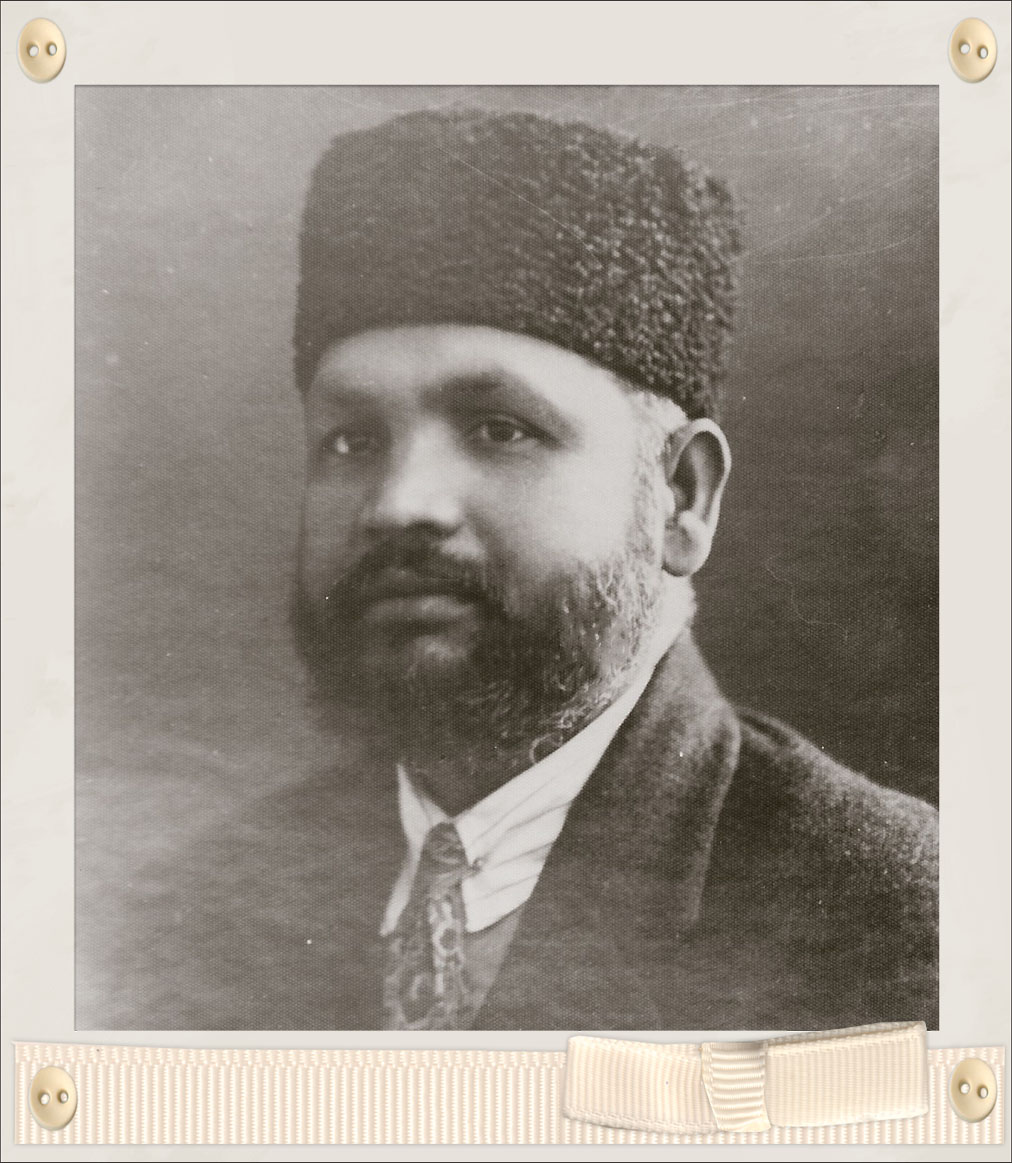
IDRIS AND HIS SON’S ASSASSIN
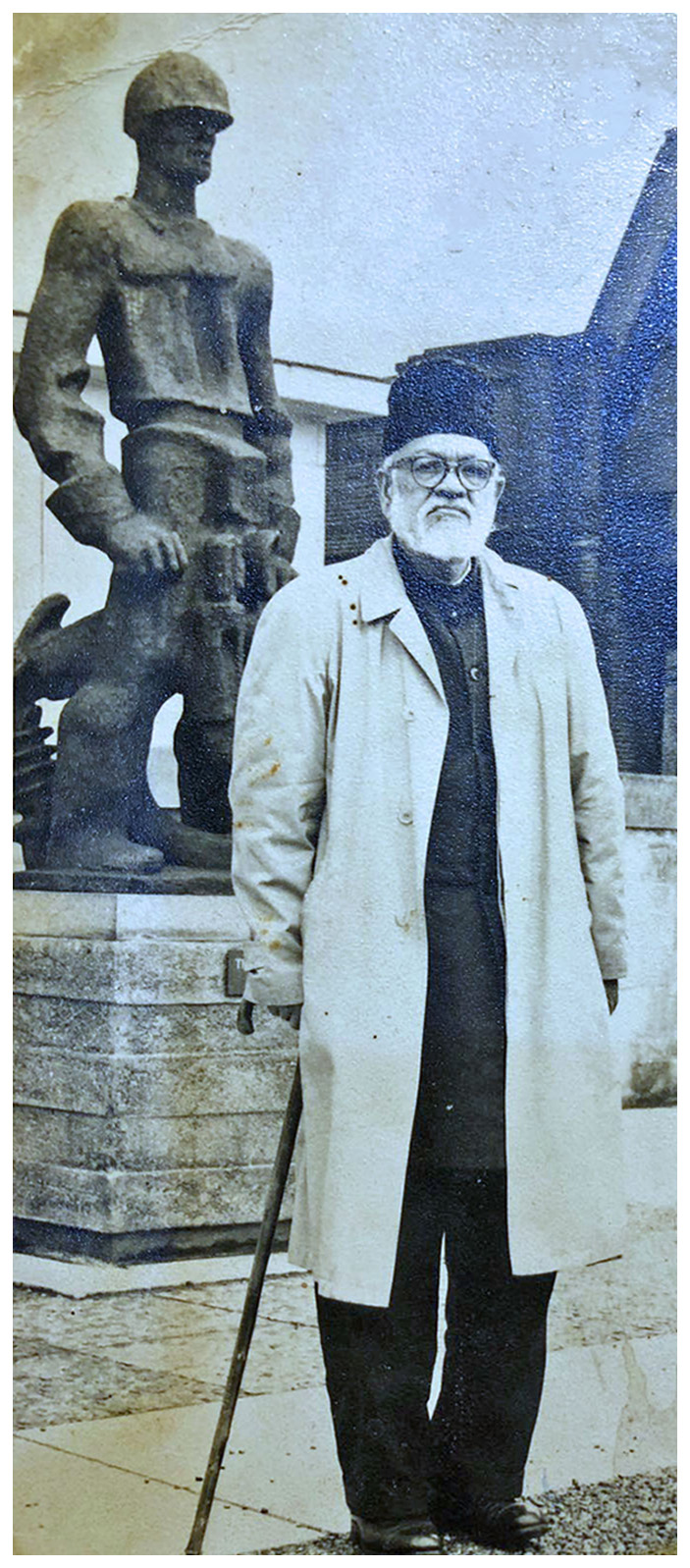
Muhammad Yakub Khan
A Story for Children
by MUHAMMAD YAKUB KHAN
Long ago, there lived in the Spanish town of Cordova a man, Idris by name. This was the time when Spain was under the rule of the Caliph of Islam with Bagdad as his capital (Abbasid Caliphate 752-861). Spain was some-thing like a colony of the Arab countries, and enterprising men from those lands often came there in search of fame and fortune. Idris was one of such immigrants. In his native town of Basra, he had a hard life. He was very poor, and with the little money that he earned as a common labourer he could hardly make two ends meet. So, he made up his mind to sail for Spain and try his luck there. On board the ship with him sailed another Arab, Kassim by name. Kassim had long been settled in Cordova and was doing flourishing business there. After a visit to his native town of Basra he was now going back to Spain. Idris was a young man of handsome appearance and strong bodily build. This was just the kind of man Kassim was looking for to take along with him as his personal attendant and bodyguard. So, from that very day he took Idris in his employ.
On the way while the ship was sailing through the Mediterranean, it was attacked by sea-pirates. They wounded and killed several men and plundered merchandise. Idris defended his master with much bravery and saved his life.This made him a very trusted friend of Kassim. And when the two reached Cordova, Kassim put him in charge of the whole of his business. And when, after a few years, he died, he willed a large fortune in his name.
Idris was now one of the richest men of the town. He married a girl of charming beauty and noble descent. He was a most God-fearing man and spent much of wealth on helping the poor. Years rolled by, and he basked in the sunshine of good fortune. There was but one thing which worried him. He was already in his forties, but he had no issue. At last at the age of 50 a son was born to him. There was great rejoicing and feasting in his house. The child was given the name Ishaq. Ishaq grew up to be a handsome youth — just the image of his father. Idris took good care to give him a good education, and training in archery and horsemanship. This was an age when manly sports and chivalry were held in high esteem. And every year tournaments were held in which young men, Muslims, Christians as well as Jews, participated.
One such tournament was announced for the Eid day, which is a festival of rejoicing for Muslims. People of all classes, men and women, young and old, flocked to the stadium to watch the contests. The King’s courtiers and noblemen took their seats in the pavilion. The King’s arrival was announced with a fanfare of drums. As soon as he took his seat on the raised platform, specially erected for him, he declared the tournament open. The athletes marched in a procession in front of the dais, saluting the King and courtiers. They were all young men of finest build and handsome features. But Ishaq attracted the loudest cheers as he entered the arena. He had been the champion in archery for the last two consecutive years. When he came to the dais, the King gave him a special smile. ”Well, Ishaq,” he said, ”I hope you will bag the trophy this year as well.” ”With the help of God, your Majesty,” replied Ishaq, with a graceful bow.
A drumbeat announced that the first round in the archery was to start. It was a hard contest, and many were knocked out in the first two rounds. Ishaq was one of the ten who qualified for the third round. Now the contest was made all the stiffer. At the top of a pole was pinned a bird made of silk. A strong wind made it spin round and round. Each competitor was to bring down this bird in three arrow shots. Five of them tried their hand, one after another, but sent their arrow wide of the mark. The four others who followed did better. Some put one, some two shots into the bird, but they could not bring it down. Last of all was announced the name of Ishaq, and as he stepped forward, bow and arrow in hand, there was a loud peal of cheers from the crowd.
Ishaq smartly took his position, raised his bow to the elbow and taking aim, sent his arrow whizzing through the air with such accuracy that it pierced through the wings of the spinning bird. But it was not brought down. Another shot, and it settled into the bird’s chest, but without bringing it down. At this loud applause went up from the crowd, with shouts of, ”Well done, Ishaq!” ”Buck up, Ishaq l” He had now but one chance left. He screwed up his eyes to make his aim as accurate as he could, and stretching his bow, sent his last arrow with such force that it cut through the thin iron wire on which the bird was perched, and down it came to the ground. This was greeted with frantic shouts and jubilations from the crowd. Once more Ishaq won the day. And in the midst of scenes of wild enthusiasm he was once more awarded the gold cup by the King. Once more Ishaq was the hero of the crowds.
As the tournament was over, the crowds dispersed. Ishaq mounted on his steed that was waiting for him outside the stadium, and wended his way towards his home, a magnificent villa in the suburbs of the town. His servant, handing over the horse to him. followed on foot. As he was galloping along all alone, a pedestrian who was carrying a load on his head suddenly crossed his path and was slightly knocked off along with his load. Ishaq held up his reins, dismounted and apologized to the man.The fallen man, who was a Jew, was soon on his legs, and started raving at Ishag. Ishaq did his best to soothe his anger, but in vain. The man went on shouting and hurling abuses at him. Ishaq begged him to let the matter go, but the man lost all temper, and began to attack Ishaq. Ishaq was a strong, young man. The Jew was no match for him. Finding himself too weak, he drew a dagger that was hanging by his arm and plunged it into Ishaq’s heart. Ishaq instantaneously fell down and was soon a dead man.
The news of Ishaq’s victory at the tournament had reached his aged father Idris. His heart was filled with joy, and he stood at the gate of the villa awaiting the return of his son to kiss him and, embrace him. He sent word to some of his friends also to come to the reception in honour of Ishaq. It was getting unduly late. The sun was already setting but there was no sign of Ishaq to be seen. The assassin, discovering what he had done, was seized with terror. In the meantime, Ishaq’s servant also appeared in the distance coming that way. When the assassin saw him coming, he took to his heels, and ran frantically for his life.
Idris, finding Ishaq being unduly delayed, asked his servant to accompany him to the nearby mosque, to say his sunset prayers. They had hardly gone a few paces, however, when they saw a man running along, much terror-struck. ”Just wait!” Idris said to his servant. ”Let us see what the trouble is with this man who seems so frightened.” Presently the man came up to where Idris and his servant stood. His hands were red with blood. He was too frightened to utter a word. He fell down at Idris’s feet, and with great difficulty managed to say a few words.
”0 Sheikh,” he said, am a stranger to this land, I know nobody in this part. I am innocent. Pray, grant me protection.”
”What is the matter with you?” asked Idris. ”Protection you shall have. A Muslim never refuses asylum to a man in distress. You need have no worry on that account. But do tell us what the matter is with you.”
”0 Sheikh,” said the assassin, ”as I was coming along a young man jeered at me. I told him not to do so. He began to abuse me. I returned his abuses. He fell upon me. I was alone. He was too strong for me. I took out my dagger to defend myself, and in the scuffle, he got wounded and died.” ”Don’t be afraid,” said Idris. ”Just step in. You are in a Muslim’s house, and you have a Muslim’s protection. Nobody will now dare touch you.”
”0 Sheikh!” said the man, ”it is so kind of you to give me protection. But I must tell you that I am not a Muslim. I am a Jew. I hope you will not give me up if the man I have killed turns out to be a Muslim.”
”Be of good cheer,” said Idris. ”To a Muslim there is no difference between man and man. Whatever a man’s colour or creed, he is as much dear to God as a Muslim. That is the teaching of our religion. Have no fear, you are perfectly safe under a Muslim’s roof.” The assassin kissed Idris’s hand and followed him into the interior of the house, where the hand of the law could not trace him. It was growing late in the evening. Yet there was no trace of Ishaq. The party of the distinguished men had already come and were in their seats. But Ishaq was nowhere in sight. This caused Idris much misgivings. What could have detained him so long, he wondered. He never stayed so long away. All sorts of thoughts crossed his mind. Presently, the silence was broken. There was some noise at the front door. A domestic servant came into the dining hall where Idris was sitting with his friends waiting for Ishaq, and bursting into tears told the Sheikh that his son was dead.
This was a bolt from the blue for Idris. The party could hardly believe their ears. Idris hastened to have a look at the dead body, and when the sheet was lifted from its face, he saw that it was truly his own darling Ishaq who lay drenched in his blood.
”From God we come, and unto God we go” — he exclaimed with a truly Muslim-like resignation.
The merry-making party became a mourning party. Everybody consoled Idris and expressed deep sorrow at the brutal murder of his only son, the prop of his old age.In the adjoining room, the assassin, hearing the lamentations was filled with terror, thinking it might be the dead body of the young man he had killed. The relations of Idris in the meantime dispersed in all directions to look for the assassin.
After a while Idris entered the assassin’s room, lamp in hand. The man thought he had been found out, and he began to tremble.
”Don’t be afraid,” said Idris, ”Just follow me!” And taking him to the room where Ishaq’s body lay, removed the sheet from his face and asked, ”Is this the young man you have killed? –
”Yes, yes,” said the man in broken words. ”Have mercy on me. It was no fault of mine. He abused me” and so on.
”Don’t worry,” said Idris, ”A Muslim’s word is a Muslim’s word. There is still some night left. Early in the morning, I will arrange your safe escape.
While the assassin kept brooding over his fate, Idris kept a vigil by the body of his son. Early at dawn he bade one of his swiftest horses, together with a water-skin full of water, to the back door of the villa. While the attendant was busy saddling the horse, Idris went into the assassin’s room with a bag of food and some money. Presently the attendant came with the horse. Idris led the assassin and beckoned the attendant to go away.
”You wretch!” he said, ”the young man you have killed is my own darling son, the prop of my old age. You have put out the only light of my life. You can’t imagine the agony I am going through. There is the picture of Ishaq before my eyes crying for revenge. But there is the word of God calling that word once pledged must be honoured. Let it not be said that a Muslim was so mean as to go back on his word. A promise once made must be kept. That is a Muslim’s code of honour. Here is the food for the journey and some money. You are a free man. Go!”
(The Islamic Review – March 1961)