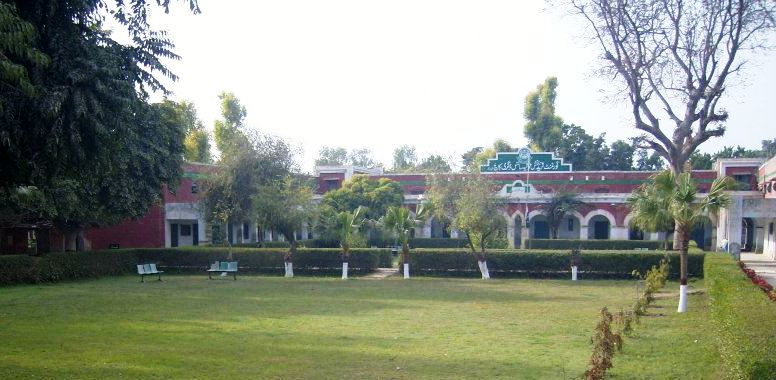
Ghausia Faridia Islamia Primary School, Toba Tek Singh.
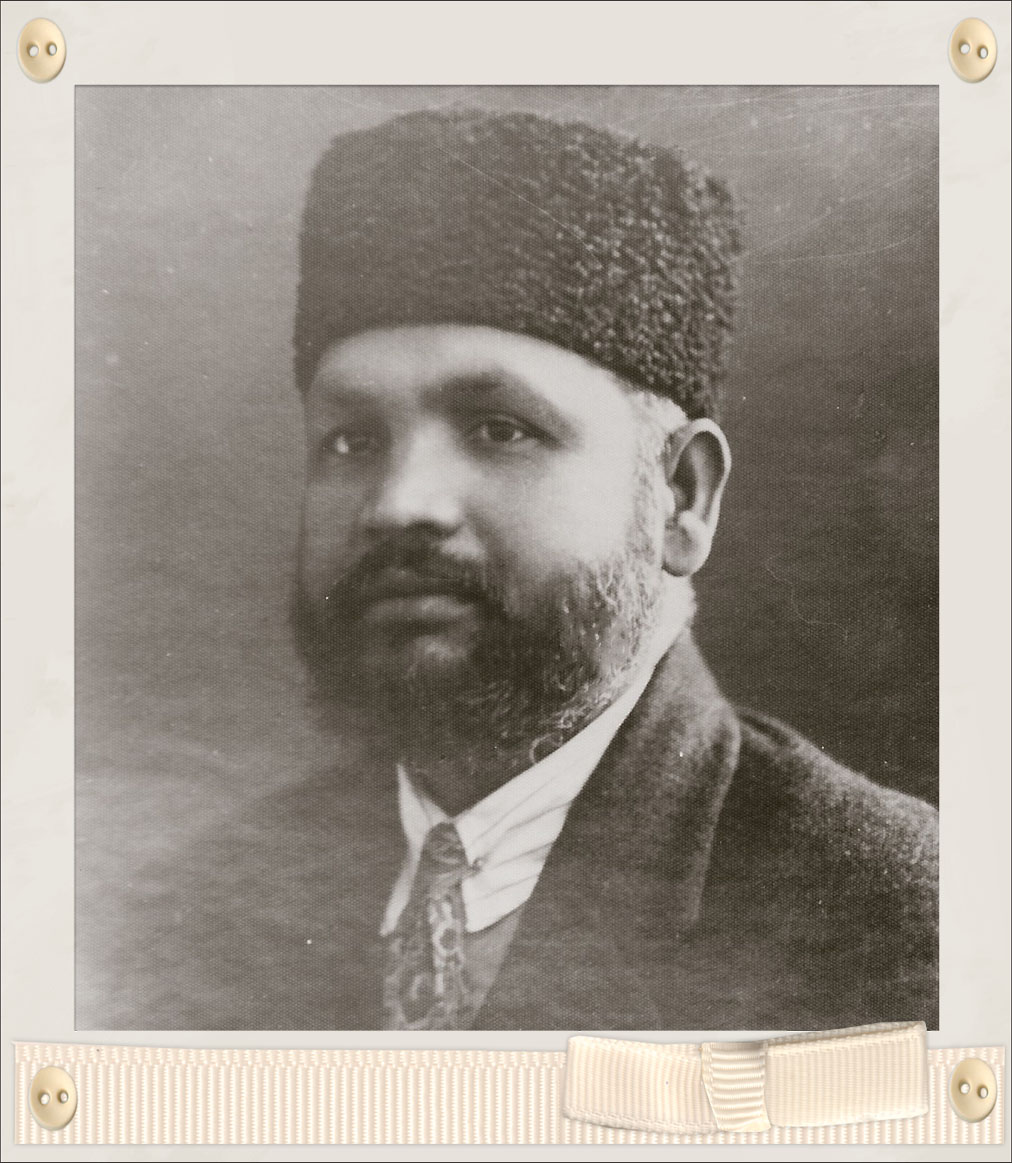
Headmaster Mohammad Yakub Khan & Ghausia Faridia Islamia Primary School, Toba Tek Singh, India.
(S.Ahmad)

Ghausia Faridia Islamia Primary School was set up by a philanthropist, the late Dr. Farid Baksh, in 1908 on his own land in Chak 333-GB Toba Tek Singh, a remote village in the Lyallpur district in the Punjab Province of British India. The scarcity of resources meant that it had to be set up in a corner of a tiny dispensary which Farid Baksh had opened in 1902. Farid Baksh had once been part of the army’s medical core as a compounder and ran the dispensary in order to serve the remote villages of the area. As the number of students attending the school increased, Farid Baksh decided to build two rooms adjacent to his house which could accommodate 200 students. He then had the school recognised as an Anglo-Vernacular primary school – a school which taught in English as well as in urdu, by the school inspectorate in the area. Subsequently, a board bearing the name ‘Ghausia Faridia Islamia Primary School’ was put up at the school entrance. Students from far-off villages began pouring in, and soon the need to arrange for board and lodging became a necessity. Dr. Farid Baksh and his wife accommodated the students in their home and even arranged for their meals for many years.
A few years elapsed, and finally it was time to seek upgradation of the school from primary to middle-class from the school inspectorate. Although Dr. Farid Baksh had a great passion for setting up the school in Toba Tek Singh, he lacked the necessary expertise in the field. Therefore, he needed someone who could help him to upgrade the school to the standards required by the school inspectorate in the British ruled India to qualify as a middle-class school.
Dr. Baksh was spiritually inclined, and, like many others at that time, came into contact with the Ahmadiya Movement leaders in Qadian in 1913.The Movement in Qadian exercised great influence over the masses throughout the British India and was regarded as being very influential.
Dr. Farid Baksh decided to visit Qadian and meet Hazrat Maulvi Nooruddin, who was an ardent disciple and a great companion of Mirza Ghulam Ahmad of Qadian – the Promised Massiah and Mahdi. He made an impassioned request to Maulvi Nooruddin for help.
Hazrat Maulvi Nooruddin was a kind-hearted person, so he decided to send one of the teachers from Talim-ul -Islam High School in Qadian, Mohammad Yakub Khan, along with Dr. Farid Baksh and asked him to assume the headmastership of Farid Baksh´s school in Toba Tek Singh. He briefed him not to expect any salary as the school was being run under primitive conditions. Yakub Khan was waiting for a government scholarship for higher education in England at that time and when he informed Maulvi Nooruddin about it, Maulvi Sahib replied:
“Please do go and help him. If you do not, the school will be closed down, and the children of the Muslim community will be left without education. Do not worry about the salary; when God closes one door, He opens many others”.
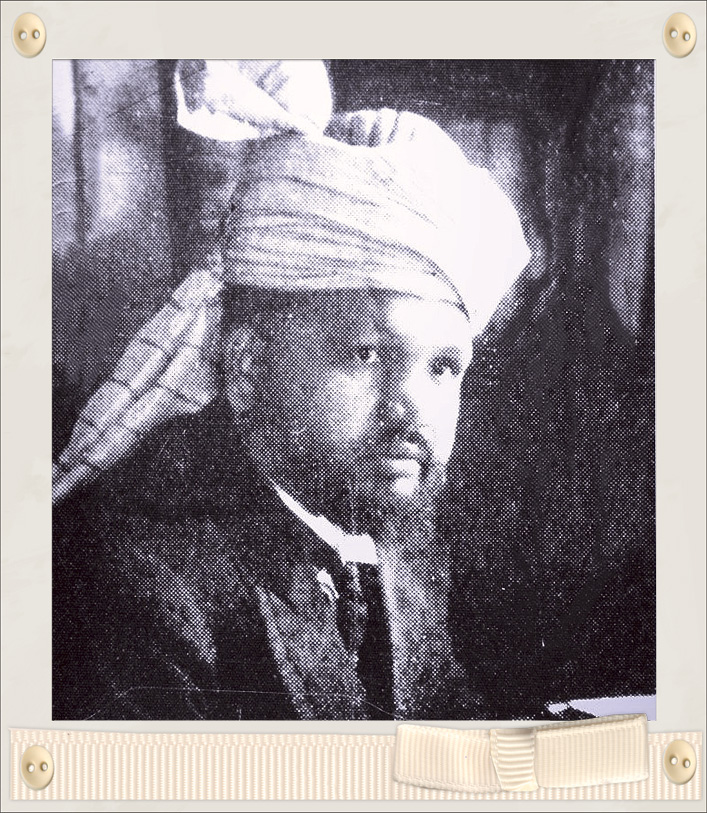
As a result, instead of heading for England, Yakub Khan heeded his mentor´s advice and headed for the primitive Chak Number 333 GB region, Toba Tek Singh in India.
Dr. Farid Baksh and Mohammad Yakub khan left for Toba Tek Singh, Chak 333 (GB) in 1913, where the new headmaster Mohammad Yakub Khan took over the management of Ghausia Faridia Islamia Primary School and brought about all the necessary changes. Before long, the school was ready for inspection by Lala Sunder Das Surri, divisional inspector of schools in Punjab (British India). The institution successfully became a middle-class school in 1913 thanks to the round-the-clock hard work and exceptional abilities of its headmaster, Mohammad Yakub Khan. In his autobiography “Sir Syed of Punjab”, the late Dr.Farid Baksh dedicated a full chapter to Mohammad Yakub Khan and his unusual abilities as an educationist and a great supporter of his school in Toba Tek Singh.
Young Mohammad Yakub Khan hailed from Pir Piai, a small village near Nowshehra in the present Khyber Pakhtunkhwa province of Pakistan. His father Mir Alam Khan was a farmer and a timber merchant in the village. As a child, Yakub Khan attended school in Pir Piai and later in Peshawar. Finally, his father decided to move him to Lahore for higher education purposes. He graduated from Islamia College Lahore in 1910, where he led the college football team as captain. Subsequently, Mohammad Yakub Khan obtained his Bachelor of Training (BT) from Lahore in 1912.
During his schooling period in Peshawar, young Mohammad Yakub Khan had met the illustrious Qazi Mohammad Yousaf and later Mirza Yaqoob Baig in Lahore – both great companions of Mirza Ghulam Ahmad of Qadian. Mirza Yaqoob Baig had once taken young Mohammad Yakub Khan to see Mirza Ghulam Ahmad Sahib during the latter’s visit to Lahore sometime in 1906. Young Yakub Khan was greatly influenced by Mirza Ghulam Ahmad of Qadian and his teachings. Everything new caught his interest deeply and the idea of revival of Islamic values by Hazrat Mirza Ghulam Ahmad touched his heart and soul. He made up his mind and travelled to Qadian to pledge his allegiance to the Ahmadiya Movement at the hands of Hazrat Maulvi Nooruddin Sahib in Qadian in 1912 and subsequently pursued teaching in Talim-ul-Islam High School, Qadian, India.
After serving there for a few years improving the school standards, Yakub Khan moved to Lahore and, between 1923-36, took charge of the famous The Light – the official magazine of the Lahore Ahmadiyya Movement in Islam.
Subsequently, he assumed the headmastership of the Muslim High School, Brandreth Road, Lahore between 1936-1947.
In 1922, he was sent to England by the Ahmadiyya Movement and became part of the Khwaja Kamaluddin´s staff at the Shah Jehan Mosque at Woking in Surrey, England.
In 1948, he became chief editor of the famous The Civil & Military Gazette Lahore – serving in that capacity until 1954. However, he stayed in close contact with Dr. Farid Baksh, and whenever Dr. Farid Baksh visited Lahore, he almost invariably met Yakub Khan and his family. To Yakub Khan’s household, Dr. Baksh was part of the family and lovingly called Baba Farid Baksh.
In 1925, Ghausia Faridia Islamia Middle School attained the status of High School, and in 1957, it became a College in the newly founded Pakistan. The college, being away from big cities, enjoyed less support from the government and the scarcity of funds for the running of the College soon became a renewed problem for Dr. Farid Baksh.
In 1959, Dr. Farid Baksh decided to embark on an international tour to Europe to raise funds for his school.
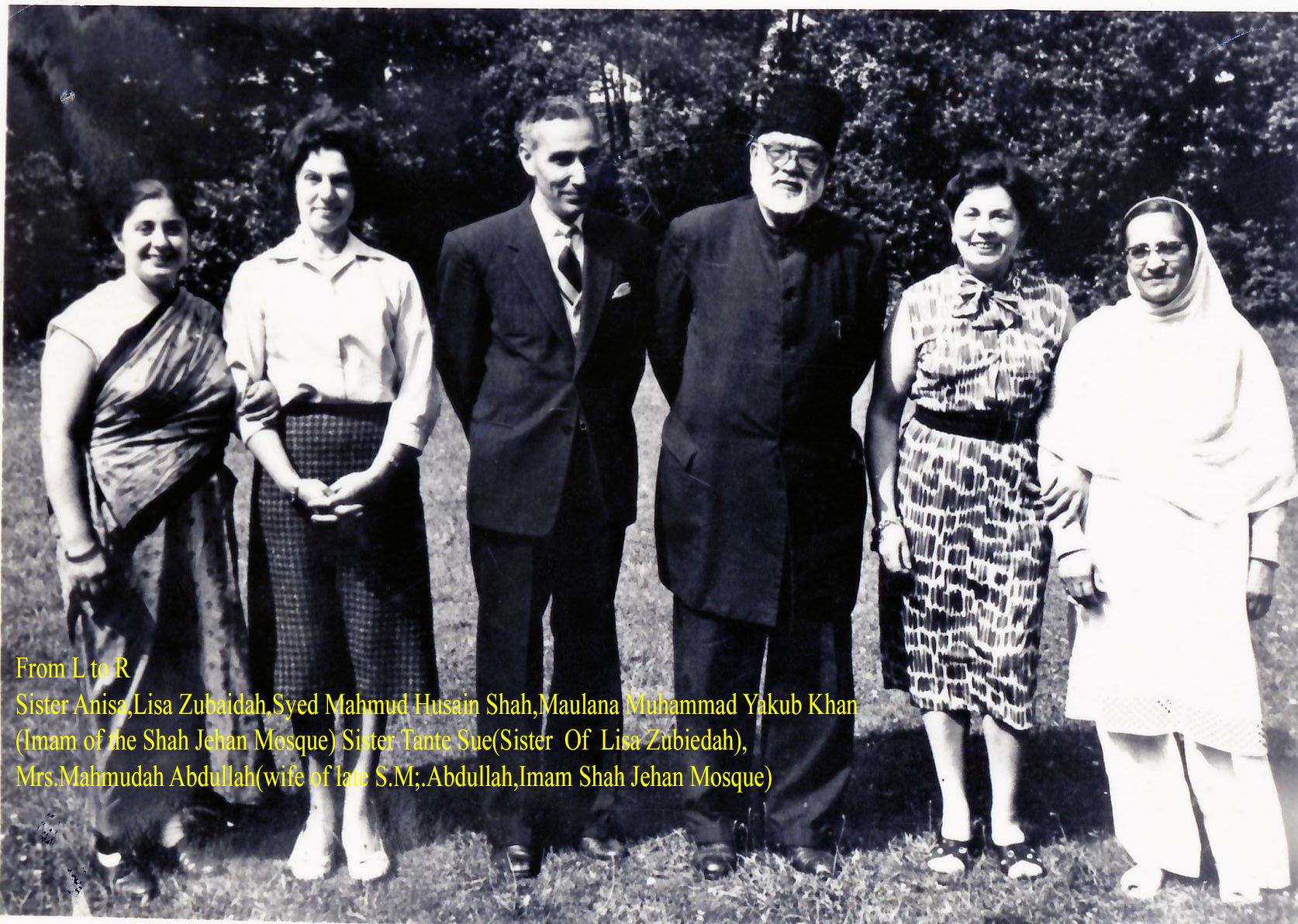
He began his tour in London where none other than his old friend and patron, the first headmaster of Ghausia Faridia Islamia Primary School, Mohammad Yakub Khan, met him at the London Heathrow airport on 10 January 1959. Mohammad Yakub Khan was now Imam of the famous Shah Jehan Mosque at Woking in Surrey, where he served as Imam and Missionary of Islam for the fourth consecutive stint under the auspices of the Ahmadiyya Movement in Islam between 1959-1961.
Dr. Farid Baksh and one of his sons, Mustafa Kamal, stayed at the Imam´s residence at Sir Salar Jung Memorial Hall, which was adjacent to the mosque. Dr. Farid Baksh toured London and other cities with the help of Imam Mohammad Yakub Khan and some of his relatives, collecting funds for the college. The British press gave him full support, giving details of his college in Pakistan and the fund-raising tour.
The Pakistani community, as well as indigenous Britons in London and other big cities of the UK, fully endorsed his efforts and generously donated money for the cause.
During his tour, he met the illustrious Dr. Abdus Salam (who worked at Imperial College London as a professor of theoretical physics and who later received the Noble Prize in physics in 1979).
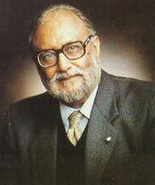
Dr.Abdus Salam was instrumental in Dr. Farid Baksh’s fund-raising efforts. It was Dr. Abdus Salam who advised him to purchase the latest equipment for his college science library and offered him help in buying all the equipment in his own name, tax free in the UK and duty free in Pakistan – on discounted prices. Dr. Farid Baksh returned to Pakistan after a successful tour of Europe.
Today, Farid Baksh Ghausia Primary School has become Government Farid Baksh Ghausia Degree Science College (since 1987) and is affiliated with the University of Punjab in Pakistan.
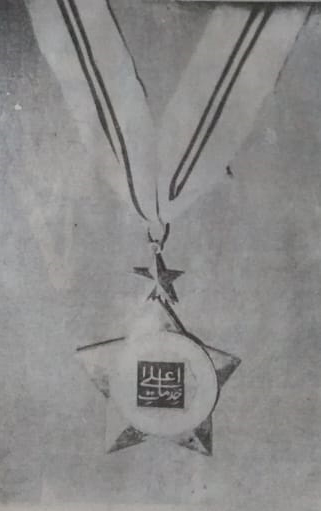
In recognition of Dr. Farid Baksh’s services to the country, President Field Marshal, Muhammad Ayub Khan, awarded him the Sitar-e-Khidmat and the honourary title of “Punjab Ka Sir Syed” in 1960.. The village of Chak 333-Toba Tek Singh has now been renamed as Faridabad after Dr Farid Baksh.
My Sources:
Autobiography of Dr. Farid Bakhs of Toba Tek Singh “Punjab ka Sir Syed” by Shamim Afza Shamim published in 1989.
Mohammad Yakub Khan at aaiil.org
Information collected from Mohammad Yousaf Khan,Lahore,Pakistan.
Dr Mubarik Khan, Fairfax,Virginia, USA.