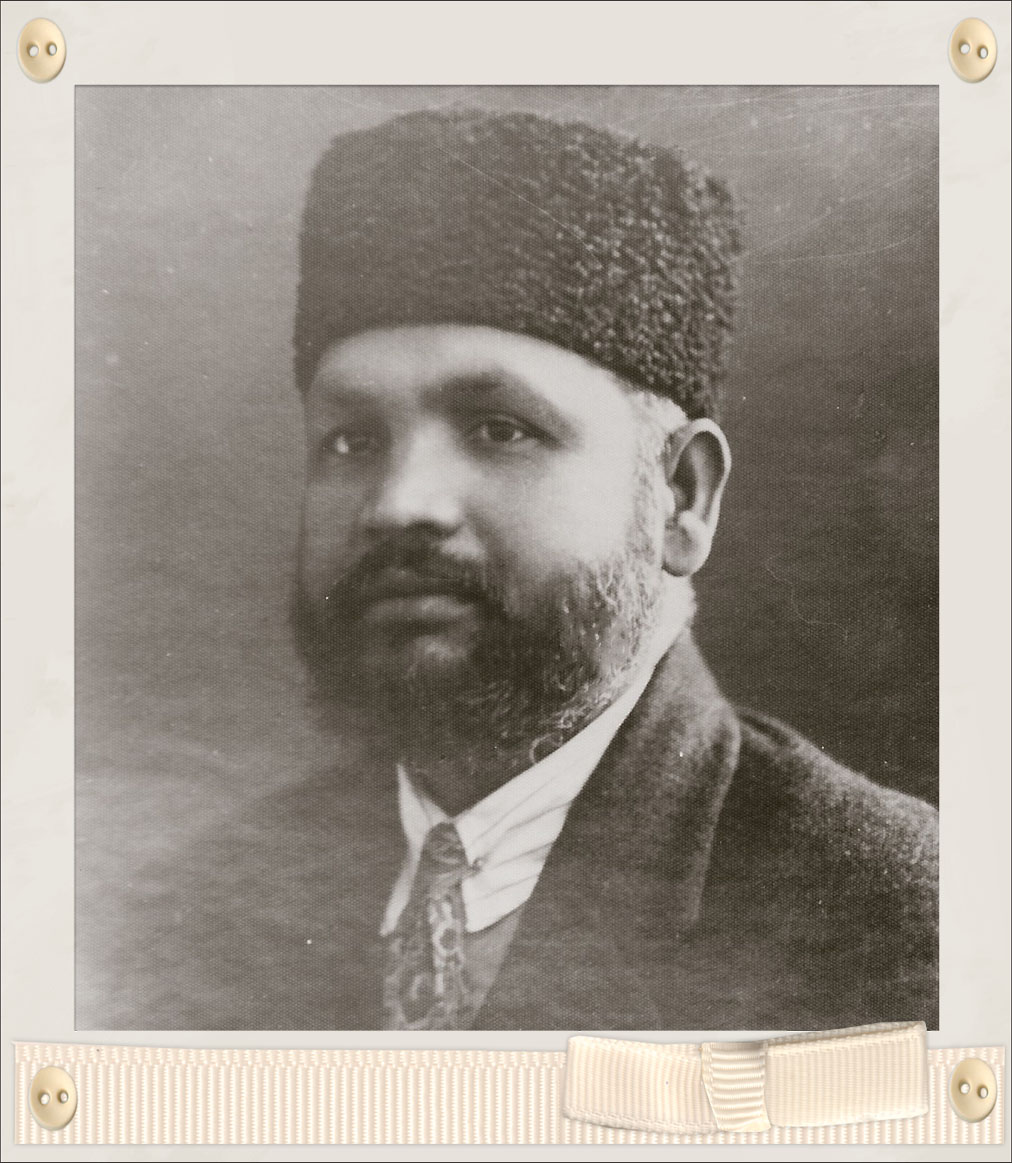
FAMILY PLANNING: Is it Un-Islamic?
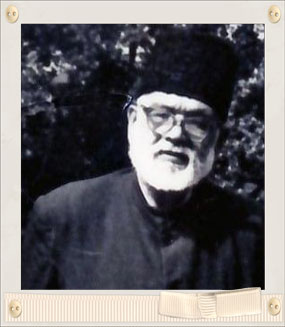
Mohammad Yaqub Khan
Editor : The Light
Family planning is becoming the most burning social problem of the day all the world over. Nevertheless, it is the most controversial question on which world opinion is sharply divided. More than half of Christendom, the Roman Catholic world is dead against it as a sacrilege and an abomination in the eye of God. Scientists are emphatic that unless something is done to arrest the present-day birth-rate, no amount of development of food resources made possible by modern science, will be able to catch up with the pace of rise in over-population, and humanity must be in for a terrible catastrophe.
In Pakistan, family planning has so far been a purely academic question. Since it has won official recognition and the new regime has taken it up seriously as a pressing social reform, it has come within the range of practical politics, giving rise to a spirited public controversy.
We have before us one such discourse on the subject in Urdu from the pen of an Islamic scholar who has not only a deep insight into the teachings of the Quran and Sunnah but is the product of modern education with a wide range of outlook and a great deal or scientific objectivity. These lines are intended as an appraisal of the arguments adduced therein.
Family planning is one of the few most delicate and complicated questions on which much can be said on both sides. The same is true even of its purely religious aspect, which the book in hand is primarily concerned with.
To take this aspect first, it is difficult to say whether the writer, by marshalling some verses of the Qur’an and some sayings of the Prophet ﷺ has made out a case for or against himself.
The verdict of the three Ahadith he quotes, we are inclined to think, tilts the balance, notwithstanding his ingenious explanations against the cause he has set out to uphold.
The most clear-cut of these is the Hadith from Abu Dawud and Musnad-i-Ahmad (p. 10) wherein the Prophet ﷺ gives an emphatic lie to the contention of the Jews who described ‘azl, the form of birth control then in vogue, as child-killing on a miniature scale. Kazabat-il-Yahudu, the words used by the Prophet ﷺ, is a very strong expression, and if the Prophet ﷺ saw anything very wrong in the practice, his refutation of the Jews would not have been so sweeping and unqualified. This Hadith anyway should clinch the issue that the Prophet ﷺ did not look upon birth-control as tantamount to child-killing.
The Hadith from Muslim (p.11) no doubt identifies birth control with child-killing in substance, but its weight is definitely offset by another Hadith (p. 33) on the authority of a Companion of Umar’s eminence which says that the Prophet ﷺ forbade ’azl in the case of free women as wives ”unless practised with the latter’s consent”. If the Prophet ﷺ really took the same view of ’azl as given in the first Hadith (viz., as a form of child-killing), the question of the wife’s consent did not arise. Child-killing is child-killing, and the wife’s consent could not change its complexion as such.
Coming to the Quran, the very first thing that must be taken into consideration is that there is no direct mention of birth control anywhere in the Book. If in God’s eye, it were really the absolute abomination it is made out to be, ’azl should have been bracketed at least with the two other apparently lesser evils of Khamar and Maisar (drink and gambling). It is a fact that like these two, ’azl also was a common practice at the time. If it were really such a bad thing, the verse would have read as:
innamal khamru wal malsiru wal ’azl, rijsun min `amal-ish-shaitan.
إِنَّمَا ٱلۡخَمۡرُ وَٱلۡمَيۡسِرُ وَٱلۡأَنصَابُ وَٱلۡأَزۡلَٰمُ رِجۡسٞ مِّنۡ عَمَلِ ٱلشَّيۡطَٰنِ
SURAH AL-MA’IDAH AYAT 90 (5:90 QURAN)
The only verse which anti birth-control list fall back upon is:
La taqtulu auladakum khashyata imlaq…
وَلَا تَقْتُلُوا أَوْلَادَكُمْ خَشْيَةَ إِمْلَاقٍ ۖ نَّحْنُ نَرْزُقُهُمْ وَإِيَّاكُمْ ۚ إِنَّ قَتْلَهُمْ كَانَ خِطْئًا كَبِيرًا
(Surah Al-Isra -Verse 31)
Don’t kill your children for fear of lack of means of subsistence. Did the verse really have in view the practice of ’azl which was in vogue in Arab society? That ’azl may by implication be included into this prohibition is quite another thing, but it will be too much to think that the verse was specifically aimed at the practice of ’azl, considering that while the Qur’an specifies some other social evils it is completely silent on ’azl.
The commentators, no doubt, do deduce denunciation of ’azl from this verse. But their second inference from this very verse should go in favour, rather than against birth control. To neglect the proper education and upbringing of children is also inferred from it, and, obviously, this can not but happen in poor homes with many children and too scanty means to properly look after them. And there indeed lies the whole point in the case for birth Control. It is quality rather than quantity in manpower that constitutes a nation’s real strength. The instance of the Quaid-i-Azam cited in the book against birth control (p. 45) was also really a case of proper education and training, rather than the mere incidence of his birth. He was just one out of quite a big family of children, but what made him what he became was the high education, training, discipline, and good society which he got. It is rather surprising that it should not have struck the learned writer that the citation of Quaid-i-Azam’s case goes against his theory of numbers. Here is one man who pulled more weight than millions of his contemporaries.
Another Quranic authority quoted against fear of food shortage is the verse:
”There is no creature on the earth but on God rests the obligation to provide its means of subsistence” (p. l8).
وَمَا مِن دَآبَّةٍ فِى ٱلْأَرْضِ إِلَّا عَلَى ٱللَّهِ رِزْقُهَا وَيَعْلَمُ مُسْتَقَرَّهَا وَمُسْتَوْدَعَهَا كُلٌّ فِى كِتَـٰبٍ مُّبِينٍ
Hud (The Prophet Hud) 11:6
We should never forget that all such promises of the Qur’an are subject to the use of common sense and personal effort on man’s part. This verse certainly does not mean a blank ration-card for everybody. What about the million people who perished in the Bengal famine in recent past?
The author has started his inquiry with a mind predisposed against birth-control, but he is not unmindful of the difficulty of his task. He has done his best to bring the gift of a balanced mind to bear upon the question, and very rightly claims nothing more for his thesis than just notes which he is still trying to fully digest, and invites others interested in the nation’s welfare on such a vital issue to supplement with their suggestions.
These lines are in response to that call. It seems to the writer that while procreation is one of the main objects of matrimony in Islam, it does not want to make man and woman just child-bearing machines. This natural function has been subjected to so many other demands of practical wisdom and common sense. The very fact that the Qur’an restricted unlimited polygamy to four (even that under special conditions) is an indication as to the general trend of its teachings in the matter of procreation. If the idea was to multiply man’s seed like the sands of the desert, as the Biblical phrase goes, there should have been no restriction on polygamy. Conjugal affection, means, a manageable family size, a happy home where children can be properly looked after and brought up – these and so many other factors should constitute a healthy brake on procreation.
To apprehend that birth control may result in reducing the Prophet’s ummat (p.7) in comparison to the followers of other religions is not much of a compliment to a Faith which claims to be a world religion by virtue of its inherent appeal, not by the method of procreation.
The argument that the Roman Catholic Church is apposed to birth control should in reality be a strong argument in its favour. Almost every Catholic country that we know of – Spain, Ireland, Italy – is poverty-ridden and backward.
So far as the limitation on the number of children per family is concerned, we see no religious obstacle in the way. To our mind religion will have a say when it comes to the method of birth-control. Perhaps the author in the fuller discussion he has in mind, would apply his analytic gifts to the assessment of the various methods, and prescribe some clean ones which should ensure family control without offending against the requirements of moral decency, religious sanctity and hygienic cleanliness.
One Quranic verse in this connection comes to mind, which should furnish a clue to Islam’s attitude towards birth prevention and at the same time indicate the line how to do it. This is verse 24:33 which enjoins chastity until one is in an economic position to find a match:
”And as for those who are unable to marry, let them live in continence until God grants them sufficiency out of His bounty, And if any of those whom you rightfully possess desire [to obtain] a deed of freedom, write it out for them if you are aware of any good in them: and give them [their share of the wealth of God which He has given you. And do not, in order to gain some of the fleeting pleasures of this worldly life, coerce your [slave] maidens into whoredom if they happen to be desirous of marriage; and if anyone should coerce them, then, verily, after they have been compelled [to submit in their helplessness], God will be much-forgiving, a dispenser of grace”!
Al-Nour (The Light) 24:33
Firstly, here is a clear recognition of a link between matrimony and the means to support the family. Secondly, it should also be a guide to married couples as to keep family dimensions within check through abstention rather than artificial contraception. Certain sayings of the Prophet ﷺ advising fasting to supress sexual urges also support that line of action. But anyway, this is art issue on which, we feel, the author should concentrate rather than on finding a religious license for uncontrolled procreation.
The only convincing part of the author’s case against birth control consists in his exposure of the scientists’ claim that the world is heading towards a food crisis or shortage of living space. The statistics he gives should show possibilities of unlimited development of Nature’s unlimited reservoirs of resources, hitherto lying untapped. Likewise vast tracts of the earth’s uninhabited surface should provide ample outlet for colonisation for over-populated regions. The Quranic verses he quotes in this connection (pp. 27 and 37), emphasising the boundless expanse of re-sources created by God, and commending exploration or the earth’s surface, to our mind, constitute a mare convincing argument against any indiscriminate, nationwide campaign of birth control than the verse about Qatlul-aulad (child-killing), or the ahadith about ’azl.
The safest conclusion to draw should be to steer a middle course – neither unbridled procreation regardless of economic means, nor a panicky wholesale nation-wide campaign of birth-control on the strength of an imaginary fear of food shortage, which betrays a reflection on the unbounded expanse of God-created natural resources. Scientists tell us that this earth of ours, with all its huge size, is little more in the starry creation than a particle of sand in a desert. To imagine of such a bounteousness of unbounded dimensions that a time will ever come when man will find all of nature’s resources exhausted is to betray one’s own little knowledge. Nevertheless, the actual demands of economic conditions, as they vary from family to family, can not be ignored in determining the size of the family. It is within these two extremes that lies the safest course. Let there be a nationwide awareness to the existence of the overpopulation problem, and the need to keep family within one’s means. But at the same time there could be no indiscriminate race extermination out of imaginary fears conjured up by the daily shifting data of our imperfect sciences.
The author has done a great service in setting the ball rolling in the direction of a much-needed inquiry. One may not agree with some of his arguments, but that is immaterial. What does matter is to focus attention on this very vital problem confronting the nation, and this the book has very eminently done.
(The Light – February 16, 1960 – LAHORE)