EAST-WEST IMPACT
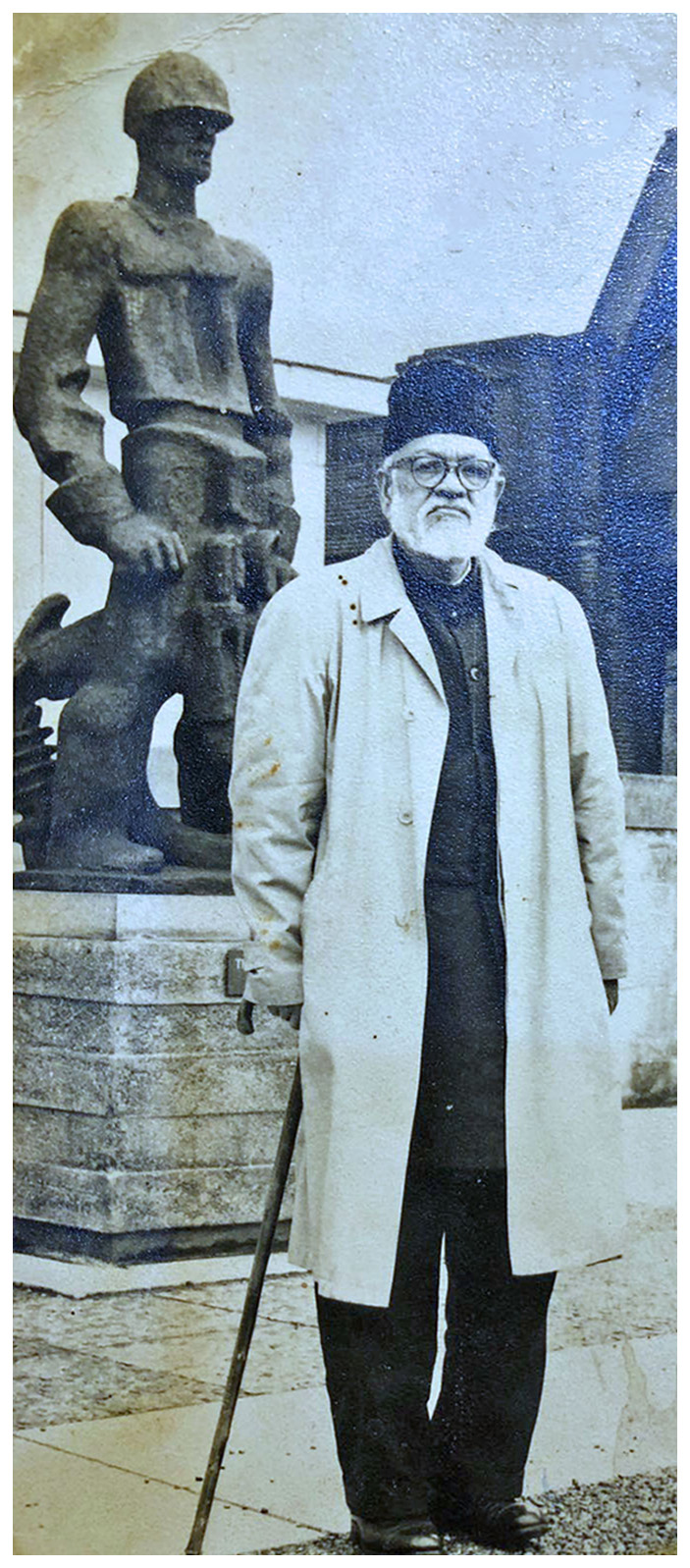
Muhammad Yakub Khan
Is Western culture really all that bad as it was painted to be at a Lahore symposium of eminent educationists, themselves mostly the product of that culture?
If moderation and self-restraint are the hallmark of good culture, the West, we are afraid, presents a much better picture of that quality than was reflected in the wholesale condemnation of Western culture at the symposium. No Western critic, much less a responsible body of educationists, would go for a non-Western culture with such self-abandon as marked the utterances and resolutions at the symposium, turning a stark blind eye to its good points.
The anti-Western out-burst at the symposium was in reality the greatest condemnation of the kind of culture which these distinguished educational reformers met to champion.
We must hasten to add that nothing could be farther away from the true spirit of Islamic culture of which the main trend is to see the good in others rather than pick holes in them. Fair play, sportsmanship and objectivity in dealings with others and judging their ways of life, which today undoubtedly are the strong points of Western culture, were once the hallmark of Islamic culture.
The Qur’an which is the fountainhead of Islamic culture does not deny the good even in the evil of alcoholic drinks, which it forbids on the ground that the evil thereof out-weighs the good. What a standard of fair criticism and objectivity!
The kind of self-glorification indulged in at the symposium breathed more the spirit of Western nationalism, which is already fast dying out, than that of the universal human sympathies of Islam, which looks upon the whole of mankind as a single nation and avowedly aims at the unification of the human race. In keeping with that sublime objective, the Quranic teachings make respect for other religions and their Founders an article of faith for a Muslim, and forbid belittling or speaking lightly of other nations.
“Let not one nation speak disparagingly of another nation”, so runs the verse, “Maybe it is superior to themselves”.
يٰۤاَيُّهَا الَّذِيۡنَ اٰمَنُوۡا لَا يَسۡخَرۡ قَوۡمٌ مِّنۡ قَوۡمٍ عَسٰٓى اَنۡ يَّكُوۡنُوۡا خَيۡرًا مِّنۡهُمۡ
(Surah 49:11 Al-Hujurat)
The kind of one-track mind which thinks “I am all good, the other all evil” is certainly poles away from the wide-open broad outlook inculcated by Islam, which is always on the lookout for new truth and eagerly seizes upon them, irrespective of wherever they come from.
“The Jews say the Christians are no good, the Christians say the Jews are no good – this kind of talk the Qur’an goes on to say has always been the talk of fools. Good is not the monopoly of any one group.
Indeed, it is one of the greatest achievements of Islam to have pulled down all barriers between man and man to the extent that it has opened even the door of God’s grace to all alike, regardless of the religious labels they bear, making faith plus good deeds the only master-key with which to unlock that door.
There is much in Western culture – an average Westerner’s sense of fair play, devotion to duty, a spirit of adventure and enterprise, and above all a high standard of integrity – which should really be the envy of a Muslim, all these being really so many Islamic virtues. Had we in Pakistan had half of these national virtues, we would not have seen half a dozen governments changing hands within ten years.
There is likewise a great deal in the Eastern, especially Muslim culture, which the West could with advantage adopt. There are good and bad among all peoples. Western culture has its own failings, but to give them credit, they (their thinkers at least) are alive to those failings and want to get rid of them. It bespeaks the lack of proper training in our younger generation that rather than absorb the really good qualities of Western culture, they rush for the uglier side of Western life, the more serious and earnest urges of that life leaving them high and dry. The problem for educationists should be how to give our youth the sense of balance, and self-discipline so as to enable them to take what is good in other, cultures and shun their evils.
Believe it or not, there is far more of balance and self-discipline in the behaviour of undergraduates in British Universities, and the dignity born of them, than one finds in our schools and colleges, where freedom was till recently considered synonymous with hooliganism, walk-outs from examination halls, strikes, and wilful rudeness to authority.
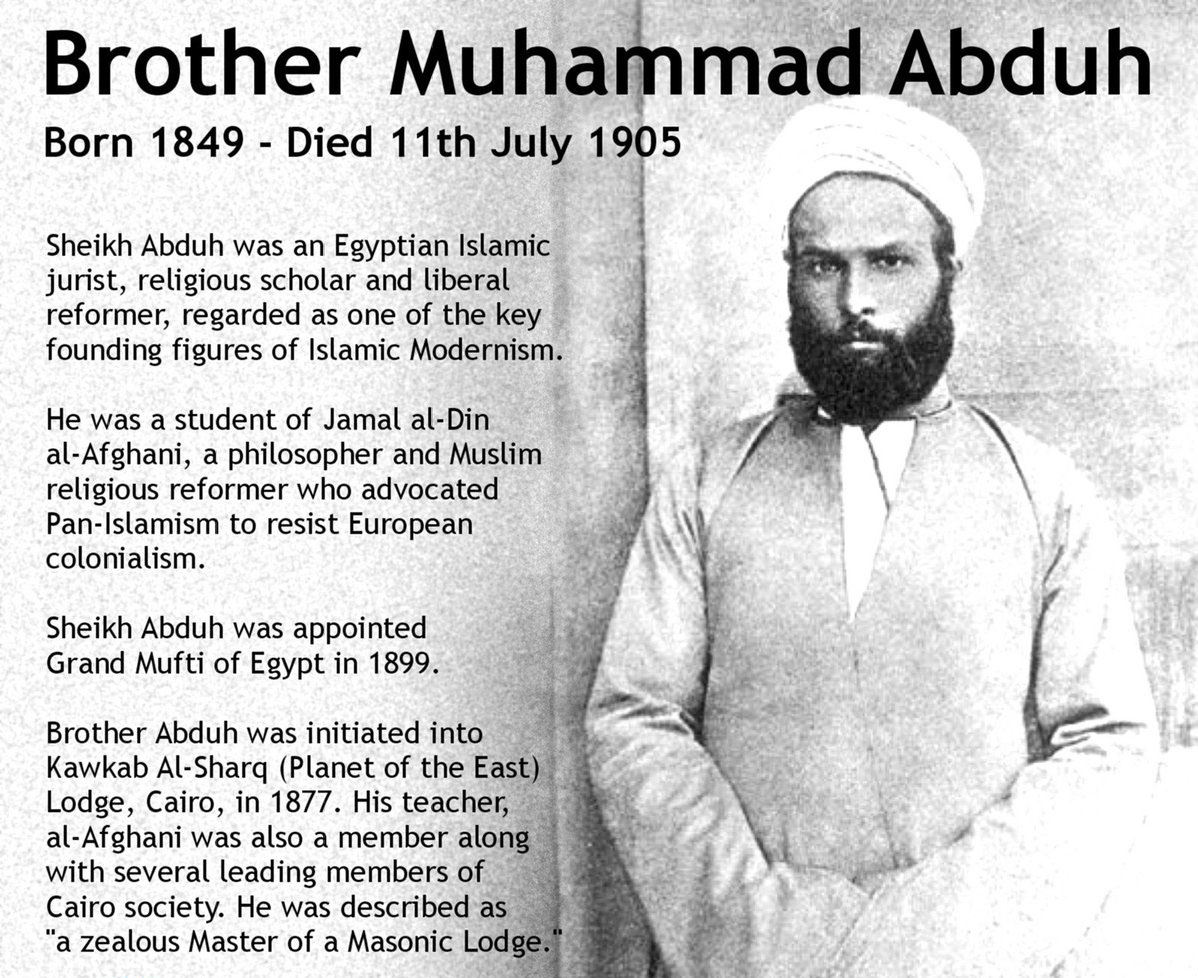
Even in purely religious matters, an average Christian boy or girl knows more of the Bible than does a Muslim youth about the Qur’an. As to really religious life, even a man of the calibre of Muhammad Abduh, the celebrated Egyptian scholar and reformer came back from his European trip with the impression that there was more of Islam in practical life in the West than in the Muslim countries.
As to the foreign educational institutions which the symposium demanded to be closed down, here again the boot lies on the other leg. The average product of a Christian school or college turns out to be more religious-minded than that of Islamic institutions. The late Khwaja Kamaluddin who became the pioneer of Islamic missionary movement in England was a graduate of the Forman Christian College of Lahore. Besides, there need not be anything really very dreadful in Bible teaching. A Muslim student should know something about Jesus whom the Qur’an speaks so highly of and of the Bible which it says contains “guidance and light”. The Sermon on the Mount, for instance, should certainly do much good even to Muslim students.
Even where Islam differs with Christianity, there is no reason why those doctrines should be blacked out from Muslim students. A comparative study should, by sheer contrast, make the Islamic truths shine with all the greater lustre.
The kind of inferiority complex which runs into hysterics at every hostile criticism of Islam is not the Islamic attitude towards the search for truth, which welcomes exchange of views and discussions in a friendly atmosphere, and with sweet reasonableness. It is disgusting to see in the Press every now and then a demand to ban this book or that which contains an attack on Islam or the Prophet (peace on him). Why ban it? Answer the charges therein and explain where the truth lies! Every hostile attack is an opportunity in disguise to make the truth about Islam made known to a wider circle. For our part we would include even Karl Marx’s Das Kapital in the curriculum at the university level.
Islam has nothing to lose in any ideological combat that may be forced on it. It has everything to gain thereby, and as such, welcomes it. Indeed, the Quran anticipated a stage in the evolution of human society when all religions and cultures, including Western culture and Communism, would be thrown into a common vertex on a world-wide scale, when it proclaimed Islam alone, in such an inter-mingling of cultures and religions, is bound to emerge triumphant over every other cult or system.
In the Western educational institutions, there is a studied programme to give the students some knowledge about other Faiths by inviting representatives of those Faiths to give them talks on what their religions teach. That is the true fearless spirit of quest for truth. Study of other faiths and cultures, only widens one’s outlook and enriches personality. The demand to close down the missionary schools and colleges is not only a reactionary step, prompted by inferiority complex which is born of ignorance of the true beauty and strength of Islamic teachings; it is also the height of ingratitude and ill-return for a whole century or more of service which these institutions have rendered to the cause of education in this country.
To encourage the “touch-me-not” attitude in the face of the modern influences and to call upon the youth of the country to withdraw within their own narrow intellectual shells, shutting out all new life-impulses, is hardly the path of survival in this atomic age, when the world is shrinking to the size of a single country, and mankind to that of a single nation. It is the very mission of Islam to promote the fusion of all that is best in all religions and cultures. Indeed, Islam is but another name for the synthesis of all that is of abiding value in all religions and cultures. The youth of Pakistan, rather than bury their heads in the sands of self-complacency and exclusiveness which the distinguished educationists who met at the Lahore symposium would see them do, must grow up to be the vanguard of the new age that is in the making. This they can do by keeping their minds wide open to all the currents and crosscurrents of modern thought.
Whether we like it or not, the West happens to be the nerve-centre of all dynamic life-impulses and to shut these out as gall and wormwood cannot but relegate the lands of Islam into the backwaters of life. The impact into which the East and the West have been providentially thrown is big with possibilities which at the moment may be beyond the reach of our imagination. Islam bas a decisive role to play in this impact, and, as such any retreat from this historic new front would be a denial of our great destiny as envisaged in the Quran. The attitude of isolationism advocated at the symposium which included some top-ranking educators is so out of tune with the spirit both of modern age and Islam that it reminds one of the poet’s rather blunt dictum:
گر ہمیں مکتب و ہمیں مُلّا است
کارِ طفلاں تمام خواہد شُد
M.Y.Khan
(The LIGHT, Saturday – October 1, 1960)