CORRESPONDENCE
Copy of a letter dated December 12, 1921, to the Editor,
the Leicester Daily Mercury, Leicester.

DEAR SIR – Your issues of the 5th, 7th and 9th inst. give publicity to certain views concerning the Prophet Muhammad under the title, the ” Problems of Pan-Islam,” which give rise to some very serious misconceptions. Will you extend me the courtesy of your esteemed columns to say a word in that connection, with a view to throwing light on the misapprehensions?
Major Davy’s otherwise interesting and informed discourse fails to do justice to the Prophet when he observes that ” he was at times cruel and cunning and addicted to sensuality, having many wives.” Permit me to point out for the information of your numerous readers that the reflections are un-merited, not warranted by historical facts and figures.
Any one acquainted with the alpha and beta of the Prophet’s life must have noticed that long before the Call came to him, in fact from his very early days, he enjoyed universal reputation for his righteousness, uprightness and honesty, so much so that he was nicknamed ” Al-Amin ” or the trustworthy. He was the general depository, and even in the days when the whole of Mecca was against him, he had several trusts in his custody. When his house was surrounded by his foes in order to put an end to him as soon as he should come out next morning, his one anxiety was not so much on his own account as for the due return of the deposits with him ; for he wanted to make his escape good for Medina before dawn, in which case he feared he would be causing anxiety to the depositors. Hence he sent for Ali, his cousin, and informing him of his intention, made over all the deposits to him, to be duly returned to the owners the following morning. Mark the gravity of the situation and the anxiety of the Prophet, not for his life, which was hanging in the balance, but for his honour, which he was too jealous to throw into suspicion. Can such a man be justly called cunning?
Now as regards his alleged cruelty. Who does not know that the Prophet and his companions were subjected to incredibly inhuman tortures. The legs and hands of one, for instance, were fastened to four camels, each one being driven into different directions, thus tearing his body into pieces. After such-like tortures to which they were put for about a decade, they had to bid farewell to their home and hearth, to seek shelter elsewhere. There, too, they were allowed no rest, the Meccans making incursions after incursions on them to extirpate the movement, root and branch. But the time came when the exiled, persecuted and detested Muhammad became the sole master of Mecca, his torturers at his sole mercy. What was the treatment meted out to them? They were granted general pardon. Is it fair to accuse such a man of cruelty?
On a certain. ” Eid ” festival, while the Prophet was walking along towards the congregation, with his two grandsons, he met a child on the way, lonely and sad. ” Why don’t you go to the congregation? ” asked the Prophet. ” My father is dead,” replied the child, ” I have none to carry me.” ” Come along,” said the Prophet lovingly, taking the child up on his shoulder, ” I am your father; I will carry you to the congregation.” One of the Prophet’s companions once happened to come across a dog licking mud by a well on account of excessive thirst. There being no arrangement for drawing water, the companion made his turban into a rope and his leather-sack into a bucket, and drawing water, quenched the animal’s thirst. This came to the Prophet’s notice, on which he remarked that the single act of kindness to a creature of God was enough to entitle him to access into heaven. A heart full of such tenderness even to lower animals, but cruel to fellow-man – is it conceivable?
Again, female infanticide was a point of honour with the Arabs in pre-Islamic days. The father would dig a pit outside in the open, take the child there and with his own hands hurl the child down and heap earth on the screaming child. When, one such incident was related to the Prophet, he burst into tears. A heart so full of the milk of human nature! Is it not cruel to call it cruel?
Now with regard to the charge of sensuality. Youth is the time when human passions are in their full vigour. It is at this stage that one’s passions may run riot and have the better of him. Till the age of 25 the Prophet leads a bachelor life, admitted by friend and foe alike to be one white sheet, perfectly spotless. At 25 he marries, no young girl, it may be noticed, but a widow 15 years older than himself, i.e. 40 years old. Up to the good old age, 53, he leads his life in the company of this single wife. Is it not absurd on the face of it that one who has led a life of continence so long should be accused of sensuality at an age when the vigour of youth has absolutely left him?
If the Prophet was out, as alleged, to attain power in order to minister to his self-gratification, the object could be attained without undergoing the untold hardships he was subjected to. At a very early period of his mission the Meccans offered him all this if he would only give up preaching his new creed : ” If you want power, we accept you as our overlord ; if you want money, name the sum and it shall be at your disposal ; if you have a fancy for beauty, point to the girl and she shall be in your arms.” But what is the Prophet’s reply? ” Should you place the sun on my right hand and moon on my left, I shall not give it up until it should triumph, or I perish in the attempt.” This surely cannot be the reply of one who aims at self-gratification.
Then come to the mode of the Prophet’s life, at a time when he owned the spiritual as well as temporal allegiance of the whole of Arabia. A matting made of palm-leaves, an earthen jug for water, an ordinary bed, formed the only furniture of his house. For days no fire was made in his house to prepare food, dates being the only provision on which the family would live. Could you honestly style such a man as sensual?
As a matter of fact, circumstances do arise when polygamy becomes a necessity; after a state of warfare, for instance, when in consequence of the falling of the male element of the population the female element preponderates. How to provide for this surplus portion? A woman might work for her living, of which the present-day state of society no doubt permits, but bread and butter is not all she must have. What is the inevitable consequence if left alone? Why, that worst type of the curse of human society—sex-immorality. And what do we find in this country, where the fair sex predominates, and polygamy is disallowed? If polygamy in practice means intercourse with more than one woman, it may safely be asserted that the people here are more polygamous proportionately than in a Muslim country, where you will hardly meet one in a thousand having a second wife. The only difference between the two forms of polygamy is this : In a Muslim country, where it is recognized by law, the husband keeps her in his own house, at his own expense, on a footing of perfect equality with the first wife ; the children born are free from that life-long stigma of bastardy and are entitled to due share in the father’s heritage. In a non-polygamous land she is kept at another’s expense, the offspring bear the stamp of illegitimacy, the pair is guilty of committing fornication in the eye of God, of man, and of their own conscience. Thus polygamy, though undesirable in ordinary circumstances, becomes an unavoidable necessity under such abnormal conditions in order to obviate such an extremely corrupt state of society.
Let it be remembered that Islam does not enjoin polygamy; it only permits it, of course, to provide for such-like abnormalities. As a rule, a Muslim is a monogamist. It was under such a necessity that the Prophet had to take other wives after the good old age of 58, which period of life, it is noteworthy, he spent with but one wife. He was anxious not only to provide for their living, but also to safeguard their chastity, the priceless jewel of a woman’s character from the point of view of the East. Among these, it may be noted, only one was a virgin girl, all others being widows of advanced age.
I hope this will convince many of your fair-minded readers that the Prophet’s character was far above what he is unfortunately misrepresented here to have been. I regret the space of a news-paper article does not permit of a lengthy discourse, or I would have attempted to place before your readers some of the numerous bright gems of the Prophet’s character. The correct spelling, by the way, of the Prophet’s name is Muhammad.I trust you will not, as an English journalist true to your worthy calling, hesitate to give publicity to this refutation of the charges, so light-heartedly brought against a man who founded a civilization unique in the history of the world, who owns to this day the spiritual allegiance of one-fifth of the world’s population.
Yours, etc.,
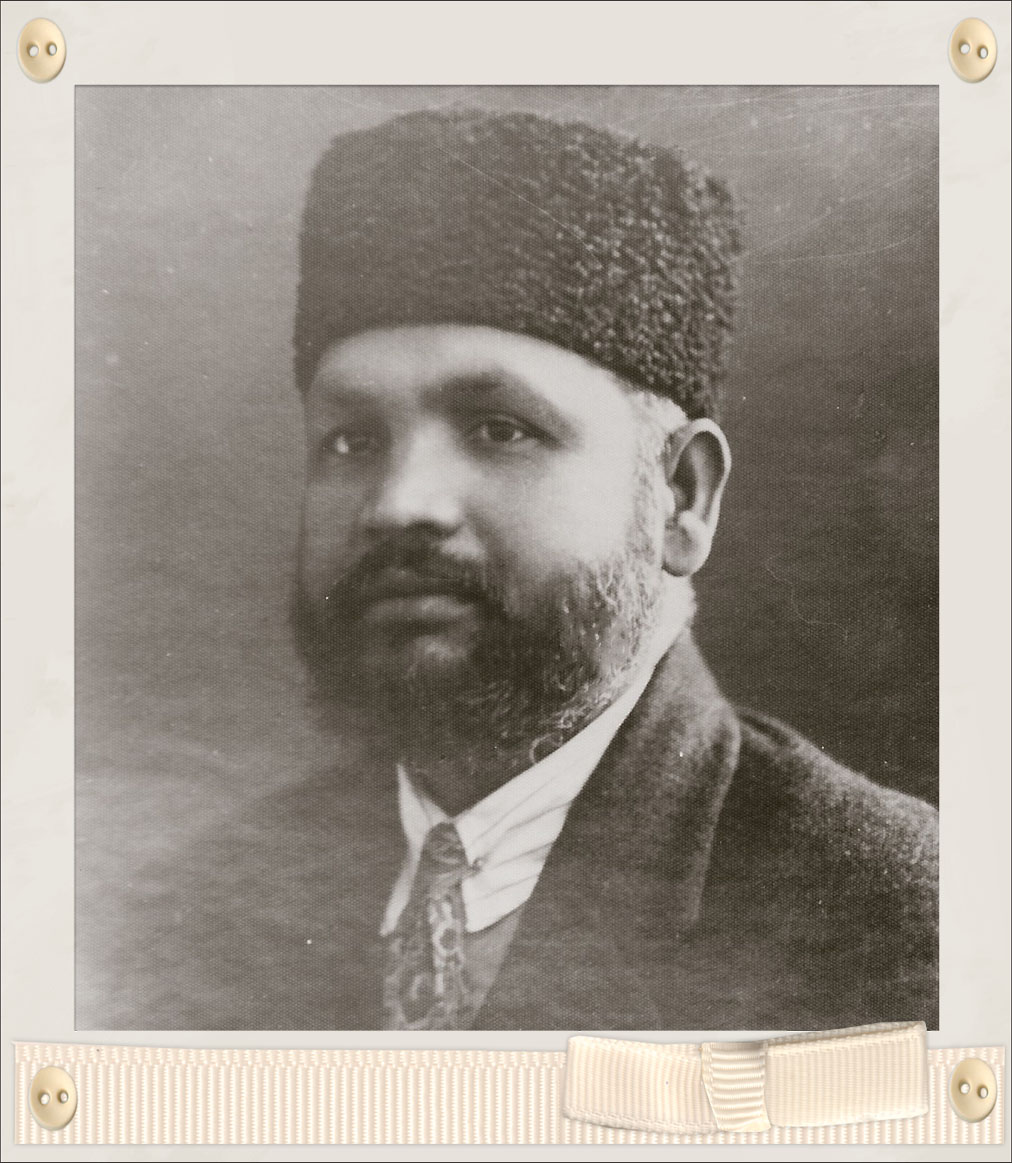
MUHAMMAD YAKUB KHAN.
(We are thankful to the Editor of the Mercury for inserting the above, though a little abbreviated for reasons of space, in the issue for December l4th. – ED.)
(The Islamic Review, 22 january 1922)