CONSTITUTION MAKING – Part 5
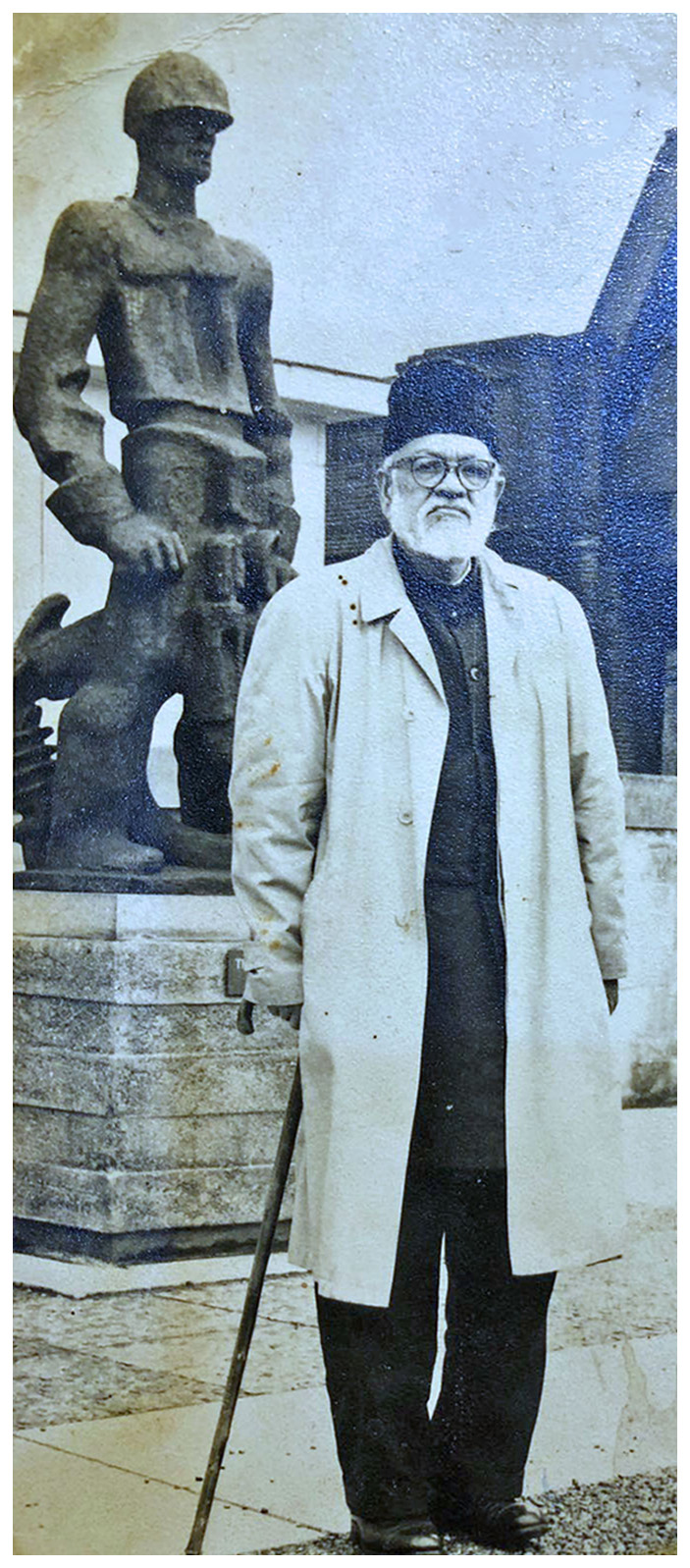
Muhammad Yakub Khan
Focus on Islam’s World Mission
IN the whole cobweb of petty details we have woven around Islam, we have lost sight of its main message and mission, and missed the whole burden of its teachings, which is none other than to weld the whole of mankind in a bond of common fellowship and brotherhood. This is like losing the wood in the trees.
The new era of freedom on which so many Muslim States in Asia and Africa are embarking must mean the turning of the focus on this world mission of Islam. The need for rediscovering and recapturing this higher vision of Islam as a force for goodwill, harmony and integration on a world-scale was never greater than today.
Never before in history did humanity as a whole stand at more fateful cross-roads than today. For good or for evil, all nations, races and colours have been jumbled into one human mass. Out of this seething cauldron of ideas and ideals, is taking shape a new humanity with a new outlook on life and a search for new values. The impact of the West has come in full force to our very doorsteps. This means both a challenge and an opportunity to Islam and the Islamic way.
The measure of a good Constitution will be how far it is alive to this big historic drama on an all-world stage that is silently but unerringly going on. The tragedy is that while the Qur’an devotes chapter after chapter to this most momentous epoch in the onward march of human society, containing broad hints at the big role that awaits Islam in the making of the new world, there is very little awakening even among most erudite and scholarly Muslim circles, to this main mission of Islam as a Divine dispensation for the redemption of a tottering civilisation. The very first thing that our Constitution-making must keep in view in the context, of these larger life-currents on all-world scale is that above everything else, Islam was meant to be a force for integration and synthesis in the midst of racial and cultural diversities.
For the first time in history, Islam gave mankind the big ideas that mankind is but one family, that all peoples are equally dear to God, that He blessed every people with light from Him, that all religions of the world are (at bottom) not only true, but actually one and the same, the various founders of religions being so many channels of Divine Light, and, as such, not only to be respected and revered, but accepted as true Messengers of God.
Can any human brain-trust in the United Nations or any of its sub-sections think of a greater psychological force to bridge differences, eliminate discords, release feelings of genuine good will and common humanity, and bring man closer to man in mutual understanding in a common life, and a common destiny?
The cry of co-existence which is so much in the air these days is the cry of the anguished soul of humanity, yearning for a synthesis, for a coming-together, in a world torn and threatened by conflicts. If it has remained a cry in the wilderness, the reason is that it lacks the only solid basis on which the edifice of true human fellowship can be raised. Islamic principles as detailed above alone provide that sure foundation for a new social order. Providence has placed all nations of the world in a position that they have either to take that only basis, not only of negative peaceful coexistence but of positive helpful co-existence or perish.
The greatest stumbling block in the acceptance of this irresistible Islamic ideology is the bedraggled shape into which Muslim social pattern the world over has fallen. It should be the concern of our Constitution-making to put life in Pakistan on truly revolutionary tracks, so as to make it possible, in due course, for an altogether new social pattern to emerge – a pattern reflecting the truly Islamic values of human equality, harmony and fellowship.
Muslim nations who have started as independent States must remember that if they do not want Communism to sweep their masses, they must counter it with Islam as a superior revolutionary force. A revolutionary force can only be successfully met by a counter revolutionary force. Islam with its message of universal human fellowship combined with a profound respect for human dignity undoubtedly remains the greatest revolutionary force even in this modern age.
Time there was when Islam swept the greater part of the then known world – a phenomenon somewhat similar to the spread of Communism today. Where lay the secret of its irresistible appeal?
The secret was that against the then feudalism-ridden and Church-dominated social background it arose as a revolutionary force, raising the standard of universal human equality and freedom, declaring a war on all man-made shackles on the body and mind of man. The result was that wherever the flag of Islam went, the masses of people groaning under temporal and ecclesiastic tyrannies hailed it as a liberator and a deliverer, and decadent and outmoded institutions and systems collapsed before its onward march like a house of cards. The objective before all Muslim States must, therefore, be to shake their people free of the numerous chains they have forged during the centuries in the name of Islam and enable them to recapture the big basic urges of life which Islam really connotes, and which we have smothered under a whole bushel of forms and formulas, and theological terms and trappings.
This obviously is a matter of a different kind of education than what we have been imparting in our schools and colleges. The educational machinery should be so geared up as to turn the spotlight on this larger vision of Islam and its world mission compared to the petty details with which it has commonly been identified. The Constitution must underline this world mission of Islam as the very pivot of our educational system at all levels, from the Primary to the University. Indeed the whole publicity machinery should be trained on inculcating this larger, liberal outlook of Islam.
One big step which will go a long way to signalise the dawn of a new truly Islamic era will be to make specific provision in the Constitution to eradicate the virus of sectarianism which has for centuries past been eating into the vitals of Islam and Muslim body-politic. Nothing could be a greater libel on a religion which came to proclaim the universal fellowship of mankind at large and bring all the religions of the world closer together than to split its own house into a mushroom of sects and groups. This is too big a subject to be casually disposed of in a note like this. But even a cursory student of the Qur’an cannot miss the fury of denunciation which it has for those who split up their religion into watertight compartments.
إِنَّمَا ٱلْمُؤْمِنُونَ إِخْوَةٌ
All Believers are brothers, which is undoubtedly the greatest achievement of Islam must be the cornerstone of any Constitution which aspires to revive true Islamic values.
Sectarianism is not only the direct negation of Islam; it is the greatest anti-social activity, and now that we are out to re-construct the house of Islam anew, we should have no hesitation in giving it a short shrift. If India had the imagination and courage to abolish untouchability in the Constitution itself, despite its being rooted in the Hindu religion itself, there is no reason why Pakistan should not throw overboard an anti-Islamic legacy foisted on Islam by centuries of stupidity and fanaticism.
This is the correct perspective from which to look at the task of Constitution-making. Very few people, we know, can rise to these heights of vision of Islam as a world force and a world destiny.
With the Ulema, Islam is mostly a matter of outer observances, even of such petty things as dress and personal toilet – a matter of a few food taboos and penal offences. And this in spite of the emphatic and repeated Qur’anic declarations against the kind of so-called pious living to the neglect of the underlying spirit of self-renunciation, purity in thought, word and deed, social service, spending of one’s belongings on the good of others. But the fact remains that if Islam is at all to come into its own and play its destined role in the making of the new world, we must recapture the central note of its message which undoubtedly lies in universal human fellowship. That is the new path – rather the true good, old Islamic path which the Constitution must blaze.
In the all-pervading darkness and the deepening international crisis, born of the narrow national, racial or geographical ideologies, the eyes of eminent thinkers in the West itself are turning to Islam, whose abiding values of faith in One God and universal human fellowship, they feel, alone can provide a stable basis for building a new social order.
(The Light – August 16, 1960)