CONSTITUTION-MAKING PART 2
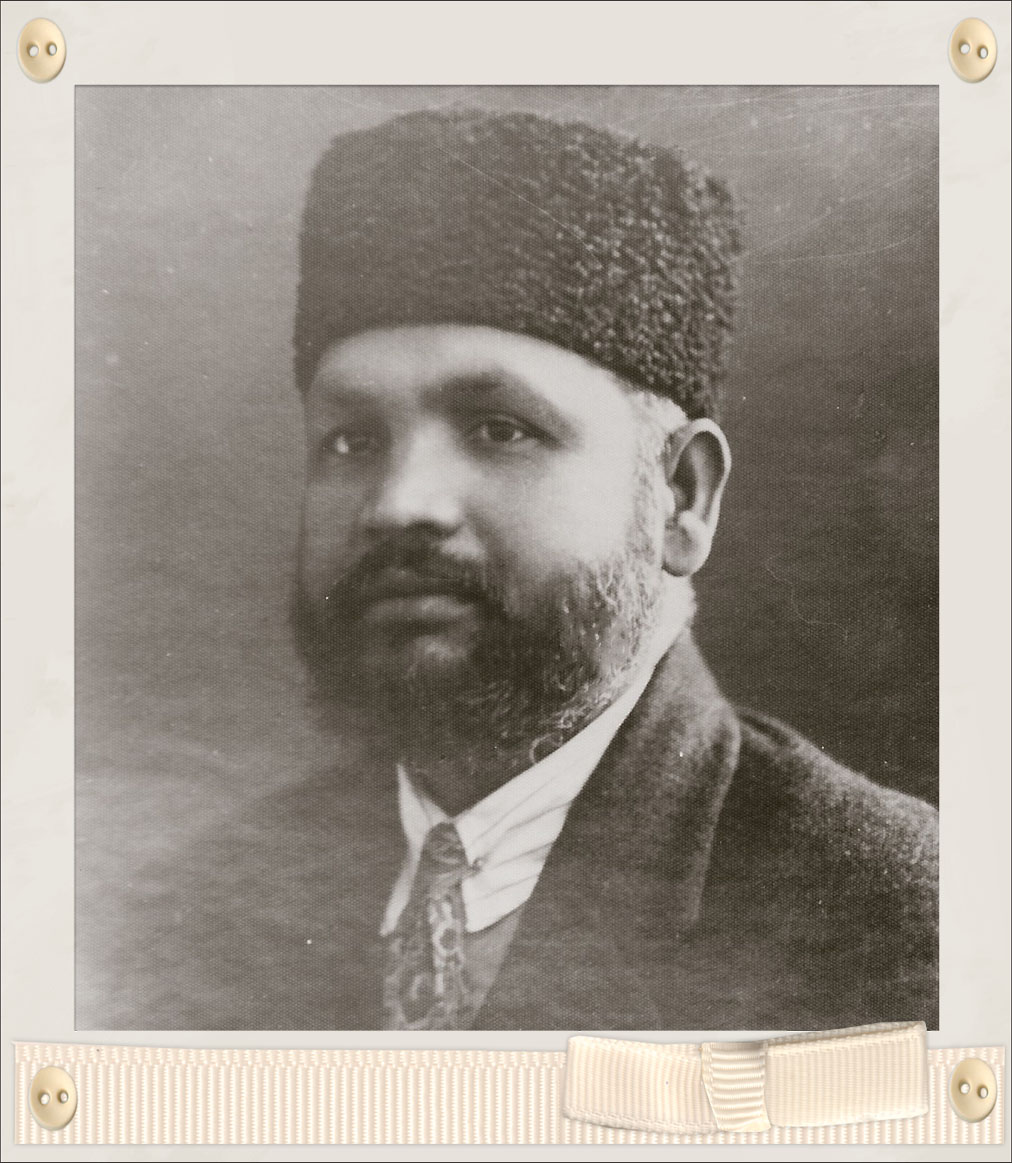
Mohammad Yaqub Khan
Editor The Light
Complete Freedom of Conscience
The Quranic verses, according to the Qur’an itself, fall under two categories the Muhkamat (i.e. those of basic, fundamental, unalterable kind) and Mutashabihat (those that are symbolic, liable to various interpretations). La ikraha fiddin (There is no compulsion in the matter of religion) is one of the fundamentals, which knows no altering under any circumstances, and must form the cornerstone of any Constitution that spires to truly reflect the Islamic principles of life.
The famous historian Phillip Hitti (author History of the Arabs 1937) picks out this verse as one of the brightest spots of the Quranic teachings, it being Islam’s unique contribution, he says, to the religious thought of mankind.
Much confusion of thought has in the past stemmed among Muslim jurists and constitutionalists from subordinating this basic teaching to other considerations. The division of the citizens into full-nationals and sub-nationals on the basis of religions, as advocated by some of our Ulema, obviously impinges upon this basic teaching of the Qur’an. To deprive a non-Muslim of a full citizenship status is certainly the worst form of religious coercion, which the Qur’an categorically forbids. No considerations of political exigencies can override this fundamental law of Islam.
Penalising conversion from Islam to any other religion is likewise tantamount to interfering with the freedom of individual conscience.
The sub-national status given to a people who were vanquished in war meant no more than that vis-a-vis the Muslim ruling class, they occupied the position of a subject people. If in course of time the term zimmi was generalised and applied to a non-Muslim as such, it was an abuse of the original idea, which carried no religious significance.
In Pakistan where non-Muslim minorities never occupied the position of belligerents in opposition to Muslims, where, indeed, they were co-sharers with the Muslims in the struggle for independence, there is absolutely no point in raising the question of their status. They, in their own right, enjoy a status perfectly on a par with the Muslims.
The fallacy in interpreting certain Quranic verses enjoining discrimination or reprisals against non-Muslims lies in treating emergency measures necessitated by, and restricted to war conditions as permanent laws, and making them applicable to peaceful conditions.
Another most controversial question, the relationship of the State to religion, can likewise be easily disposed of, if only we keep in view the above basic rule of “no coercion in religion”. The State should have nothing to do with the individual, so far as religion is concerned. Religion is a matter exclusively between the individual and his Creator and the whole tenor of the Quranic teachings points to the conclusion that complete spontaneity is a pre-condition of a truly religious attitude. The Qur’an has made it abundantly clear that even apparently good deeds carry little value in the sight of God, unless they spring spontaneously from the very depths of one’s being. For a State to undertake the task of bringing about inner transformation in the people is to mass the whole point in the mission of religion, which is essentially a matter of self-effort. The Qur’an tells the Prophet ﷺ himself:
إِنَّكَ لَا تَهْدِى مَنْ أَحْبَبْتَ وَلَـٰكِنَّ ٱللَّهَ يَهْدِى مَن يَشَآءُ وَهُوَ أَعْلَمُ بِٱلْمُهْتَدِينَ
Al-Qasas (The Narration) 28:56
“Surely, Thou canst not guide whom, thou lovest to, but Allah guides whom He pleases”
A misconception, somehow, took root in the minds of Muslims that unless they have a State of their own, they cannot lead an Islamic life. The Pakistan struggle also was based, among other factors, on this presumption. Pakistan was demanded to enable the Muslims to mould their lives in the light and glow of the Islamic ideology. At the birth of Pakistan, the people naturally looked forward to a miracle to happen.
Pakistan, they expected, would be a land flowing with milk and honey, a land filled with Islamic integrity, and Islamic justice – the ”land of the pure”, as the name connoted. This was exactly the kind of escapism in the name of religion from the realities of life which made Marx describe religion as the opiate of the people. Nobody ever gave a moment’s thought to the categorical Qur’anic declaration:
إِنَّ ٱللَّهَ لَا يُغَيِّرُ مَا بِقَوْمٍ حَتَّىٰ يُغَيِّرُوا۟ مَا بِأَنفُسِهِمْ
Ar-Ra’d (The Thunder) 13:11
“Surely. God does not alter a people’s condition unless they alter themselves”.
Here is another fundamental, another basic law of life, viz, that man is the architect of his own destiny. It is up to the people to make of themselves, and of their homeland whatever they would. This fundamental dynamism of national prosperity and strength was altogether missed, and when Pakistan was born, everybody looked to the Government to do everything for them – yea, even to make them good Muslims! Even the first Constitution made this un-Islamic illusion one of the objectives of the State, viz., to enable the Muslims to lead an Islamic life. In goodness name, how can an Act of Legislature or an Ordinance transform villains into angels? The truth lies the other way about. It is the people that make the State what it is. And what was the net result of this self-deception? With every year that passed, life in Pakistan became more and more unislamic. Instead of the State making the people better Muslims, the people vitiated the very springs of the State, till an honest Minister or official became an extinct species. In making the State responsible for the Islamic life of the individual is to put the cart before the horse. That is why for ten long years the State cart of Pakistan stood stuck up in the quagmire of false hopes and false slogans. That was perhaps the biggest psychological rock on which the State bark foundered.
The mistake must not be re-peated. No false hopes as to the Islamisation of the people by the State should be held up before the people. On the contrary, the Constitution should incorporate some clauses to emphasise the duties and obligations of the individual towards the country and the State. It is one of the main points of departure on the part of Islamic social pattern from the democratic way as understood in the West, that it puts more emphasis on the duties of the individual than on his rights. The whole bane of Western civilisation lies in this wrong emphasis on rights, resulting in egoism; greed and a mentality to grab more and more for oneself. This is the direct negation of the truly religious way which puts service of fellow men above self-seeking. The State must steer clear of all dabbling in the religious life of the people. Indeed, it should be impressed upon the people that it is up to them to recapture the true urge of the Islamic way in a spirit of free, uninhibited enquiry.
The Islamic Research Institute recently inaugurated, cannot take things one inch forward, so far as Islamic life is concerned. All it may accomplish is to raise the standard of Islamic scholarship. But Islamic scholarship is one thing and Islamic life quite another. Islamic life is a matter of heart more than of head – a heart filled with faith in the Providence of God and the high destiny of man.
So far as the individual concerned, the State must leave him alone to follow the light of the Qur’an as he understands it. The question of “making” him a better Muslim is not within the competence of the State nor does the Qur’an permit any State action in the matter of religion which would amount to the kind of regimentation in vogue under totalitarian States.
There is another sector of life, however, where the State, according to the Qur’an, does come into the picture. This concerns the nation’s collective life. This covers the security of life and property, social justice, eradication of poverty, ignorance and disease. The crux of the question thus boils down to this: How can Islam give mankind a model Welfare State? That is the one objective the discussion as to the religious role of an Islamic State should be directed to.
(To be continued).
(The Light – 24 July 1960)