Book Reviews
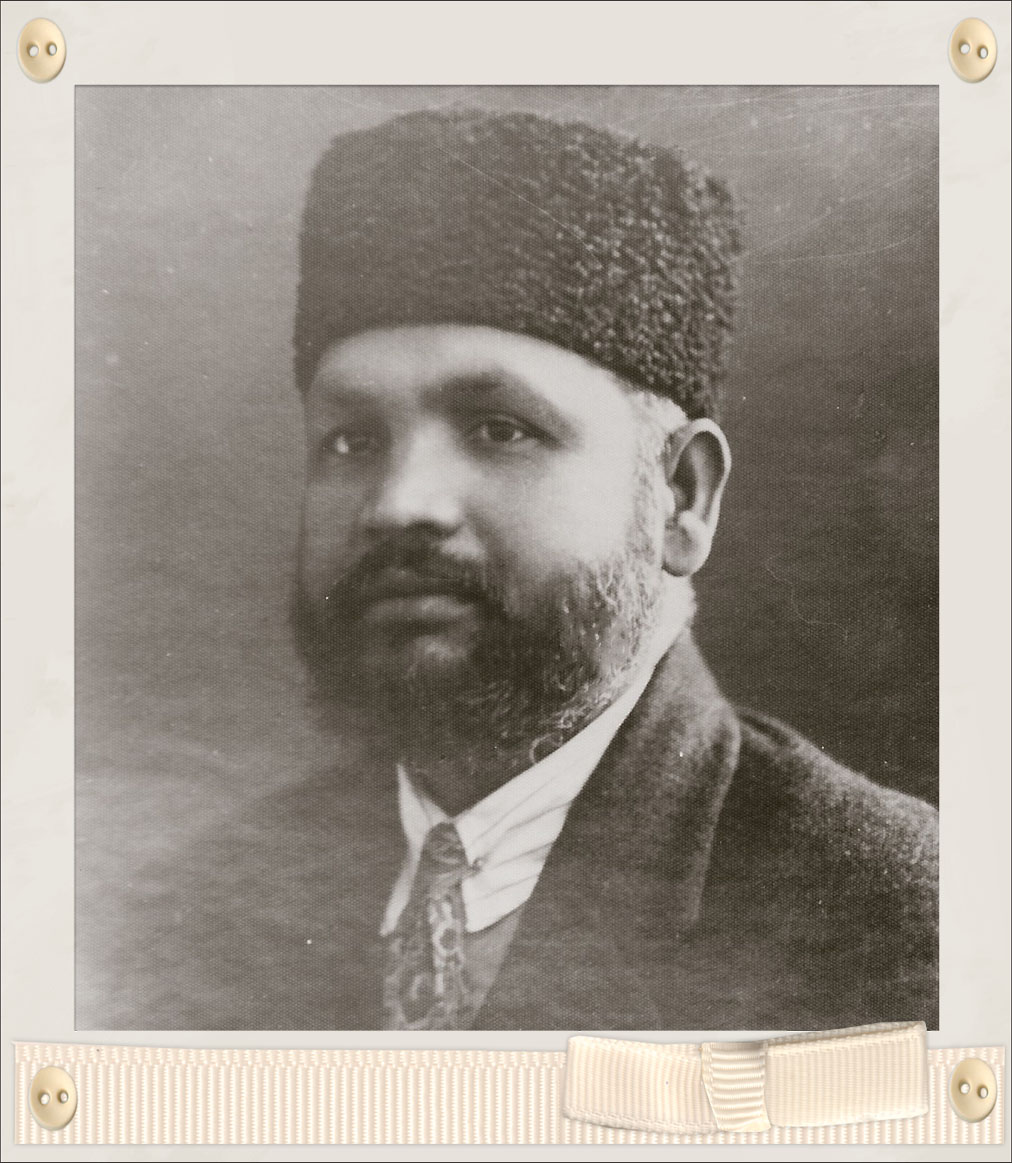
Mohammad Yaqub Khan
Editor The Light
THE IDEOLOGY OF PAKISTAN AND ITS
IMPLEMENTATION by
Dr Javid Iqbal, published by Sh. Ghulam Ali and Sons, Lahore.
The theme of this book is a most hackneyed subject. Since the birth of Pakistan, there has been a whole plethora of talk about the Islamic ideology, even to the extent of nausea. To have brought freshness to this beaten subject so as to produce on it a book which is not only readable but arresting, should do credit to a more mature mind and a more seasoned writer than one would associate with a comparatively young man as Mr. Javid Iqbal is. The foreword by President Ayub Khan deservedly describes the attempt as “brilliant.” Has Javid in him the making of another Iqbal in the fullness of time? The book under review certainly reflects a similar deeply thoughtful cast of mind.
The six chapters comprising the book cover most of the vital issues that confront Pakistan as a state based on the Islamic ideology – relationship of religion to State, duties of State towards the individual and vice versa, fundamental rights, how to weld the various ethnic and linguistic groups in Pakistan into a homogeneous whole, the ideal citizen, how to meet the twin threats of India’s anti-Pakistan policy and Communism.
On all these problems the book has some very useful, matter-of-fact suggestions to make. The section dealing with Communism which it tears to shreds should serve as an eye-opener to our half-baked university undergraduates who, in their youthful love of romanticism, are carried off their feet by the fanciful foe paradise painted by skilled propaganda, camouflaging its real nature as a calculated cutthroat philosophy of world dominion. Since Communists claim an exclusive access to how the historic process works, they think it gives them the right of absolute power by any means.
“Accordingly,” the book sums up, “murder, robbery, sabotage, or the committing of any criminal offence is justified in the interest of the dictatorship of the proletariat.” When, however, it comes to suggesting an antidote, to Communism, it contends itself with “drilling” the Islamic principles of equality, solidarity and freedom into the minds of the people. The opponents of Communism often forget that sweet talk cannot fill empty stomachs. The grinding poverty of the masses of people in all Muslim countries is a standing invitation to Communism which no sermon on the beauties of Islam can offset. In fact, the general decadence, stagnation and degradation of Muslim peoples is liable to be interpreted as a condemnation of Islam itself.
The only effective answer to the menace of Communism lies in a social pattern where there is no more of hunger, ignorance or disease, a pattern such as the Welfare State in Britain where education and medical aid are free, where the basic needs of life such as bread, butter and milk are subsidised, where widows and old people are maintained at state expense and unemployment is practically non-existent. For a definition of Islamic ideology, one has only to pay a visit to England where the State exists solely for the people – not the people for the State.
Another issue where there exists a great confusion of thought is the relationship between the State and Islam. Generally, the view taken is more sentimental than realistic. Since Islam is an all-comprehensive way of life it must have a say in guiding the work of the State. Theoretically, this is a sound position. But it ignores the fact that a theory, however idealistic, can be no substitute for matter-of-factness. The State is concerned with the realities of everyday life – with what the actual state of things is, not what it ought to be. It has, therefore, to function on a level of its own, where religion in the abstract will be a mere intruder.
The verdict of history is also against the meddling of religion with the functions of the State. Religion, throughout Islamic history, has served as a handmaid of politics, and much of the dis-integration in the house of Islam, and for that matter its decadence has been due to the exploitation of religion. The safest course is for the State to sail clear of involvements in religious hair splitting and confine its activities to the security and prosperity of the citizens. The Sheikh al-Islam in Turkey was a centre of much foreign intrigue and had to be given a short shrift by the Ataturk. On the other side there are many instances in the history of Islam, where conscientious theologians of high stature refused the highest office of the Qadi under the State, as something incompatible with the unfettered freedom without which the plant of true religion cannot thrive or blossom. The over-embrace between the Church and the State is bad for both, and each must pursue its own course, untrammelled by each other’s strings.
The fear that if we keep the State and the ideology well apart, it will weaken the foundations of Pakistan, seems exaggerated. Pakistan was founded on just a common Islamic sentiment, and that should quite suffice as a binding force to cement the various sections of the nation. To go beyond that would land us in difficulty. It must not be forgotten that so far as the depths of the Islamic ideology are concerned, Maulana Husain Ahmad was far more erudite than the Quaid-e-Azam. But the latter’s common Islamic sense and sentiment turned to be nearer the requirements of Islam than all the erudition of the Ulema ranged against him. Even the recent-most of Pakistan’s history points to the same conclusion. Field-Marshall Muhammad Ayub Khan has no pretentions to a scholarship of the intricacies of the Islamic ideology. But he and his band of fellow-soldiers have shown a better grasp of Islam by rising to the occasion, rescuing the country from garrulous theologians and politicians and putting it on the highroad to reconstruction, progress and prosperity. That is where the best in Islam and the best in statecraft meet.
We would urge the author to reconsider his suggestions as to State Imams, which will do good in the long run neither to the State nor to Islam as a free religious force. The remedy of ignorant mullas can be found in raising the standard of general literacy and religious education. The book, undoubtedly, entitles Javid Iqbal to a hearing in his own right, and not merely in the reflected glory of being a great man’s son.
The get-up should do credit to the publishers, and the complete freedom from misprints to Syed Munawar who has done the proof-reading.
(The Light – January 24, 1960)