BENGAL AS I FOUND IT – PART 1
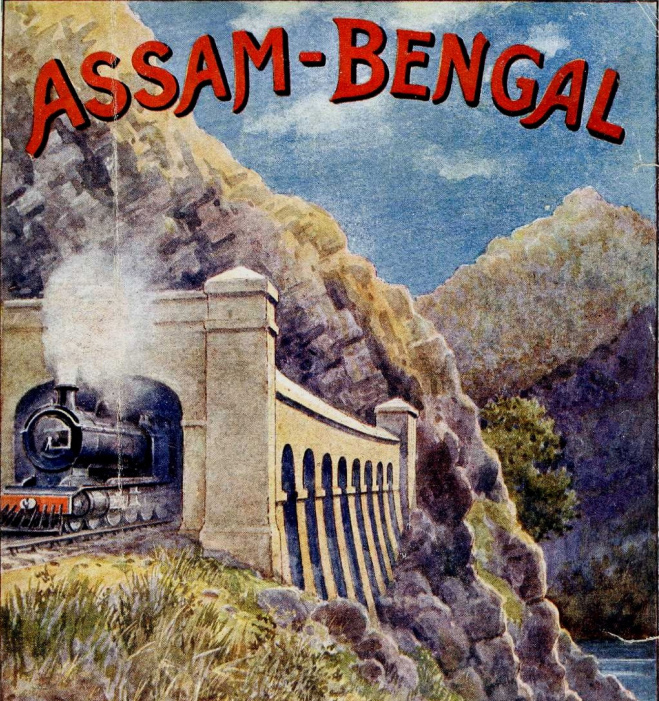
Today is the 27th of January and the issue for February 1, is already in the press. But my esteemed friend and colleague Maulvi Aftab-ud-Din, who kept this tiny torch of ”Light” burning in full flame during my absence on my Bengal-Assam lecturing tour, wants me that as the very first thing on my return to dear old Lahore to-day, I must put myself in touch with the numerous readers of the ”Light” who must be anxious to hear what I saw and did all this time. However much I would have appreciated a day or two of rest after the long and tedious train journey, he thinks that does not matter. He has the privilege of belonging to that part of the country himself and it seems, in his Provincial patriotism which is perhaps the strongest and most sensitive point of an average Bengal young man, he is in a hurry to know what I think of the great Province of his birth, its people, its life, its ideas and its ideals and all the rest of it.
But to tell the story of two months of ramblings in two columns, is certainly not possible. These were months of a crowded programme. During this period, I had to rush from place to place, from the most picturesque even romantic hills of Shillong (capital of Assam) to the din and dust of dull, prosaic Jamshedpur of the famous Tata Iron Works. I had the privilege of giving addresses on the beautiful message of Islam and its Great Founder, to all classes, persuasions and beliefs of men and women. I had to give talks to young men everywhere I went, to exchange ideas with Muslims as well as non-Muslims on the irresistible charm of the Truth of Islam. And I had to do the less pleasant thing of arguing with our ubiquitous friend, the Mulla. When I look back on these busy days, all sorts of pictures crowd upon me. When I think of the universal hospitality I received all over Bengal and Assam and of the very many friends who put themselves out a great deal to make my sojourn in their midst comfortable as well as useful, I feel overwhelmed with a sense of gratitude. When I recollect the enthusiasm of the youths of Bengal, their ready response to the Call of Islam, the life and vitality they displayed, I am filled with hope and confidence as to the Future of Islam and the Great Race of Islam. Th Mulla who flourishes with tropical luxuriance especially in East Bengal, how he lives on the masses by keeping them in ignorance and superstition, is certainly entitled to an instalment to himself. Then there were the learned Ulema, learned in the real sense of the word, of whom too Bengal has quite a large proportion to boast, whom it was as pleasure to meet. The Hindu of Bengal and how far he is amenable to the message of Islam if properly approached, should form an interesting study by itself. And not the least, the story of the Khasia race, the people inhabiting the hills of Shillong, their animistic forms of worship is most fascinating story, especially that of Khasia woman, whom Shakespeare would at first sight have put down as his ” blithe, buxom and debonair ” type and who perhaps is the solitary woman all the World over who enjoys every superiority over man in every detail of social, political and religious life, so much so, that if you have the fortune or misfortune to marry one, you will have to go over to her house to live there as her wedded man—exactly the position that woman in the rest of the world has in relation to her husband. All these things should prove of interest to the readers, and it will certainly be a pleasure to me to tell these in coming issues. For the present, however, I would just content with giving the reader just one most outstanding impression that I have brought with me.
In the first place, wherever I happened to present Islam as I find it outlined in the pages of the Holy Quran, one thing invariably followed. There was a general feeling of surprise amongst the audience. Muslims as well as non-Muslims. Is Islam really so rational, so natural, so simple, so beautiful, so charming a Truth—they all wondered. I showed at some length, for instance, that Islam was not something that was to be thrust down the throat. No semblance of coercion in whatever shape or form had a place in Islam. On the other hand, Islam as a Truth most lovely, most bewitching, had that tremendous power of its own to draw all who had the eye to appreciate the True, the Beautiful and the Sublime, even as a sweat rose draws, attracts and commands spontaneous love. And so was the keynote of the daily life of that Great Man, the Holy Prophet of Islam, all a keynote of love and sympathy for all—man, bird and beast. Was this really so? — thought non-Muslims. Even the Muslims rubbed their eyes and looked about, with no small feeling of pride that, after all, the Great Faith they professed was not a mere bundle of dead rituals as they were taught to take it, but a living law of life, which no sensible man could afford to reject.
”For the first time have I heard such an exposition of Islam ”—was the general comment,’ ”A new thing absolutely”! I mention this, certainly with no idea to be patted on the back. As a matter of fact, it takes no great skill to convince how beautiful a rose is. Just show it and you have done all that is needed. And to do it you have only to keep to the simple; description of it as given in the Quran and as illustrated in practice in the Prophet’s life. I mention this to emphasize all-important fact that Muslims as well as non-Muslims do not know what exactly Islam is. ” New Islam,” indeed it was people. And it is this ” New Islam” the Islam of the Holy Quran and of the Holy Prophet that alone can at the present crisis in the history of Islam, turn the tide and set in a new era of life vigour and prosperity.
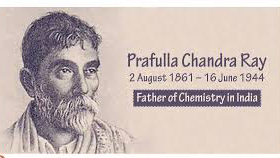
Sir P.C. Ray when presided over one of the meetings I addressed, seemed to me to have far better idea of the true message of Islam than many a Muslim. In his Presidential observations, he paid a glowing tribute to Islam and what it stands for.
”You Hindus,” he reminded his co-religionists among the audience, bring the charge of sword against Islam. If Islam really owed its spread to the sword, the majority of the Muslim population should not have been in Bengal, a far-flung part of the Muslim Rule, but at the very seat of that Rule in Delhi or Agra”
“The reason” he argued, “was that while you Hindus were caste ridden and undermining one section of humanity to a position of servility. Islam came with its message of human equality, liberty and fraternity and it was but natural that Hindus should have looked to that standard of Universal Brotherhood. And then he exhorted the Hindus not to quarrel over cow slaughter, for if truth was told, cow-killing was a common practice in Vedic India. Hindus of Bengal, the learned scientist went on, were noted for brains, but it seemed to him that they kept all their brains in one compartment of their head, whereas in the other they kept all their castes and customs. In their worldly affairs they used all their brains, but when they came to castes and customs, they carefully locked the brain compartment up.
Thus, my first and most irresistible impression of Bengal may be put as thus: –
Give India Islam and you will be doing her the greatest good. The Muslim needs it just as the Hindu or the Christian. Let them only see True Islam and True Muhammad ﷺ and I am sure, a miracle may yet, become possible in this 20th century!
The Light February 1, 1927 M.Y.KHAN

The Editor in Bengal
Maulvi Yaqub Khan Sahib, Editor of the Light, left Lahore for Bengal on Sunday the 28th of November. He will stay for some time in the province and visit its important centres. It is also under contemplation that he will proceed as far as Rangoon. His purpose in undertaking this travel is to gain a first hand knowledge of the affairs of the renowned province and realize by personal experience the special turn the misunderstandings about the message of Islam have taken there – misunderstandings that have cropped up not only owing to the malicious propaganda of perverse-minded enemies but also because of the irresponsible conduct of unmindful friends. Readers of the Light in Bengal should, we hope, take up this opportunity of more perfectly understanding the cause to which the editor has devoted his life. His arrival in Calcutta and a definite program of the tour will be announced through the Calcutta Press.