AN AGE OF PROMISE

“The day is coming when people even in the organized religions and churches will have to put God’s Will above their self-made creeds. God is unconquerable – unconquerable even by the churches. We have it in our scriptures, that in the last stages the time will come when the sun rises in the West. What a contradiction in terms – sun rising in the West – for wherever it may rise, that place becomes the east. This is just a way of saying that sun of Truth and true Faith will rise in the Western countries. This gathering itself is a sign that that age of promise is already dawning. You are here in quest of God and true Reality. You have in you the spirit of discovery. May be, your endeavours lead you to the rediscovery of true Faith – the Faith or complete self-surrender to God’s Will. That is the new age that is already dawning – the age to get back to God and the sovereignty of His will above all self-made creeds. This new faith is to be a faith in the sense of recapturing God in our own experience, in our daily life.”
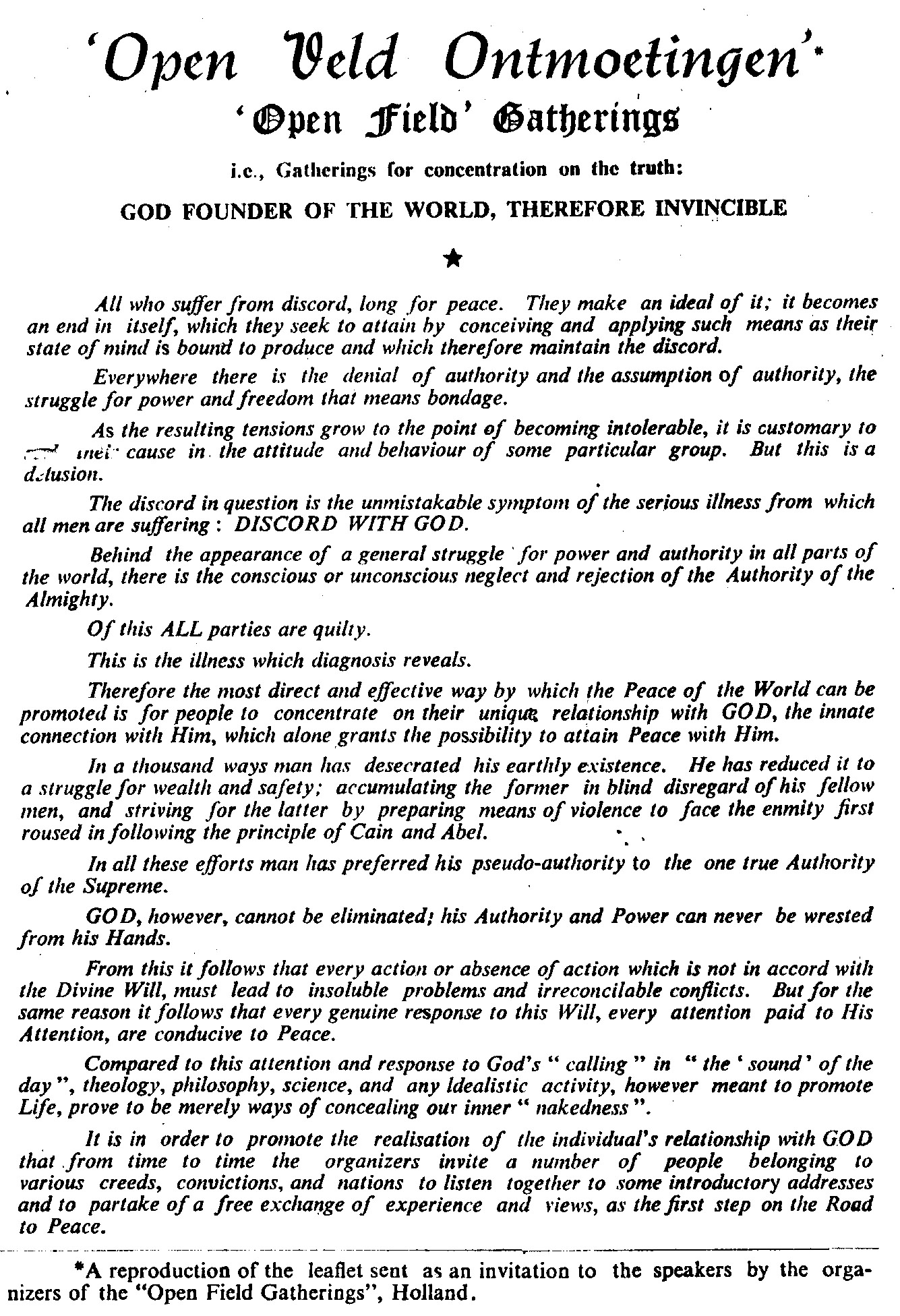
(Text of a tape-recorded speech by Maulana Muhammad Yakub Khan, The Imam, the Shah Jehan Mosque, Woking, England, at a conference of the “Open Field Gatherings” of Baarn (Holland) held at Hotel “De Wageningse Berg” at Wageningen from May 29 to May 31, 1959).
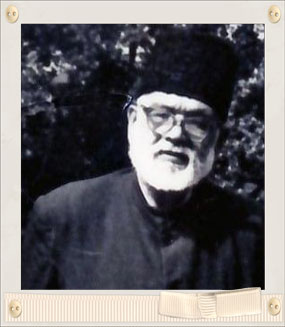
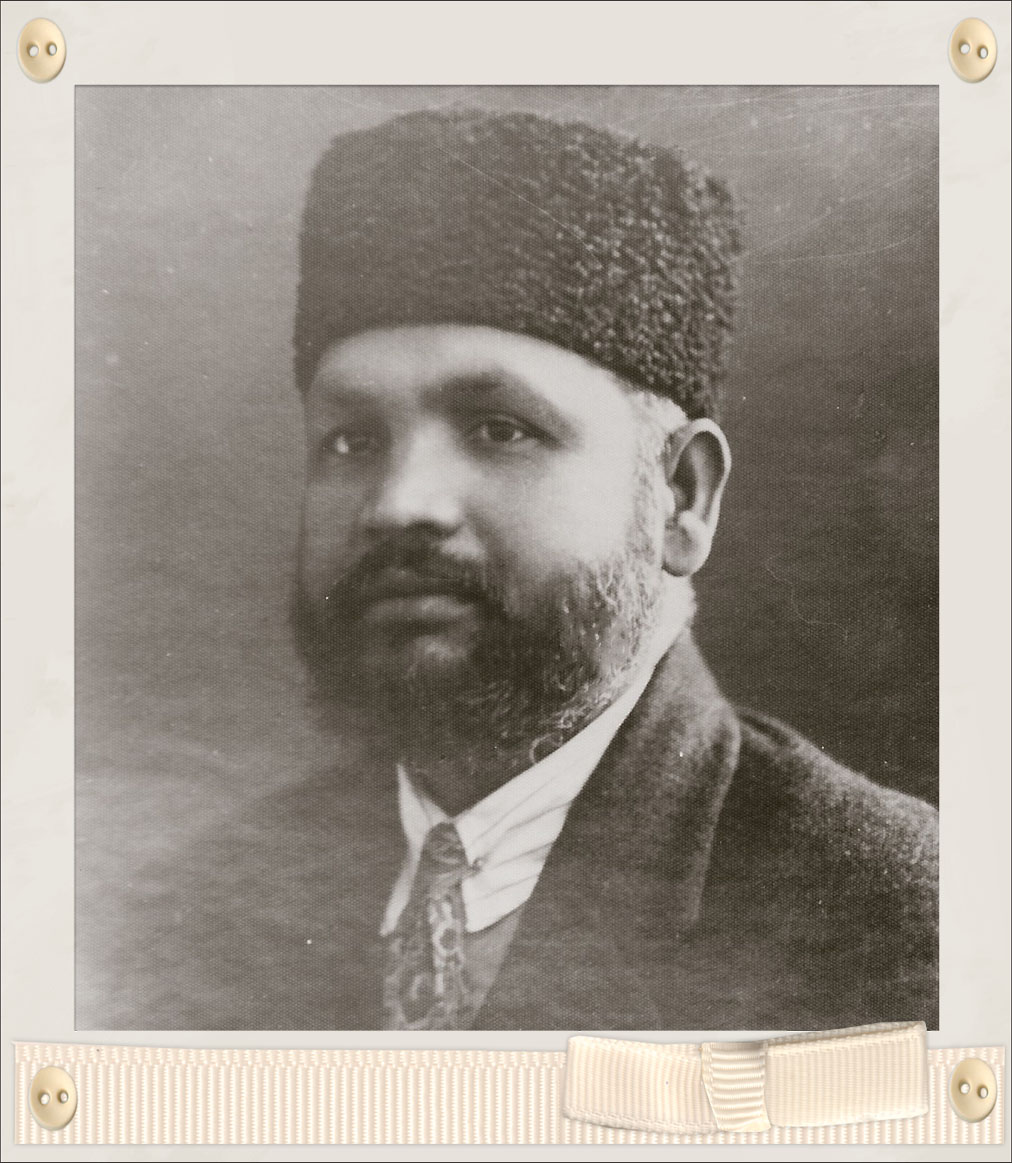
Mohammad Yaqub Khan
THE PURPOSE AND MESSAGE OF RELIGION
Ladies and Gentlemen!
First of all, let me tell you what attracted me especially to this Conference. When I received your invitation the very first thing that caught my eye as I looked at it was God the Founder of the World, therefore unconquerable. Here are some very earnest and devoted people, I said to myself, who are thinking deeply about religion and the expression of their mind as reflected in this printed leaflet, echoed all that religion, as we in Islam understand it to be, stands for.
God the Founder and unconquerable! I found in this, as I said, the echo of what we understand to be the purpose and the message of religion. The religion, I repeat, that we feel to be the true religion is the religion or complete, unconditional self-surrender to the Will of God. There are to be no two opinions about this, no compromise on this issue, with advantage in what-ever sense. If we make any compromise with this, we only deceive ourselves and come to grief.
In the Qur’an which is a Scripture from which we derive inspiration we read that throughout nature there prevails but one religion – the religion of submission to the Will of God. And whoever accepts a religion other than this, we are told, it will not be accepted from him. Non-acceptance of a particular religion or ideology means its failure in work-a-day life – its failure in the long run. Experience bears this out that whenever we set up false deities of our own, ultimately, they fail us, and we say God has let us down. The fact is it was not God that we were worshipping, not the true God.
There has been a great emphasis and very rightly in the learned discourses that we had these few days, on true reality. The true reality is always in danger of being clouded by something else and we are often prone to go astray into side-issues and leave the straight line. Therefore, the Islamic formula of faith begins with a denial, saying, there is no God but one true God. The first negative half is a constant reminder that we must set aside all false notions of our own making about God.
So this was the attraction that brought me here and I want first of all to confess that what I saw and heard these two or three days confirmed me in that impression. I found not only the discussions and the discourses at a very high level, but what I prize much more is the devotion with which these questions were pursued, and the goodwill that prevails here. No two men can always agree on all things; we are bound to have different outlooks, but what really matters is that we should have a common objective and a common quest, and that is, I am sure, that all of us who are gathering here have in our minds. That common quest, common goal is the rediscovery of God.
THE AGE OF FAITH
By a happy coincidence the theme of my talk begins where my distinguished friend Professor MacMurray left off. He told us that his reading of the modern situation and human society was, that human society, in the course of its evolution, was reaching some final stages. A sense of interdependence has been driven home to all nations – perhaps I might say, has been rubbed into them – by the hard knocks that we have received during the last two wars – a sense of interdependence and the necessity of a sense of common humanity and universal human fellowship. He very rightly told you that when once this new horizon has dawned on human mind, it does not seem likely that any line can be drawn anywhere. It is bound to go ahead till it encompasses the whole of humanity. He struck another note of optimism. He thought humanity was on the threshold of a new age. I think that that coming new age is an age full of promise, that it is the age of faith, the age of God.
As the motto at the top of your printed leaflet says God is the Founder, hence He is unconquerable. He has a design. He has got a purpose and a plan. If we mortals can have our plans – five year or ten-year plans how to build – certainly God can have plans of His own. And what is this Divine Plan? The plan is that out of the present-day cauldron of events should emerge an age of faith. Either modern man rediscovers God or he perishes. That is the clear-cut challenge we find flung in his face by a Providential scheme of things. And God is unconquerable. We cannot fight God; we cannot resist His ways.
Self-surrender is the wisest course of life. This is the age of promise that Islam visualized. You would say what about this world-wide revolt against God? Almost half of humanity behind the iron curtain is determinedly and organized out to eradicate the very concept of God. To me that is a hopeful sign too. It is but a revolt against those false notions of God, the false deities that people have set up. And now when the clay feet of those self-made deities have been discovered, it has naturally led to a revolt against them. To me, behind this very revolt, there is a hankering after what our friend very rightly called “true reality”.
So, I am not at all pessimistic, I see in this a promise of better days to come. We are standing at the threshold of a very good age. Possibly, we might have to pay some more price, a heavy price for it, but you cannot defeat Divine Purpose. The difficulty always is, that we set up, we carve out idols of our own. In ancient times they carved idols out of wood, out of stone, or out of metal. The idols that we carve out of our own wishful thinking, out of our own prejudices, out of our own little whims, out of our own preconceived notions, are idols just the same. They may not be so tangible, but that makes them all the more dangerous. The so-called ideologies are also the new idols.
Material and scientific achievements led the western people into two catastrophic world wars.
That were the new idols that the Western people started worshipping, which led them into two catastrophic world wars? They worshipped the false, gods of materialistic philosophy of life. The Western man, in the flush of his little scientific wisdom, and scientific achievements, began to strut on the face of the earth as the master of all he surveyed. That was his feeling. It was a common saying in those early days of scientific achievements, that God resides only in dark corners and the more the light of science spreads, the more God recedes into the background and the time will ultimately come when there will be no room left for God. But God is unconquerable. He cannot be conquered. You discovered that to your great cost during the last world war, when Holland was hard hit. The Western people discovered that false gods will not pay.
Then you began to worship your technology – your mastery of the sea, and your mastery of the distance, and air, and your industrial achievements. They are all very good in their own way, but they are not to be worshipped. You put them on the pedestal of the deity and started worshipping them. If you had developed your industries and brought prosperity in the wake of your industrial development, God wanted you to use that prosperity for the good of humanity at large. But you turned your back on the Will of God and you came to grief.
Violation of God’s Will causes man’s fall
So, at every step we find this story coming up again and again. Whenever we violate God’s Will, we pay the penalty for it. It is a story that never ends. It started with the parable which is common to Christians and Jews and Muslims – the parable of the fall of Adam. Adam was told not to taste the forbidden fruit. Here is this earth, the garden of Eden – he was told – make it into a garden! Help yourself plentifully to whatever your needs are. But do not touch this particular tree. What was this forbidden fruit? There can be different opinions about it. Likely it meant: Do not set up any rival to God, do not set up yourself as a god! Always see that you do not give up the path of self-surrender to God. Do not forget this thing. Then, by all means, may go ahead and develop all the resources of the earth that are meant for your good. The only condition is that you must never stray away from the path of self-surrender to God. This was what Adam was told. But he forgot and he was misled, and that led to his fall. Every time this happens, every time man transgresses the Will of God, there is a fall.
And this will go on all the time. You never can reach a stage when you can say, I have come to the end of this spiritual journey and now I need not be on the watch, on the alert. There is to be no resting on our oars as long as life’s journey lasts. That is why we Muslims always say: There is no God, but one true God. And in our daily prayers, five times a day, we always say, O God, keep us to the straight path. Straight path – that is the word, because in all our doings, we are so liable to be pulled away, this way or that way, by external pulls, outer pressures, or by internal wishes, our own predilections, and passions. So, this is a perpetual quest.
The concept of God
Now, when we talk about God, we must remember that God is unknowable. That is another difficulty. We cannot do without God, yet we cannot know God. The moment we know Him, we bring Him down to our own level and He ceases to be God: His nature, what exactly He is like, this is utterly incomprehensible. I remember a saying of a Christian Saint, which greatly impressed me. He said: God, forgive me two sins – one when I go to the church. Well, apparently this going to the church cannot be a sin against God. But the Saint said going to the Church implied that God was confined to the church. There lay the sin, for God was everywhere, all over the Universe, the very soul of the Universe. That is how he considered that narrowing of the concept of God to the church, even by implication, is a sin. The other sin he said was when he tried to form some mental picture of God, because He is beyond understanding.
The quest after God
But now, what is this quest then, if we cannot understand God? What are we seeking after? The quest is for discovering His Will. God is beyond comprehension, but His Will is quite understandable. And that is what we are really concerned with. Here we are in this life. We find ourselves placed in a certain set of circumstances. The question before us is not: Why are we here? The question is simply: How to make the best of this game of life. Acceptance of life, as it is, and making the best use of it – this is the essence of true religion. This is true reality and true truth.
Acceptance of life, as it is, we are told in the Qur’an, is the only true religion, and everything that is Nature, the whole of the universe observes this religion. This is the religion of complete self-surrender, submission to the Will of God. In the physical nature, this observance of God’s Will is involuntary. In that world we call it the “law of nature”. You find the rule of law everywhere – in the whole of nature. So we look upon nature also as a scripture, as a mirror which reflects the working of God´s Will. We find that supremacy of the rule of the law in everything. But for this supremacy of the law, all this beautiful universe will become a mass of chaos. There will be no harmony, no smooth working. Everything will go to pieces. This is how we find the Will of God operative all around us. And what we are concerned with is, What exactly is this Will of God for the harmony and well-being of human nature? The question is not, Why we are here. The practical question is how to keep into step with the purpose of life. This is the significance of self-surrender to God’s Will. This is the harmony that we want to seek with the Will of God.
The working of God’s Will
We turn to nature to discover the working of God’s Will. We are exhorted in the Qur’an, again and again to observe nature and read God’s signs; that is to say, His ways therein. But the main source we seek light from is revelation. We believe that God reveals His will to mankind. This also we conclude from the general attitude of God in His dealings with men. We believe that God sends His light and inspiration through His chosen people for the guidance and inspiration of man, and to cheer him up in the ups and downs of life. It is this light that sustains us in moments of doubt and darkness. These beacons of light came from time to time, the Qur’an tell us. This is also a principle that we find working in the physical nature. God has taken good care to minister to our physical needs. He has given us so many faculties with which to earn our living and to grow our food. He has made such an elaborate planning to provide us with air, sunshine, crops and fruits and vegetables for our physical needs, without which we cannot sustain our life. It cannot possibly be imagined that He would do nothing to look to the needs of our soul, which is a more abiding part, and a greater concern of our life. We all know that we are to leave this world sooner or later. The generation that is sitting here will, in course of time, be followed up, and a new people will take their place on the stage of life. This is how this historic march has been going on, day after day, since time immemorial. Every day about 100,000 people die a natural death and about as many are born. It is surprising that we hardly ever take notice of this grand procession that is going on – multitudes coming in and multitudes going out. Can we possibly imagine that all these multitudes disappear in just nothing – that it is all blank on the other side, that the grave is the end of life? It would be a very dismal picture indeed if that were really the end of human life. We, all of us, have some near and dear ones on the other side. It would be a great torture and tragedy to imagine that there is nothing beyond the grave. I remember having read long ago Tolstoy saying that whenever he was seized with a mood that there was no God, he took good care to see that no rope came his way. He might feel inclined to hang himself and put an end to a life which was purposeless. So, it is inconceivable that God should have left us in the lurch so far as this spiritual life is concerned and therefore, we Muslims believe that such light did come from times immemorial. The Qur’an says that when Adam met with that fall then God revealed His will to him, telling him that whenever again such a tragedy befell him, Divine light would come to him. He was told to listen to this voice of revelation, and he would once more find himself set on the right path. And even so has this story been going on, the Qur’an tells us, and Divine Teachers have been raised one after another in a long succession for the guidance of man.
Universality of Divine Light is a basic teaching of Islam.
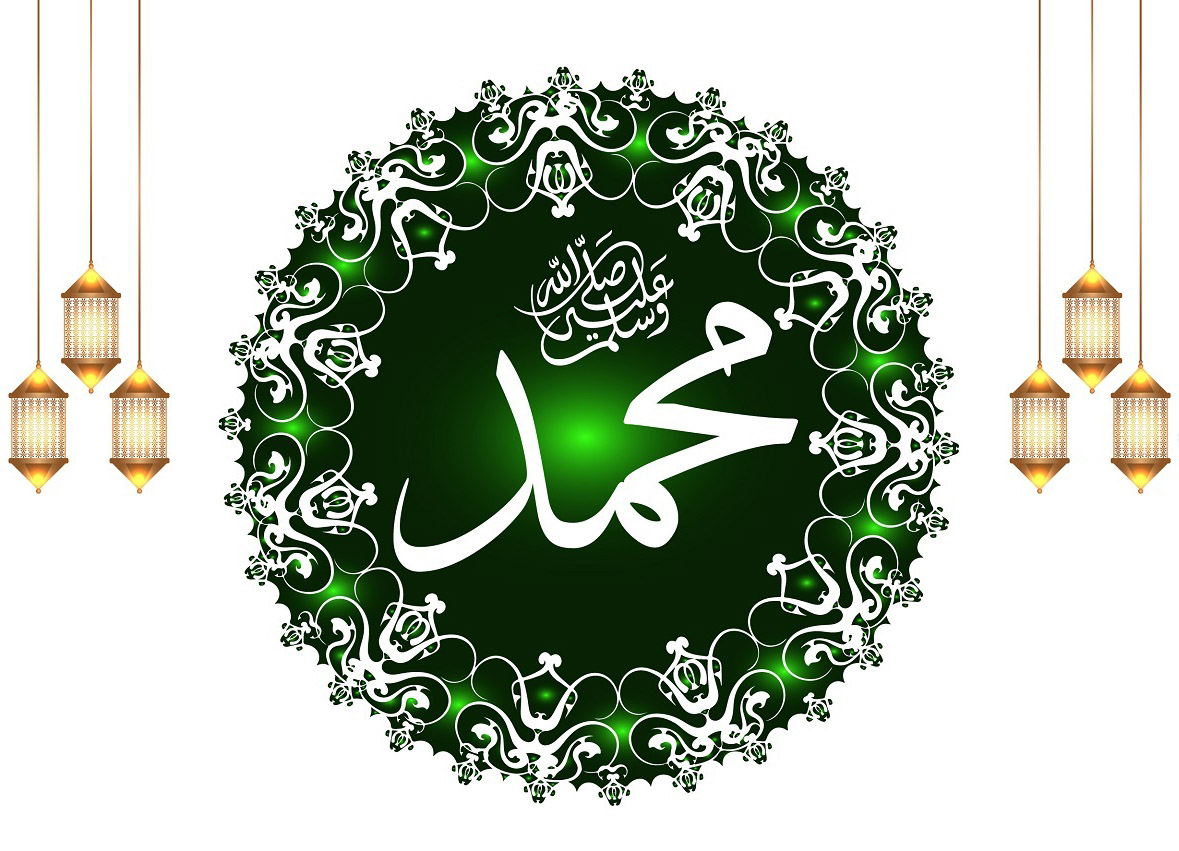
Universality of Divine Light is a basic teaching of Islam. Very few people in the Western countries know this very simple fact about Islam that a Muslim has as much faith in the divine mission of Jesus Christ, of Moses and Abraham and every world Teacher as in that of the Prophet Muhammad ﷺ. This universality of revelation is indeed the corner stone of our religion. It is a corner stone because we are told that we cannot he Muslims unless we believe in all of the world Prophets. This attitude goes to the extent that we have to make no discrimination between one Teacher and another Teacher. Many Christian friends cannot understand when I tell them that we Muslims have the same profound love for Jesus Christ as they have, that indeed we resent their claim to an exclusive monopoly of Jesus Christ. And the Qur’an gives us the reason why we are not to discriminate. The reason given is that these various Teachers were so many channels of Divine light, and that is what we are concerned with, that is really what we need and cannot do without, that is what we must get hold of. For our spiritual nourishment we need Divine light and inspiration. We must pounce upon it wherever we may get it. These Divine Teachers were so many windows through which Divine light shone on humanity. If you want electric light, you do not bother whether the bulb is English made, or Dutch made, or German made. So this is the approach that we have to these world Teachers.
The nature and comprehensiveness of Will or Law of God
Now I do not want to be a source of infliction to you, but you will ask me, what exactly is this Will or Law of God like, which we have to follow. It is a fair demand from God to tell us what His plan actually is, how He really wants us to live. This is given in the very opening words of the Qur’an, where we are given a picture, not of God Himself, but of His attributes – that is of His dealings with man. These attributes sum up the whole of His plan or blueprint for man’s life. This blueprint for the regulation of life, both in nature and man, has been set forth in the very first four attributes of God. God’s attributes are but another name for God’s Will, or God’s Laws. The very first of these attributes is described by the Arabic word Rab, which means One Who creates, and nourishes, sustains and leads everything on to its highest destiny. God thus, as depicted in the Qur’an, is not merely the Creator, Nourisher and Sustainer, but having created, He enables everything to go through the various stages of evolution, till from the lowest rung of the evolutionary ladder it attains to the highest purpose for which it has been created.
For instance, a small apple seedling has in it the whole of the plant in a miniature form. It has to work it out. That is the divine plan for that small thing. To be able to do it must go through the mill of natural laws. It must be put in soil, watered, looked after, and only then it can grow into a plant and bear fruit. Man, likewise has a purpose. He has been created in the image of God. He has divine attributes in him, which he has to work out. This can be done by playing this game of life, in all its variegated demands, challenges, and opportunities. We, therefore, do not believe in escapism from life. The opportunities that this worldly life bring are a necessity for that development. The more we run away from those opportunities, the more it leads to stunted growth of our personality.
So one aspect of the truth as we understand it is that we take life as it is and we do not want any escape from it. We say yes to it, welcome it. We say it is all to the good, and we must live it fully and make our contribution towards making a better and better world.
The evolution of soul in man
The other aspect is that we do not believe in any duality of the flesh and the spirit. We believe that the flesh, and the passions and the cravings that we have in us are also the necessary breeding ground for the seeds of moral and spiritual virtues within man, and to kill them, as some ascetics do, is to miss so many opportunities for self-advancement. They are the raw material, so to say, out of which grows and develops the finished product that we call morality or soul. If you do not have the raw material, you cannot expect a finished product. Take the passion or temptation. If you show strength against temptation and resist it, you develop your moral fibre. Within this moral self, as it grows and develops, there emerges another entity known as soul. The Qur’an calls this a new creation inside this body – the evolution of soul in man. It is a very high level of faith. A man of this high spirituality is above the reach of all clouds of doubt, and grief, and sorrow. In moments of darkness and doubt, when all seems lost, he stands firm like a rock, feeling calm and secure in the lap of Divine beatitude. We have this exemplified in the life of every one of the Divine Teachers. It is a paradox that these Teachers were the chosen of God, yet they had to go through the worst persecutions. How do we resolve this paradox? It was a necessary processing for their soul force. The whole glory of Christianity lies in Christ proclaiming from the Cross in that darkest moment: “Thy will, not my Will!”
In suffering lies the whole glory of human life, provided that in that dark hour man shows complete self-surrender to the Will of God. So, a man of faith is not afraid of suffering. Suffering and evil have always been the most baffling problems of life. To man of faith, they are a necessary condition for the growth of spirituality in us. This is the picture of the concept of God and Reality and Truth, as we understand it. You say that God is unconquerable. Another description of God came across in your literature was the beautiful expression that God is inescapable. This gave me another idea, and it struck me that God is irresistible. We have only to look at the unbounded bounties He has given us – a wonderful pair of eyes to see the world with and all the wonderful mechanism of our various faculties – we have only to think of these great gifts of God to feel involuntarily impelled and drawn towards Him. That is what I mean when I say that God is irresistible. We feel overwhelmed by the numerous bounties He has blessed us with. That is what makes God’s charm and spell irresistible.
There are two forces which exercise such a tremendous pull on human nature that it cannot resist them. They are the charms of beauty and beneficence. You see a beautiful rose, and you feel drawn towards it. There is no question why you feel so drawn. You do not seek explanations. Beauty cannot but attract. You do not say: Why? There you are! You are drawn, and you just cannot help it. The other force is equally impelling. If somebody does good to you, your heart is filled with gratitude to him. Gratitude is inherent to your very nature. God is both beauty and beneficence par excellence. Look at the beauty of His universe and look at His boundless beneficence. He is love, He is mercy, and therefore the Qur’anic approach to God is to seek Him not merely through the head, not even through, say the consciousness, not even through our conscience (because conscience also is a product of certain environment) but to seek Him through the deepest depth of the whole of our being. God the Qur’an tells us, is the voice of our very nature. From the very depths of our being there arises the loud witness that it has a Creator, and it must bow in gratitude to Him. The very thought of His unbounded bounties fills us with thanksgiving to Him. We simply cannot resist the spell of all the great things and the beautiful things that He has given us. So God is the very cry of our whole being. His charm is irresistible.
Science and philosophy are after all the Creation of our own limited physical senses and the knowledge they give us is conceptual knowledge. They are themselves caged within the four walls of the physical senses. So they cannot be depended upon for a true knowledge of God. The same is the story with conscience, which is the product of environment and education which varies with different social patterns. Above all these sources of knowledge, stands the whole depth of our nature, which proclaims that we have a Creator, who is also our Sustainer but for Whose beneficence we cannot live for a single moment. He is the very breath of our life, as we are told in the Qur’an nearer to us than our very life vein. He answers our prayers when we knock at His door for light and succour.
Prospect of the Age of Faith
So this is the concept of God as we in Islam understand it – a God faith in Whom means our own highest self-fulfilment. Now you will ask me: How about this new age that is coming, which I called to be full of promise. Let me explain. Just as there is the process of evolution for the small seed which I described, just as there is a process of evolution for the individual, similarly there is a process of evolution for humanity as a whole. And the Divine Plan seems to be that ultimately people should rediscover their common fellowship, which inevitably follows the concept of God as the Creator of all. He is interested in all alike, whether white people or dark people, no matter what their language or their race or culture. The concept of one God leads to these logical corollaries that He is interested in all people, that He wants the well-being of all people, that He has so planned things that humanity may move on towards that consummation. And that planning is already unfolding itself. As Professor MacMurray visualised, humanity is in the last stages of that process. Physically, the world has already become practically one. The development of sciences has conquered distance, it has conquered time. Fast means of communications have thrown humanity into a universal melting pot and there is interchange of cultures and concepts. A new horizon is dawning on humanity that peace and war are indivisible. It has become impossible for one section of humanity to live in prosperity while others are in the grip of extreme poverty. These kinds of things have been tried for long enough and found against the Will of God. And every time one section of people tried to keep another section down, it recoiled on them, and there was a catastrophe.
There is a growing realization of this, and the world is moving towards the realisation of a universal common humanity political level cannot take us very far. The reason is they lack a sanction behind them, a driving force. That driving force can only come from the recognition of the fact that we are all children of the same God, that we are all equally dear to Him. I have a feeling that this consummation is also coming and with the emergence of one humanity, one world and perhaps one world state, there is bound to come some sort of one common world religion. That one, common universal religion can only be that of doing the Will of God, with these existing religions becoming so many branches of that one religion. When Jesus said at the Cross: “Thy Will, not my will,” he summed up the essence of this religion – self-surrender to God’s Will. We find the same thing in different words, in the Qur’an, which enjoins:
قُلْ إِنَّ صَلَاتِى وَنُسُكِى وَمَحْيَاىَ وَمَمَاتِى لِلَّهِ رَبِّ ٱلْعَـٰلَمِينَ
(Al-An’am (The Cattle) 6:162)
“Say my prayer, my sacrifice, my life, my death, everything is for God.”
It is a tragedy with religion that while it came as a uniting force, it became in actual practice a force for disintegration. Religion and disunity are a contradiction in terms. Religion should always unite. What is it due to, you will ask me: how to explain this? We in Islam sometime have conflicts and disunity, instead of the Qur’anic teaching of universal brotherhood of man. Christianity talks of God being love, but we do not find much of love lost with the coloured Christians. Why this disparity between precept and practice? Perhaps I could best illustrate it by a little anecdote that I read somewhere. One day the devil was walking along a road with a friend. Ahead of them on the road, they saw someone stoop down, pick up something and put it in to his pocket. The friend asked the devil what was it that the man had so eagerly picked up and pocketed. The devil said, it was a bit of truth he had found. The friend said: That must be bad news for you. Don’t worry about that – replied the devil. I know how to deal with him now. I am going to let him organize it! And the moment he organizes his bit of truth, he will lose it.
The moral is that we should get behind organizations, creeds, dogmas, forms and formulas and rituals. We should get at the back of them and that is common to all religions. When Jesus was asked by one of his disciples: Master, can you tell me the best commandment, he replied: ”Love the Lord thy God with thy whole heart thy whole strength and thy whole soul. That is the first commandment. And the next commandment is: Love thy neighbour. If you have done these, you have done all the commandments.” The Prophet Mohammed ﷺ was put a similar question by one of his followers. You want us to say the prayers, and keep fast, go to the pilgrimage, do this and do that, but will you please tell us in a nutshell what religion exactly is? The Prophet ﷺ in reply summed up religion to consist in just two things: Realization of the majesty of God and kindness to His creatures. Here is the common ground, the bedrock on which all religions stand. It is to that bedrock that we should get back.
The day is coming when people even in the organized religions and churches will have to put God’s Will above their self-made creeds. God is ”unconquerable – unconquerable even by the churches. We have it in our scriptures, that in the last stages the time will come when the sun rises in the West. What a contradiction in terms sun, rising in the West for wherever it may rise, that place becomes the east. This is just a way of saying that the sun of Truth and true Faith will rise in the Western countries. This gathering itself is a sign that that age of promise is already dawning. You are here in quest of God and true Reality. You have in you the spirit of discovery. May be, your endeavours lead you to the rediscovery of true Faith – the Faith of complete self-surrender to God’s Will.
That is the new age that is already dawning – the age to get back to God and the sovereignty of His will above all self-made creeds. This new faith is to be a faith in the sense of recapturing God in our own experience, in one’s daily life. Unless we recapture God in our own practical daily life, we will only be victims again of that worship of the false deity of our own making, the various creeds which we have set up. But you may well ask: Can there be any such thing as God being invisible, unimaginable, inconceivable, and yet realisable in our lives? This indeed is possible. This is something like the experience of the boy who was flying a kite on a foggy day. When somebody asked him: What fun do you get out of this – you cannot see it – what did he say? I may not be seeing it, but I can feel the pull of it. That is how we can realise God in our daily lives. We should feel His pull in our lives.