ACTIVITIES OF THE WOKING MUSLIM MISSION, ENGLAND
Meetings addressed.
A Notable Conversion.
Correspondence about Islam.
Does Islam mean peace?
Meetings Addressed
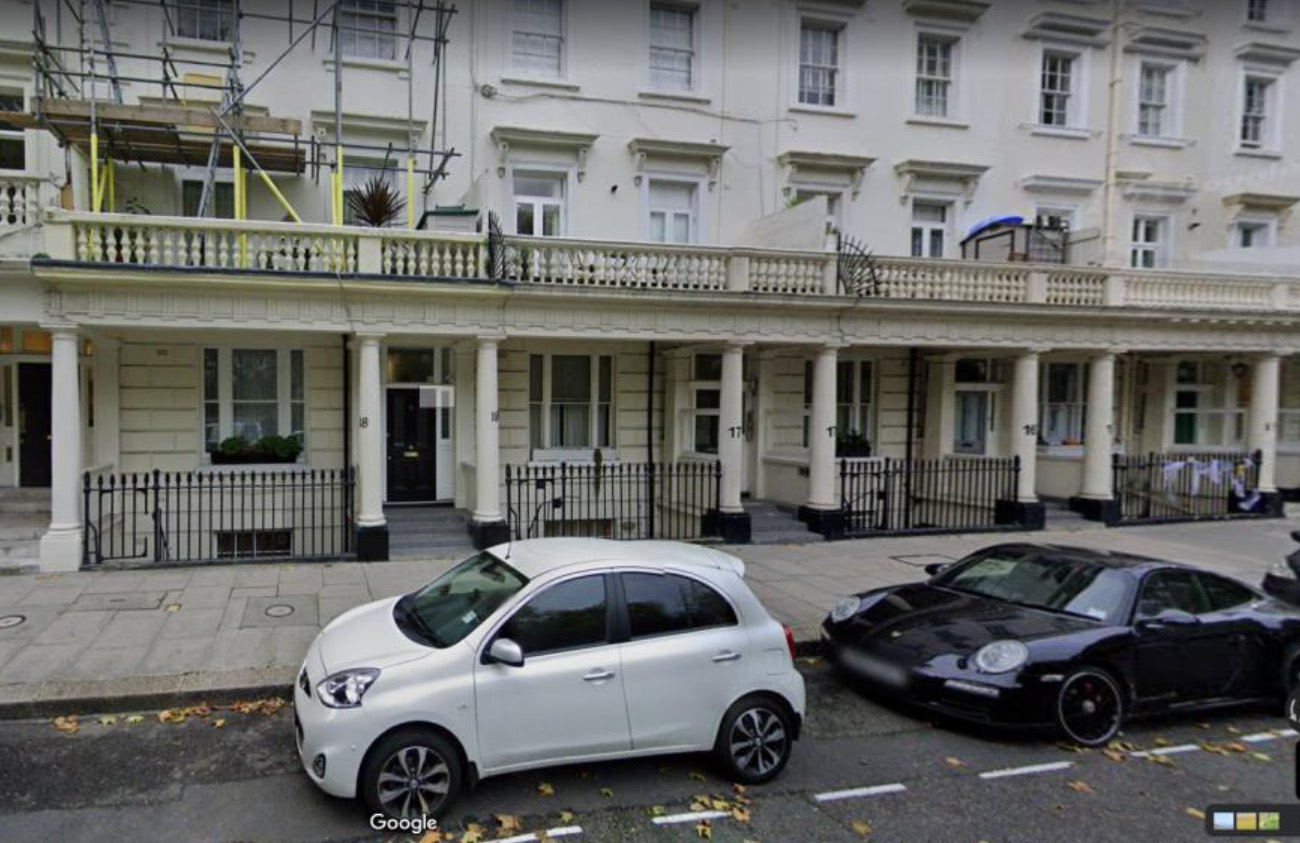
In addition to the usual Saturday Qur’an Lessons at 18 Eccleston Square, London, Sunday Talks at the Mosque, Woking. Imam addressed meetings on Islam at the following places during the month of October 1959:
October 7
At the Methodist Church at Banstead (Surrey) Vicar, Rev. Norman Greenhalgh B. D. received the Imam at the Surbiton railway station, and took him to Banstead, about 25 miles from that station.
Attendance was about 100, comprising more ladies than gents. The talk which lasted 45 minutes was followed by questions for about half an hour.
October 14
At International Fellowship league in Notting Hill Church, London. The talk was followed by questions.
October 20
At the Anglo-Jewish Association, at Ben Uri Art Gallery, London. The room was packed to capacity, the audience being mostly Jews. The talk lasted full one hour. Questions and Answers took another hour.
October 29
At a symposium at the Institute of Education London University. Other speakers were a Christian, a Jew, a Hindu, a Buddhist and a Sikh. It attracted a large gathering. The Imam emphasised that whereas other Faiths talked of universal human fellowship Islam meant it.
The chosen race idea, the restriction of revelation to particular people or land, untouchability, colour bar, segregation in the Churches were incompatible with the idea of universal human fellowship. Islam alone carried the concept of One-God to its logical conclusion, pulling down all barriers of race, colour, birth or position, throwing open the door of revelation to the whole of mankind. Questions were put wholly to other speakers. The Imam, however, also threw light on those concerning religion in general from the Islamic point of view.
October 31
At the Islamic Union of the University of Bristol. Attendance was poor, since there were two other functions at the University the same evening. The talk lasted for an hour. Questions and answers went on for about half an hour.

A Notable Conversion
On November 8 (Sunday) Mr H. F. Fellowes, Commander (Retired) of the Royal Navy called at the Mosque, Woking, attended the Imam´s talk on Islam in the Mosque after midday-prayer, and before leaving expressed a wish to declare that he was a Muslim. He was welcomed into the brotherhood of Islam and given the Islamic name of Hamid Farooq.
Mr. Fellowes’ correspondence with the Imam which has been appearing in the ”Light”, started as far back as January last. He brought a thorough scrutiny to bear upon the various aspects of’ the problem of religion. The first book to rouse his interest was the ”Teachings of Islam”. This is an English translation of an Urdu paper read by Hadzrat Mirza Ghulam Ahmad, the Founder of the Ahmadiyya Movement at the Great Religious Conference held at Lahore in December 1896. The Paper discussed from a Muslim’s point of view the five subjects selected for discussion by the conveners of the Conference. These five subjects related to (I) The physical, moral and spiritual conditions of man, (2) the state of man in the afterlife, (3) the real object of the existence of man and the means of its attainment, (4) the effect of actions in the present life and the life to come, and (5) the sources of Divine Knowledge. Thereafter he sent for several other books, including the ”Religion of Islam” by Maulana Muhammad Ali. He also attended the Id-al-Fitr congregation service at this Mosque to see things for himself and get into the spirit of the message of Islam. As such his acceptance of Islam marks quite a landmark in as much as it was the result of a thorough study and research.
Correspondence about Islam
One great source of disseminating the light of Islam is to answer questions through post and supply free literature to seekers after truth. The following is a typical instance of such help given to those who want to know about Islam.
DOES ISLAM MEAN PEACE?
The Training College, Dorset,
England.
8 November 1959.
The Imam
Shah Jehan Mosque,
Woking, Surrey.
Dear Sir,
Thank you very much for your courteous reply to my request for reliable information about Islam. Would you be kind enough to supply me with the following two books; The Holy Quran, translated into English by Muhammad Ali without Arabic text. The Ideal Prophet by Khwaja Kamal-ud-Din. I think the cost of each of the above is 12s., 9d., but if you would let me know present cost together with postage, I should be glad to send a remittance and then perhaps you would forward the books.
Thank you for the pamphlet on Islam, “The Religion of Humanity”. I wonder if you would please let me have a comment on a passage. I quoted in conversation the helpful explanation the name Islam given on page 2, saying that the name Islam came from the triliteral root ´sh-l-m´ and meant peace, peach with God and peace with man, and that this was attained through submission. I wonder whether you would please comment on this. I do not in any sense wish to inconvenience you, but I shall be meeting the same person on Wednesday evening, and if then you could let me have a reply. I should be most grateful.
With many thanks and good wishes.
Yours sincerely
E.F. Rolls
The Imam’s Reply
10th November 1959
Dear Mr. Rolls,
Thanks very much for your letter of November 8th. As regards the significance of the name Islam, your friend is perfectly right in saying that it means “submission” (to Gods will). That is, however, the meaning of the word in this particular derivative from the root salm or silm. The root itself means “peace” and that is what the words “primary significance” on page 2 implies i.e., the root meaning. For the meaning of the root salm, see verse 90, chapter 4, where Muslims while at war are enjoined to turn towards salms (peace) if the enemy should do so.
When two Muslims meet, they greet each with the salutation as-sala-o-alaikum i.e., peace be with you. The daily prayers (salat) come to a conclusion with the same words, uttered twice, turning the face right and left. The Prophet ﷺ, in one of his sayings, has defined a Muslim as “one from whose hands and tongue fellow men are safe”, the Arabic word used for safe is salima.
Paradise is described in the Quran (10:10) as a place where salam (peace) shall reign.
Verses 10:25 describes God as calling people to the abode of salam (peace).
When accosted by vulgar people, the Quran enjoins Muslims to say: Salama. Here the significance is widened into something like “ignoring in a dignified manner”.
It will be noted that in all these variations in the shades of meaning, the original connotation is amplified – rather than lost.
The same is the case with the word Islam. When applied to God the idea of peace naturally puts on the shade of submission, self-surrender, harmonisation, doing His will keeping in step with laws of the ordained by Him and so forth.
I trust this explains the point.
Yours sincerely,
Muhammad Yakub Khan
Imam