MODERNISTS VS TRADITIONALISTS
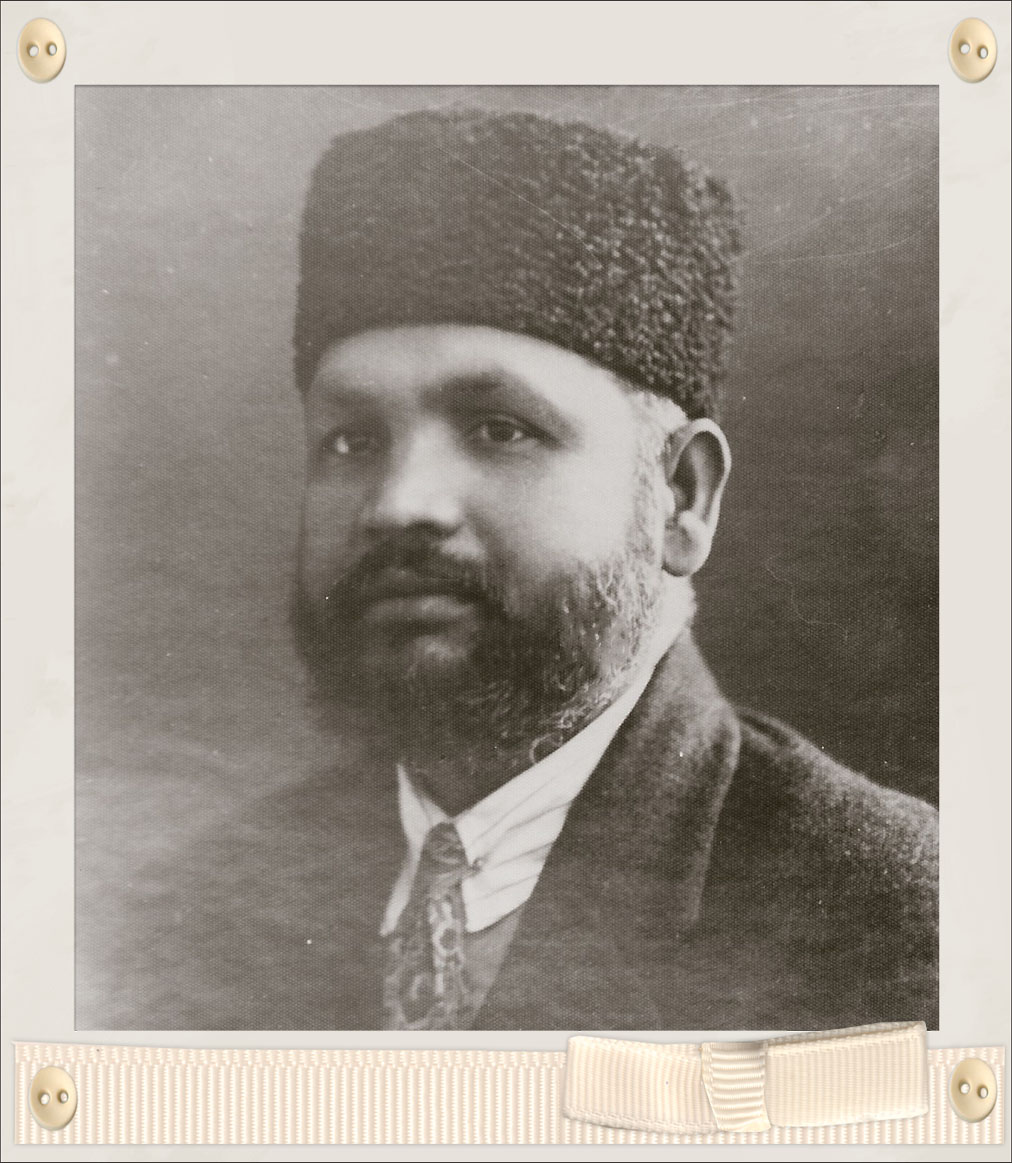
Mohammad Yaqub Khan
Editor The Light
THE conflict between modernism and traditionalism is as old as religion itself. Traditionalists, throughout history, have proved spokes in the wheels of progress, holding up the glorious onward march of humanity in the name of God and religion and scriptures.
In the Middle Ages, the tradition-ridden Church even frowned upon taking a bath as something un-Christian. The image of God in man was so distorted out of shape that darkness, dirt, squalor, superstition, and inquisition reigned supreme throughout Europe – an epoch of history aptly described as the Dark Age.
The world of Islam is just now passing through the same phase. Here in Pakistan the divergence between the two viewpoints is coming into sharp relief over such issues as Family Planning, and Family Laws. These Government-sponsored measures of social reform are dubbed by the Ulema as a violation of the teachings of Islam. One top-ranking Maulana of Karachi even marshalled all his forces in right battle array against a state authority over such a trivial issue as the sighting of the Eid-moon. This looks like a repetition of history. The struggle between the Church and the State that the West went through is rearing its head in every Muslim country that has newly won its freedom and is impatient to step up the pace of reconstruction and development to catch up with the fast-moving world, where the only doom for one who lags behind is to be mercilessly trampled and thrown away on the scrapheap of history.
It is high time the two forces within the house of Islam, instead of working at the cross-purposes, are brought into line and made to pull together in the interest of the common good. Given a modicum of good sense, this is the least lesson the world of Islam must learn from history.
The traditionalists suffer from the complex that religion is their special preserve – their monopoly – and their opposition of a social reforms seems to be prompted more by class interest than sweet reasonableness. A typical instance in point is the Note of dissent by a top-ranking theologian to the Report of Family Laws Commission. The Note, put bluntly in a nutshell, amounts to saying: “Who are you to encroach upon our sphere? You do not know the ABC of religion. You must go through the mill of religious learning which is a life-time’s job before you are competent to speak with authority on religious issues. If you want to make a bridge, you have to go to an engineer. In case of a disease, you seek a doctor’s advice. For an understanding of the Quran, you must come to us, theologians, and see the Quranic teachings through the glasses of the four Imams who had a greater insight into those teachings”.
This kind of thinking and reasoning amounts to the virtual abrogation of the Quran, setting up instead the works of the four Imams as the highest authority. This kind of attitude, in the case of the Jews and Christians, has been described in the Quran as “setting up of their rabbis and monks as gods besides Allah” (9:31).
ٱتَّخَذُوٓا۟ أَحْبَارَهُمْ وَرُهْبَـٰنَهُمْ أَرْبَابًا مِّن دُونِ ٱللَّهِ وَٱلْمَسِيحَ ٱبْنَ مَرْيَمَ
وَمَآ أُمِرُوٓا۟ إِلَّا لِيَعْبُدُوٓا۟ إِلَـٰهًا وَٰحِدًا لَّآ إِلَـٰهَ إِلَّا هُوَ سُبْحَـٰنَهُۥ عَمَّا
يُشْرِكُونَ
At-Tauba (The Repentance) 9:31
Explaining the significance of this verse the Prophet ﷺ said that their considering to be lawful what their priests declared to be lawful, though forbidden in the Bible, amounted to putting their priests on the pedestal of godhead. Our Ulema are thrusting upon, us the same position when they insist that we, who are just laymen, cannot interpret the Quran for ourselves, and must see it through their glasses.
It is this kind of fallacious thinking of traditionalism which stands as a stumbling block in the path of progressive thinking, causing a clash with the forces of modernism. A whole crop of points arise in this connection:
- This attitude makes the Quran’s claim that it is a message for everybody, vain. It becomes a message only for the select few, the Ulema. The Quran’s repeated appeal to man: Why do not you think for yourselves, why do not you ponder and reflect for yourselves, also loses all point. All the thinking, the Ulema say, must be done for you by them. It shatters the sense of personal responsibility and accountability, which is the cornerstone of religious and moral life.
- This attitude is based on the false presumption that knowledge of Arabic, Tafsir, Fiqah and the heaps of theological pyramid which has been built up on the simple teaching of the Quran is indispensable for its correct understanding. The really best equipment to get at the deeper truths of the Quran is the kind of intellectual training and discipline made possible by modern scientific method, which is completely lacking in the mental calibre of the old school of theologians. The fact is the scientifically trained mind of a Western scientist, if applied to a probe into the Quranic truths, is likely to fathom much deeper depths therein than the kind of superficial interpretations of our Ulema.
- The Quran itself makes another factor a qualification for reaching the deeper depths of the Quran – viz., purity of life (Laa yamassuhu illal mutahhirun)
لَّا يَمَسُّهُ إِلَّا الْمُطَهَّرُونَ
(Surah Al-Waqia 56:79 – The Inevitable)
God being purity par excellence, only the pure can have access to the deeper depths of His Word. Mere theological scholarship is not enough.
Another common argument trotted out by the traditionalists is that since all truth has been completed and perfected by the Quran, the door for any improvement does not arise. This again is a case of fallacious thinking. When modernists talk of modernising Islamic teachings to bring them in line with the demands of contemporary life, all they mean is to turn a new searchlight on the Quran, made possible by the advanced intellectual level of the modern man plus the emergence of new scientific truths and moulds of thought which did not exist in the days of the recognised Imams and jurists of the past. The Quran is perfect but its understanding by human mind can never reach perfection. It will go on evolving with the evolution in the mental equipment of man. Human mind which is the instrument for the understanding of the Quran is not stationary, it is something progressive, in a state of perpetual flux, always on the move from one stage to another. This makes the Quranic message as well something dynamic keeping pace with the march of time and the evolution of human society.
This was the significance underlying the Prophet’s saying that every century would witness the rise among Muslims of a man with specially-gifted insight into Truth – one who would rejuvenate Faith so as to meet the demands of the day. The Mujaddid-institution which has been an integral part of the historical process in Islam, now relegated to the background to our own cost, is the very demand of the march of time.
It should be up to the enlightened among our Ulema to re-orientate their whole thinking. Traditionalism, carried to the extreme to imprison Muslim thinking to the four-walls of the four Imams is to set up a false deity, which is but another form of idol-carving. Ancestor worship comes in for unsparing condemnation along with other false worships in the Quran, which wants man not to bow his head to any authority other than God and His Word. Iqbal struck a solemn note of warning against blind traditionalism, when he said:
اگر تقلید بودے شیوہ خوب
پیمبر ہم راہِ اجداد رفتے
“If traditionalism were something good, the Prophet ﷺ would have followed his ancestors”.
The Prophet ﷺ raised a standard of revolt against past-worship or ancestor-worship – indeed against all authority that inhibits individual thinking. Progressive thinking, opening up of new and ever new intellectual horizons, even in the matter of religion, is of the very essence of the message of the Quran, which stands for a dynamic, ever-changing, ever-progressing, ever-conquering concept of life.
(The Light – May 1, 1961)