Notes and Comments
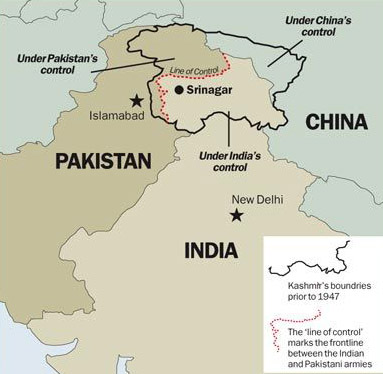
Failure Again SIR OWEN DIXON’S announcement of the failure of his efforts to bring about some sort of agreement between the Governments of India and Pakistan is nothing unexpected. It has been obvious from the very beginning that India is not prepared to let go her hold on the Valley. She did not say so, of course. But all her tactics were clearly directed towards that end. Sir Owen’s visit has served one useful purpose; it has for the first time brought out in so many words that India wants the Valley proper at any cost. That this part of the State has 95 per cent Muslim population does not in the least prick her democratic conscience.
What Next?
THIS brings both Pakistan and the UN face to face with the question:
What to do next? If UN fails to proceed with the next logical step; the application of sanctions to India, she will be driving the last nail in her already tottering prestige in the East. It will confirm the impression that that organization is more of a joint stock company for the benefit of its principals than a tribunal of international justice. Even if its hands were not full of the Korean War; it is doubtful that it would have summoned courage to confront India with this alternative. The Korean situation rules such a step by that body out of question. This means that Pakistan must fall back on her own resources and find out a prompt answer to the new development. The issue has now emerged more clear-cut than ever before: India is determined to have the Valley, come what may. Pakistan is equally determined that it will not consign millions of Muslims in the Valley to serfdom under which they have been groaning for about a century. This is the issue in plain terms.
Peace or War?
WITH this inflexible resolve on both sides the only alternative left is to settle the dispute by war. The prospect of War, obviously, is fraught with worse disasters than can be imagined to both the countries. But the question is: Can war be avoided? India’s point-blank refusal to accept a fair democratic settlement through plebiscite leaves Pakistan no other alternative, consistently with honour and the instinct of self-preservation. If, for some reasons, she cannot afford a war just now, she will have to divert all her national energy and resources towards that one grand objective – the liberation of Kashmir. This will mean a race of armaments and a war of nerves. But what does it matter to India? She has got the cake and must eat it. It was sheer folly on the part of Pakistan leadership to expect that a power already in possession of the “earthly Heaven” would voluntarily give it up.
A Possible Solution
WE wish Sir Owen Dixon had explored another possible solution. He suggested during his talks that if an over-all plebiscite was not acceptable, the device of partial partition and partial plebiscite might be tried. That also proved futile because India wanted the Valley at any cost. Perhaps it was not within his terms of reference, otherwise the only other solution he could have suggested should have been a partial war – that is to say a war limited to the soil of the state. If the two countries had agreed to this old-time method when the contestants engaged in a duel to settle the right of ownership to a coveted prize, this would have cut this gordian knot of Kashmir, provided this method were mutually agreed upon.
A Choice
SINCE partial war is also out of question in these days of total war between the two countries is bound to spell the ruin, perhaps loss of freedom of both, the only practicable alternative before Pakistan is to confront both the U N and the Commonwealth with the blunt question, “Where is the good of Pakistan staying within these organizations?” Obviously, there is no sense in it if they cannot secure justice to Pakistan. It would be an act of political imbecility for Pakistan to remain a member of these organizations.
A Possible Repercussion
THE frustration in Kashmir might well have an unfavourable reaction on the domestic politics of Pakistan. People will not be quite unjustified, if they hold the Government’s bad strategy also responsible for letting things drift to this point. It should have adopted some more vigorous line of action to checkmate India´s dilatory tactics. Ever since cease-fire, India has been carrying on this “War” of dilatoriness against Pakistan in making plebiscite impossible. Our government should have adopted ways and measures to counter this game. The Governments weak-kneed policy is equally responsible for this position. If it had told UN and the Commonwealth that Pakistan would have nothing to do with these bodies, if they sacrificed vital democratic principles to opportunism, things would certainly have taken a different turn. Even now this is the only course it should adopt if it does not want to lose Kashmir.
League Leadership
THE Muslim League is fast losing ground in the esteem of the people in every Province owing to factional dissensions and the opportunism of those who have captured this organisation. It has become a fascist body, both at the Centre and the Province, whose sole function now is to keep the ruling junta in the saddle. Everywhere it has grown irresponsive and impervious to popular feelings and problems. It has ceased to think in terms of national interests and national reconstruction and has consequently lost all vision and idealism which marked its ranks under the Quaid-i-Azam. There was a time when people used to say that if the League ticket were tied to a tree, they would vote for the same. The process has now reversed, and the League ticket may mean a disqualification at the coming elections to legislatures. On the virtual exit of the League, new forces have appeared on the scene making a bid for power, notable among these being the Jamat-i-Islami and the Awami League. The first has a slogan which is a re-echo of every Muslim´s heart, viz. to return men of righteous conduct and Islamic way of life to the Legislature. This is bound to have a tremendous appeal to the voter. The second organisation is a revolt against the inequalities and enormities of which the League has become a hot-bed and comprises some of the “Old Guard” of the League with a good record of work at their back. It will be a hard task for the League to protect its laurels against these two new forces which are aglow with the kind of idealism which alone can galvanise the nation and enable it to face the difficult times that are still ahead.
M.Y.K.
The Light – (1st. September 1950)