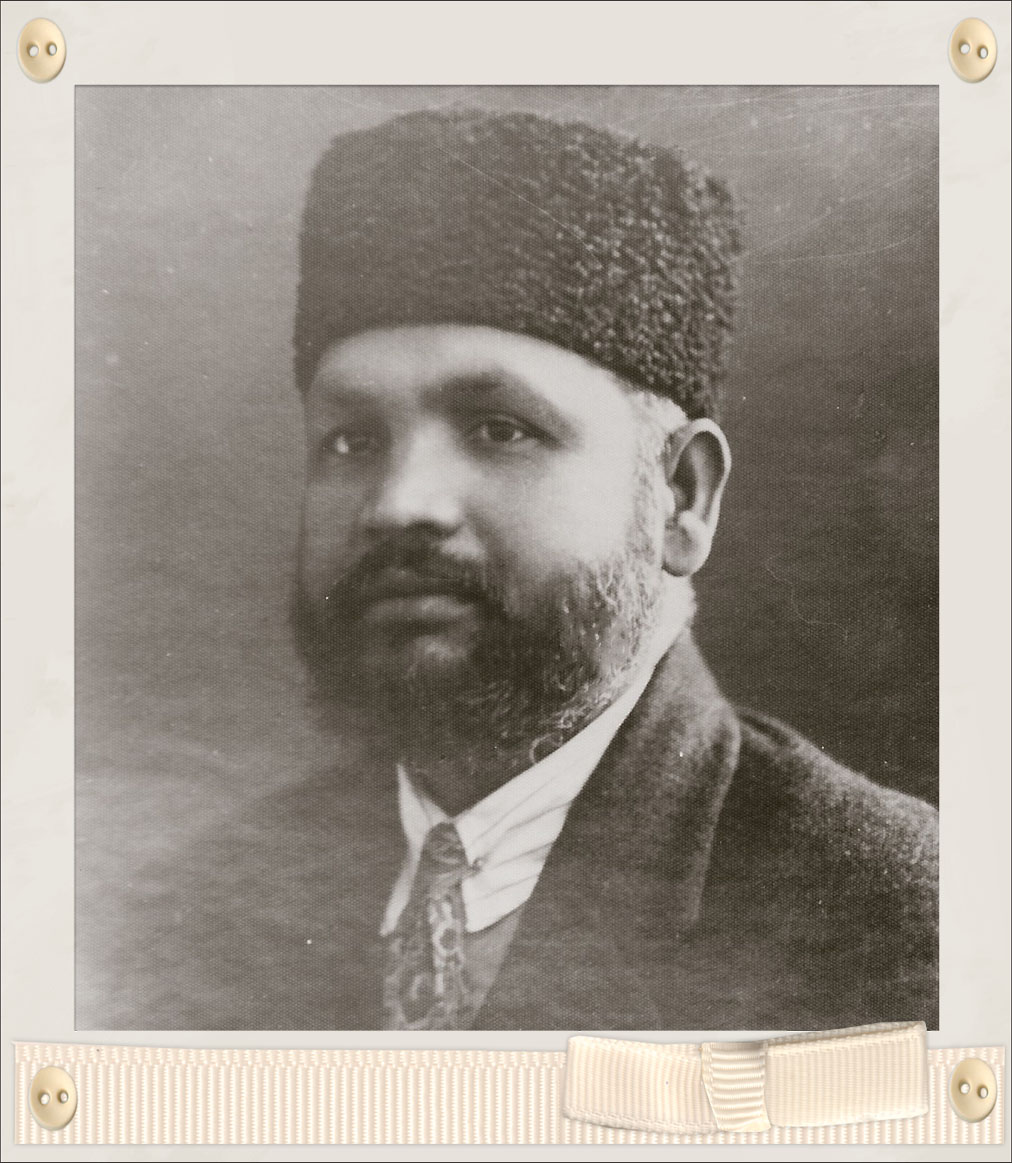
Universality of Divine Light

Text of a lecture by Maulana Mohd. Yakub Khan at the Birth Centenary of Sri Keshub Chandra Sen at the Dayal Singh College, Lahore.
December 8, 1938
When I rise to address a gathering of modern-minded men in this 20th century on a topic like Divinity and Divine Light, I am by no means unmindful of the fact that I am indulging in what may sound a cry out of season. In fact, I am reminded of the biting irony of the lines of that, great master of humour, Poet Akbar of Allahabad:
رپٹ لکھوائی ہے یاروں نے جا جا کر یہ تھانے میں
کہ اکبر نام لیتا ہے خدا کا اس زمانے میں
” They have lodged a plaint in the police station that Akbar dares take the name of God in this age!”
With all that, however, and in spite of the wave of Godlessness which seems to have swept the modern age, I am here to say that all true-life springs from that one Great Source of Life, that in fact, were it not for the life-giving rays that emanate from that Fountainhead of Light and Life, this earthly life of ours would be hardly worth living. This has been the verdict of all great souls. The sweet Teacher of Galilee gave expression to the same truth when he said, “Man does not live by bread alone but by every word that cometh out of the mouth of God.” Tolstoy tells us that at the time when he had lost faith in God, he would keep any rope in the house out of his way, lest he should hang himself by one of the rafters. Without some Higher Power and Purpose pervading this universe, he could see no meaning in human life. Divine light is but another name for the realization of this Higher Scheme of things, the opening of the eyes of the mind to this Higher Wisdom.
Gentlemen! this Inner Light is as indispensable for the health and growth of the soul within us as the outer light, of the sun for our physical well-being. Shut out the exhilarating rays of the sun and what is the result? A stunted growth coupled with a host of ailments. Our latest medical science has discovered the great value of a sunbath as a cure for many diseases and for the general toning up of the body. Likewise, a bath in the rays of that Inner Light alone can enable the soul, the real “I” within me, to attain to its fullest stature.
Here I must say a word about a possible confusion between this Inner Light and the light of reason. This Inner Light is not in any way inconsistent with the light of reason, but it is something far above it. It lifts one up to regions where the wings of reason cannot reach. The light of reason is certainly good in its own way but so far as the knowledge of God is concerned, it cannot carry us very far. The utmost flight the wings of reason are capable of is that there “ought to be” a God. But between this doubtful “ought to be” and the sure “is” of personal realization of God there is a world of difference. The “ought to be” of reason cannot take us out of the quagmire of doubt and darkness. When, however, the Inner Light of personal realization comes, all mist of uncertainty is dispelled. One stands in the full glare of Divine light. God then is no longer an abstract intellectual deduction but a warm reality that one can feel and see. One no longer says, “There ought to be a God” He says, “there is a God”.
Now this is the light which alone can bring illumination to the inside of man and release the currents of life within him. It is a far more vital necessity of human life than the daily bread on which we are supposed to live. But the question of questions now is: Is this light open to everybody or is it the monopoly of a chosen few?
In this age of general enlightenment, we can hardly conceive of a Deity who would discriminate between one people and another, who would vouchsafe His blessings to one but withhold them from the other, If He sends His sunshine, His rain, His air which we breathe, His water which we drink to all alike, whether black or white, Hindus or Muslims, Jews or Christians, High-caste or Low-caste, if He has endowed all with eyes, ears, hands and feet, it certainly does not stand to reason that whereas He is so even-handed in the distribution of these physical gifts of His, in the dispensation of this Inner Light, which is of far greater and more abiding importance to man, He should be guided by anything like favouritism. Why, the very idea is an insult to the Providence whose bounties know no man-made bounds of caste colour or creed and embrace the whole f humanity alike, the prince in the palace as well as the peasant in his hut.
Absurd as such a view may seem on the face of it, it is nonetheless a fact that all through history people have divided humanity into two lots, considering themselves the chosen of God and all the rest as outside that privileged pale. Divine light was also considered to be the monopoly of the chosen people.To-day, with all the advantages of modern enlightenment, we can quite see the absurdity of such a view; but Islam exposed this absurdity 1400 years since, when the globe was yet enveloped in darkness, and proclaimed the grand truth that Divine light was vouchsafed to all peoples and all through the ages. Every people, says the Quran, have had their guide. Another verse makes it incumbent upon every Muslim to profess faith in all the World Prophets and Guides as much as in the Prophet Muhammad ﷺ. The verse goes so far as to lay down that in the matter of professing faith in them, no dis-crimination shall be made between any of them, whether they appeared in Arabia or India, in Persia or China or any other part of the world.
Now, gentlemen, this is no mean contribution both to the advancement of human thought and the promotion of a universal human brotherhood. I often feel that this is the greatest discovery in the realm of religious thought, this recognition of the universality of Divine light. Apart from the fact that it affirms great truth, it has a far-reaching reaction on social relations between various people. It provides a common meeting ground for all the followers of various revealed religions, thereby paving the way for the grand ideal of the universal brotherhood of man. Take, for in-stance, the inter-communal relations between Hindus and Musalmans in India. Whatever the other causes of their differences, the fact remains that much of the bitterness is lent to those difference by lack of mutual sympathy on the plane of religion. But sympathy and understanding can be restored in, no time if the Hindus and Muslims should act up to the Quranic truth that Divine light was given to both of them. A Musalman has, by the clear categorical injunction of the Quran, to profess faith in Hindu Rishis like Sri Krishna and if the Hindus but reciprocated, by according the same recognition to the Prophet of Islam, the ever-bleeding communal sore would already be half healed. I often wonder why our politicians have not so far tapped this avenue of reproachment between the two communities.
And here I must pay homage to the founders of the Brahma Samaj who, though born and brought up in a caste-ridden country had the greatness of soul and breadth of vision to reaffirm the great truth that all religious founders were men of Divine light. Sri Keshab Chandra Sen, whose centenary we are celebrating, went further and said not only that truth in other religions must be acknowledged but actually seized and kissed. This is almost a reproduction, of the Prophet’sﷺwords: “Truth is the lost property of a Muslim. He must have it wherever he may come by it.”
And what is the result of this attitude of mind? From personal experience I can say that I have found myself as at home in a Brahma Samaj atmosphere as among my fellow-Muslims. The feeling of estrangement that divides a Hindu from a Musselman is gone, giving place to mutual respect and affection. And I may add that I have always given in my heart a place of honour and love to Raja Ram Mohan Roy and Keshab Chander Sen.
One only wishes the message of these great souls had reached every home in India and Hindu-Muslim question would then have been a thing of the past. At any rate it would have lost much, of its present-day sting.