PARACLETE OR MUHAMMAD ﷺ
”And I will pray the Father and He shall give you another Paraclete that he may be with you for ever.” (John xiv. 16.)
” And (remember) when Jesus, the son of Mary said, ’ 0 children of Israel! Of a truth I am God’s apostle to you to confirm the law which was given before me, and to announce an apostle that shall come after me, whose name shall be Ahmad” – (The Holy Qur-án, As-Saff 61:6)
وَإِذْ قَالَ عِيسَى ابْنُ مَرْيَمَ يَا بَنِي إِسْرَائِيلَ إِنِّي رَسُولُ اللَّهِ إِلَيْكُم مُّصَدِّقًا لِّمَا بَيْنَ يَدَيَّ مِنَ التَّوْرَاةِ وَمُبَشِّرًا بِرَسُولٍ يَأْتِي مِن بَعْدِي اسْمُهُ أَحْمَدُ فَلَمَّا جَاءهُم بِالْبَيِّنَاتِ قَالُوا هَذَا سِحْرٌ مُّبِينٌ
The Muslim World in its issue for April 1920, brings out an article under the above title, by one Mr. L. Bevan-Jones. The writer has made another attempt, no less futile than so many others of its kind, to confuse quite a plain issue. That the Gospel of John xiv. 16, contains in unmistakable terms a prediction as to the advent of the Holy Prophet of Arabia is a fact as patent as ever, in spite of all the ingenious verbal juggling on the part the Church champions. The present contribution to this old controversy is hardly an improvement upon its predecessors; it is in fact a tedious repetition of the same beaten arguments, refuted as often as advanced.
The present writer, too, is shrewd enough to seek shelter under the cover of a verbal quibble and would not dare face the proposition in all its bearings. Whether “Paraclete” or “Periclyte” was the original word of the prophecy, is the sole criterion, upon which, he thinks, should hang the decision. That the Bible has undergone changes after changes and cannot possibly claim immunity from human manipulation is now a fact of which no secret is made by Christian critics themselves. Do we not, time and again, come across revised editions of the Bible? What wonder then if the book should bristle with contradictions? Such a document can in no way be regarded as a trustworthy record of what Jesus Christ (may peace and the blessings of God be upon him) said or taught. The point is, I believe, plain enough and admits of no contest in quarters where the use of reason in matters religious has ceased to be dubbed a blasphemy. Furthermore, Jesus did not speak English, nor Greek, nor Latin. Born of Jewish parents, brought up in a Jewish atmosphere, it would be absurd to conclude that Jesus spoke a language other than the one of the people among whom he was born and lived, and for whose reformation he was raised as a Prophet. His words uttered at a time of extreme agony on the cross, ”Eli, Eli, lama sabachthani,” are very significant in this respect. These being admittedly Hebrew, we have a conclusive testimony to the fact that Jesus must have preached to his people in his mother tongue. But unfortunately, not a single copy of the Bible in Jesus’ own words, i.e., Hebrew is available.
The true teachings of Jesus are as much shrouded in mystery as his own personality, of which one cannot find much in the light of contemporary history. The Gospels, therefore, in the form as we find them cannot claim to be a faithful record even of the words of the Apostles who, in fact, are responsible for their production, much less of the words of Jesus whose language was Hebrew.
To rely wholly and solely on this uncertain point, as the writer has clearly done by regarding it as the ” pivot ” of the controversy, is just like catching at a straw. I must here guard against being misunderstood. The Muslim point of view is strong enough to meet him on this ground as well, as I will presently attempt. What I am anxious to bring out is that there are other weighty considerations directly bearing upon the question and leading to a sure and definite conclusion. These must not be lost sight of in approaching the discussion. The characteristics and functions of the Promised One must constitute the main factor to decide the point at issue. This, however, is the aspect the writer has very wisely touched upon only in passing as a trivial consideration.

The writer has produced a scrap of paper from a Greek version of the Gospel of John, claiming antiquity as old as fifth century A.D., to show that the word in question reads ” parakleton ” meaning ”comforter ” and not ” periclytos ” or the ” illustrious,” as the Muslims take it. He makes much of it and his exultation knows no bounds at the idea that this shall not fail to deal a crushing blow to his uncomfortable adversary.But may I request him to set aside all pre-occupations and weigh his contention at the arbitrament of pure reason. There are two readings of the word on available record. The one ” Paraclete ” as said to be contained in the Greek edition of John and the other in the Gospel of Barnabas as ” Periclyte,” which means ” much praised,” and hence Muhammad ﷺ , according to Muslims, which in Arabic carries the same sense. Why accept the one and reject the other? ” Because,” says a Christian, ” it is spurious Its whole tendency and purpose is Muhammadan. Its author must be some renegade from Christianity.” Another will dismiss it as the manipulation of some Muslim. Sale, in his preface to his English translation of the Holy Qur-án, makes a clear reference to the existence of the word ” Periclyte ” in the Gospel of Barnabas. The learned Christian says a certain monk came across a copy of this Gospel in the Library of the Fifth Pope and finding a clear prediction therein as to the advent of Muhammad, embraced the religion of Islam. But he adds further on that this must be the outcome of tampering on the part of some Muslim. A comfortable idea no doubt, but not warranted by facts and figures. The volume occupies a place of honour in the Library of the Head of the Church, side by side with the four other Gospels. A spurious edition such as the Gospel of Barnabas is alleged to be, must not find room in a sacred Library. The sooner it gets extinct, the better. The Pope must be the first to stamp it out of existence to save many a soul from corruption. It is, nevertheless, preserved with all care and the Monk on the look-out for it, gets access to it with great difficulty. He has reasons to regard it as a true word of Lord Jesus and finding ”Periclyte ” or ” Muhammad ” mentioned by name therein he embraces Islam. This is not an argument to be lightly set aside. It will not do to throw suspicion on its reliability. Allegation is one thing and substantiation another. Mere assertion makes no argument. Solid facts must be forthcoming to substantiate that Barnabas is more unauthenticated than John or any other Gospel. The sweet will of an interested missionary cannot count for much.
The scrap of paper lays claim to antiquity, but antiquity is no guarantee for authenticity. Faults have been found with the four Gospels in spite of their antiquity and consequently revised from time to time. It yet remains to be proved that Barnabas is less antique, if antiquity as such can carry any weight at all.
But the cleverest stroke of all! Experts, it is alleged, have deciphered the Italian text of Barnabas and have come to the conclusion that the reference to ” Paraclete ” is so vague as to be recognizable. The last refuge of a forlorn hope but only too late. Controversy on the point has been raging for centuries but a reference was never made to the text in question to ascertain whether the word ” Periclyte ” was at all discernible. It sounds more like the question of the student who went through the whole of Zulikha’s story and curiously asked his teacher at the end whether ” Zulikha ” was a male or a female. Centuries of fret and fume over the dispute rolled by and lo! the twentieth century ” experts ” step in to disillusion the world that all this time and energy was wasted on empty nothing. But the world has long outgrown the age of credulity. We have reasons to feel reluctant in reposing implicit confidence in the verdict of the ” experts” with all due deference to their antiquarian skill notwithstanding. Religious interests are dearer than materialistic ends; when the oil of Musal could prove too alluring in more responsible quarters to mind the dictates of integrity, nothing can be too much to expect of such people, however hideous, to gratify religious greed. We must therefore have other reasons, if any, to be convinced.It is thus obvious that the trustworthiness of the Gospel of Barnabas on this point survives all attempts at its demolition and stands as unshaken as ever. It is an eloquent testimony pointing to the advent of the Holy Prophet of Arabia. Many a pious and God-fearing Christian availed of the clue and partook of the blessings of Islam. There seems no reason except petty prejudice to shut eyes against a glaring fact such as this. But, however, if some Christians have made up their minds to discredit the word ” Periclyte,” we must humbly show them that ” Paraclete,” which they regard as quite a harmless word from their point of view, is no less clearly applicable to the Holy Prophet. It has already been pointed out that Jesus, born of Jewish parents, having moved and lived among the Jews and preached to the Jews must have imparted his lessons in Hebrew, the language of the Jewish people. His favourite disciples were simple fishermen, not well-versed in foreign languages. He set before himself the sole object of reforming the Jewish people. The Jews accused him of plagiarism; for he quoted so often from old Jewish writings. All these facts go to show that Jesus instructed his people through the medium of their own language, i.e., Hebrew.The Greek word ” Paraclete ” must, therefore, owe its origin to the Hebrew language. The word was obviously used as a proper noun to indicate the person, as we shall later on show, whose advent was foretold. It does not stand to reason to theorize that the present Greek form thereof was adopted as equivalent in respect of meaning, to the original word uttered by Jesus in Hebrew. In all probability the very word must have been retained in the Greek version as well, with the unavoidable vocal alterations, to fit in with the Greek form of pronunciation. It is thus irrelevant to argue that in Greek the word ” Paraclete ” means ” Comforter ” or this or that, which sense applies neither to Muhammad nor Ahmad, the two names of the Holy Prophet of Arabia. We must be obviously on the wrong track, if the Greek sense of the word is taken into consideration, for it was not with reference to its connotation but rather its vocal adjustability that the word was adopted in Greek. This, in fact, should be the guiding principle in hunting the origin of the word in Hebrew.
Hebrew being unfortunately a language dead and defunct long since, we cannot but resort to its living representative in Arabic, to come at some clue. Experts on Philology are at one on the point that of all the members of the Semitic family of languages, Arabic alone is such as can throw light upon doubtful issues in connection with the rest of this great family. Arabic, moreover, has got a significant characteristic of its own. An Arabic word in its etymological sense points to the purpose with which the word was coined. Corresponding to the Greek ” Paraclete ” we have the word ” Farqaleet,” closely resembling it. Let us therefore consider, whether or not the original Hebrew word was ” Farqaleet ”; for it is not infrequently that we come across words common to both of these sister languages. We have ample grounds in the etymological sense of the word and also in the characteristics and functions of the Promised One as we will presently discuss, that point in the direction we have assumed.
The word ” farqaleet ” is composed of two parts, ” fariq ” and ” leet ”; ” fariq ” signifies ” one that discriminates something,” and ” leet ” stands for ” satan ” or ” false-hood.” ” Farqaleet,” therefore, must indicate ” one that discriminates falsehood.” Now turning to the words of the prophecy we find that the ”Paraclete ” is also spoken of as the ” Spirit of Truth.” And what else can discriminate falsehood, but the Spirit of Truth? ” Farqaleet ” and the ” Spirit of Truth ” are therefore synonymous. ” Paraclete ” therefore is no other than ” Farqaleet,” and must not carry the Greek sense ” comforter,” but the sense of its original form, i.e., ” one that discriminates between truth and falsehood. ”
We will next see whether in its true original sense the word is applicable to the Holy Prophet of Arabia. Corresponding to John xiv. 16 foretelling the advent of a ”Paraclete,” we find in the Holy Qur-án lxi. 6 that Jesus predicted the appearance of an ” Ahmad.” We should therefore compare the words ” Paraclete ” and ” Ahmad ” to ascertain if they refer to the same person. ” Paraclete ” has already been explained as ” one that discriminates between truth and falsehood.” The word ” Ahmad ” is derived from ” hamd ” and means ” one that profusely praises good attributes.” The Holy Prophet of Arabia appeared at a time when idol-worship was at its full swing in Arabia. False deities had been set up all over the land. False attributes were imputed to the Divine Being almost all over the world, such as the Christian sonship or trinity. It was the end-all and be-all of the Prophet’s mission to establish the Unity of God, purged of all evil attributes accumulated around Him by the various people. The Holy Prophet therefore addressed himself heart and soul to the establishment of the true attributes of God and the dispelling of all false ones. This is exactly what the word ” Ahmad ” means and implies. He discriminated so to say between the true and false attributes of God. Was he not then the ” Spirit of Truth ” at the appearance of which ” falsehood ” vanished? Hence ” Ahmad ” imports the same sense as ” Paraclete.” The Holy Qur-án, therefore, correctly refers to the prediction in John xiv. i6 as to the advent of a Prophet who will discriminate truth from falsehood—a ” Paraclete ” or an ” Ahmad.”
This puts an end to all verbal contention on the point Whether ”Paraclete ” or ” Periclyte,” the prophecy contained in John xiv. 16 and the Qur-án lxi. 6 both, refers to the advent of the same person, who has, by a happy coincidence, two names corresponding to these two words, viz: Ahmad and Muhammad, conveying the same sense respectively, as already discussed. Let us now turn to what is perhaps a more important aspect of the question. The Gospel gives a number of characteristics that distinguish the Promised One. Is the Qur-ànic Ahmad or Muhammad possessed of the same set of attributes?
A comparative glance at the Bible and the Qur-án will reveal the fact that the description of the Promised One as given in the two books is the same to the very letter. The ” Paraclete ” is repeatedly spoken of in the Bible as the ” Spirit of Truth.” The phrase is very significant and a sure clue to recognize ” Paraclete.” It may be observed here in passing that the word ” Paraclete ” can by no stretch of fancy be twisted to fit in with the Holy Ghost, for nowhere in the pages of the Bible is the latter called the Spirit of Truth. Furthermore, Jesus speaks of him as another Paraclete. Jesus himself was of course one paraclete; the other foretold, therefore, must also be a mortal like himself. The Qur-ànic picture of the person is also the same in this respect, when it proclaims the advent of the Holy Prophet in the following words:-
” Say the Spirit of Truth (that had been promised to you) is come and falsehood is vanished.”
وَقُلْ جَاء الْحَقُّ وَزَهَقَ الْبَاطِلُ إِنَّ الْبَاطِلَ كَانَ زَهُوقًا
(Al-Isra (The Journey by Night) 17:81)
It is evident from this that the Holy Prophet claimed to be the Spirit of Truth. The defining ” al ” pre-fixed to the word ” haq ” recalls attention to the promise God made through Jesus.It is futile to object that the Holy Prophet was a man and not a ” Spirit.” The Bible itself has used the word ” spirit ” in a large variety of sense. ” The spirit is willing, but the flesh is weak ” (Matt. xxvi. 41); here it is used for the spiritual part of man. Again, it is also used to stand for God, both in the Holy Qur-án and the Bible, as descending upon the righteous. Yet again it signifies a holy person: ” That which is born of the spirit is spirit ” (John iii. 6). The Christian contention that the word ” spirit ” cannot apply to a corporeal being is therefore absurd. Even the Holy Ghost itself assumed a visible shape, ” a bodily shape like a dove ” (Luke iii. 22), ” cloven tongues like as of fire ” (Acts ii. 3). One absolutely fails to see any objection to the mention of the Holy Prophet as a spirit in a metaphorical sense, considering that the Holy Ghost can appear as a dove and even the second person of the triangular Godhead can put on a human form. Perhaps the words of the Bible regarding Paraclete that the world ” seeth him not, neither knoweth him,” afford a handle to the Christian that he must not be a visible human being but an invisible spirit. This is no less untenable. Does not the same Bible use similar words on a similar occasion: ” because they seeing see not ” (Matt. xiii. 13); and again ” that seeing they might not see ” (Luke viii. It)). These words should, on the other hand, furnish a further evidence that the Paraclete is no other than the Holy Prophet, of whom the Holy Qur-àn has used exactly the same words: — ” They look at thee but they do not see thee.”
Another characteristic of the Promised Paraclete as set forth in the Bible, has proved another stumbling block to the Christians. ” That he (Paraclete) may abide with you for ever ” puts them under the wrong impression, that the Paraclete, in order to be immortal, must need be a ” spirit ” and not a human being. This betrays their ignorance of the Bible itself. The very words of Jesus in this connection will suffice to remove the false notion. ” He shall give you another Paraclete that he may abide with you for ever,” clearly indicates that Paraclete shall abide for ever in a certain sense in which Jesus himself shall not. It is obvious, therefore, that Paraclete’s abiding for ever, must not be taken in the sense of a spiritual life; for in this sense Jesus too shares the privilege with Him. Jesus does claim an eternal life for himself, so far as the life of the spirit as distinct from physical body is concerned, when he says: ” If a man loves me, he will keep my words and my Father will love him and we will come unto him and make our abode with him.” But Paraclete shall have an eternal life in a sense other than that in which Jesus might have it, as the previous quotation shows. The abiding for ever on the part of Paraclete cannot therefore be in a spiritual sense. It is hence absurd to argue that the Holy Ghost enjoys an eternal life and must therefore be the same as Paraclete. The Holy Ghost’s eternity of life, like that of Jesus and unlike that of Paraclete is in a spiritual state. Thus, the Holy Ghost can on no account be regarded as Paraclete.
As a matter of fact, when Jesus spoke of the cessation of his life and the continuation of Paraclete’s, he implicitly referred to the duration of their existence through their teachings and their spiritual influence on mankind. When a prophet is raised for the reformation of a people, he is equipped with a twofold weapon—a code of laws to regulate the life of man and a personal magnetism exercising noble influence upon whomsoever may come in contact with him. In both of these respects, Jesus has ceased to exist long since, while the Holy Prophet of Arabia does exist to this day and shall exist for ever. Jesus came with a set of laws and a spiritual force, whereby he wrought considerable reformation among his people for a time. But by and by the laws that were suited to the then stage of society ceased to be of practical utility with the growth and development of human society and the spiritual force that had wrought miracles of old, lost its efficacy and vanished. Thus arose the need for another Paraclete who should bring a perfect law, not for a particular clan or clime but for the whole of human race. Society was by this time sufficiently grown up, to receive the teachings that surpassed the mental capacity of the Jews of Jesus’ time. Realizing the inferiority of the stuff Jesus had to deal with, he frankly confesses the deficiency of his own teachings: ” I have yet many things to say unto you, but ye cannot bear them now.” At the advent of the Holy Prophet of Arabia, the barriers of nationalities had been demolished to a great extent and human society was on the way to weld into one vast family under the common Fatherhood of God. Therefore the ” pearls ” of Jesus, meant exclusively for the Jewish nation, failed to meet the requirements arising out of the new situation. A perfect law to regulate the entire human society was thus called for to replace the inadequate code of Jesus. Muhammad ﷺ was consequently raised to meet the need, to which effect the Holy Qur-án says: —” This day have I perfected your religion for you and completed my blessings upon you.” And again, the continuity or ever-abiding of this law and its blessings is guaranteed in equally emphatic words: — ” And we have not sent thee but as an embodiment of mercy for all the worlds, i.e., for all peoples and all ages.”
This in fact is the sense in which Jesus could not abide for ever and another Paraclete appeared in the person of the Holy Prophet ﷺ of Arabia as a permanent source of blessings. About fourteen centuries have elapsed since the dawn of this spiritual luminary at the top of Mount Paran and up to this day its rays are as bright as ever. He is the ever-living source from which blessings have been emanating all these fourteen centuries. The History of Islam abounds with glowing accounts of spiritual giants appearing among Muslims from time to time to invigorate society and vindicate the cause of truth and righteousness. To this effect the Holy Prophet ﷺ is reported to have said ” Verily, God shall raise for this (Muslim) nation, at the commencement of each century, one who shall put fresh life in their faith.” The prophecy has turned out true to the very letter and not a’ century has since passed but some such person has made appearance to up-lift mankind.
This, in brief, was the sense in which Jesus said Paraclete shall abide for ever, while he himself would not. We have a further characteristic of the Paraclete in John’s Gospel that ” he shall not speak of himself but whatever he shall hear that shall he speak.” The words are clear enough and cannot be twisted to refer to the Holy Ghost. The Holy Ghost, being the third person of Trinity, is a co-partner of Godhead, and has a fair claim to at least one third of it. Why, then, should it be reduced to the status of a recipient, hearing anything from any other person. It is, on the other hand, the active agent imparting words to others who should communicate them to mankind. Obviously, it refers to a man inspired by God, who transmits to others nothing but what is revealed to him.In other words, he speaks only what he hears from God. The Holy Ghost is itself a part and parcel of God. Besides, we have not so far come across a collection of speeches by the Holy Ghost. The reference therefore must be to a man holding communication with God and communicating His will to the people. There is one and only one person who answers to this description of Paraclete as contained in the Gospel of John, which the Holy Qur-án corroborates in the following words:
” He doth not speak of himself, but it is the word of God that is revealed to him,” i.e., he speaks what he hears from God. This is an attribute peculiar to the Holy Prophet ﷺ of Arabia alone. Prophets before him, no doubt, heard from God and then spoke to the people. But when they spoke at other times, when not under the influence of the Holy Ghost, they spoke of themselves. The Holy Prophet, on the other hand, was never forsaken for one moment by the Holy Ghost, who kept him constant company. Therefore, he did not utter a single word of himself, but whatever he heard from God. Of the noble band of prophets, there is not one who lays claim to the distinction that he spoke not a word from himself, but only what he heard from God. It is the Holy Prophet ﷺ of Arabia alone who is depicted as such by the Qur-án. He therefore is the Promised Paraclete.
Yet another function of Paraclete as set forth in the same Gospel: ” He shall testify of me.” Appearance of a spirit as a witness to testify to the truth of Jesus is absurd on the face of it. The process implies the presence of a human being to bear evidence. What the Holy Ghost can at best do, is no more than infusing certain ideas in human minds—this, however, is anything but ” testifying.” Even granting, for the sake of argument, that the Holy Ghost bore witness through human beings, the question arises whether it did purify Jesus of the false charges laid at his door. The Jews heaped curses upon him and alleged that he had died on the cross, which they regarded as an accursed death. Did the Christians inspired by the Holy Ghost clear him of this? No! On the other hand, they assisted the Jews in their blasphemous propaganda, by admitting his death on the cross. Furthermore, they imputed to him the most abominable curse that he called himself the Son of God.
The Holy Prophet of Arabia (peace and blessings of God be upon him) alone fulfilled these prophetic words of the Gospel. He it was who emphatically pronounced the divine words: ” I shall purify thee (O Jesus) of all the false charges imputed to thee by the unbelievers.”
How far the Holy Prophet ﷺ succeeded in achieving this end can be judged from the fact that every Muslim looks upon Jesus as the righteous servant of God, His Prophet, belief in whom forms part of a Muslim’s faith. Excess of hatred and enmity on the part of the Jews were responsible for the blackest picture of Jesus while excess of zeal and love of his admirers, the Christians, painted him in fantastic colours no less hideous. The Holy Prophet came and testified of him as he in reality was, a Prophet of God, His servant and His beloved. He purged him of all the rubbish accumulated round about him by virtue of excess on both sides. Thus, he fulfilled the words of Jesus ” he shall testify of me.”
To sum up, the true word in the prophecy whether ”Paraclete ” or ” Periclyte,” applies to the Holy Prophet of Arabia, the one meaning ” Ahmad ” and the other ” Muhammad.”
The characteristics of Paraclete as laid down in the Gospel of John are met with one and all, in the person of the Holy Prophet ﷺ. He came to discriminate truth from falsehood and was thus ” The Spirit of Truth.” He brought a perfect code of laws and so fulfilled the words of Jesus: ” I have yet many things to say to you, but ye cannot bear them now. . .. Howbeit when he, the Spirit of Truth, is come, he will guide you into all truth ”. (John xvi. 12, 13).
The Holy Ghost never left him and so he never spoke of himself, but whatever he heard, he spoke. He alone cleared Jesus of all the false charges against him, and thus ” testified ” of him.
Who else, then, but the Holy Prophet (peace and the blessings of God be upon him) fulfills all the conditions of the prophecy in John, can claim to be Paraclete? He, in fact, it was whose auspicious advent was foretold by Jesus with all his characteristic features, so that his people might readily recognize him, and partake of the spiritual blessings in store for the human race, through the Holy Prophet of Arabia (peace and blessings of God be upon him).
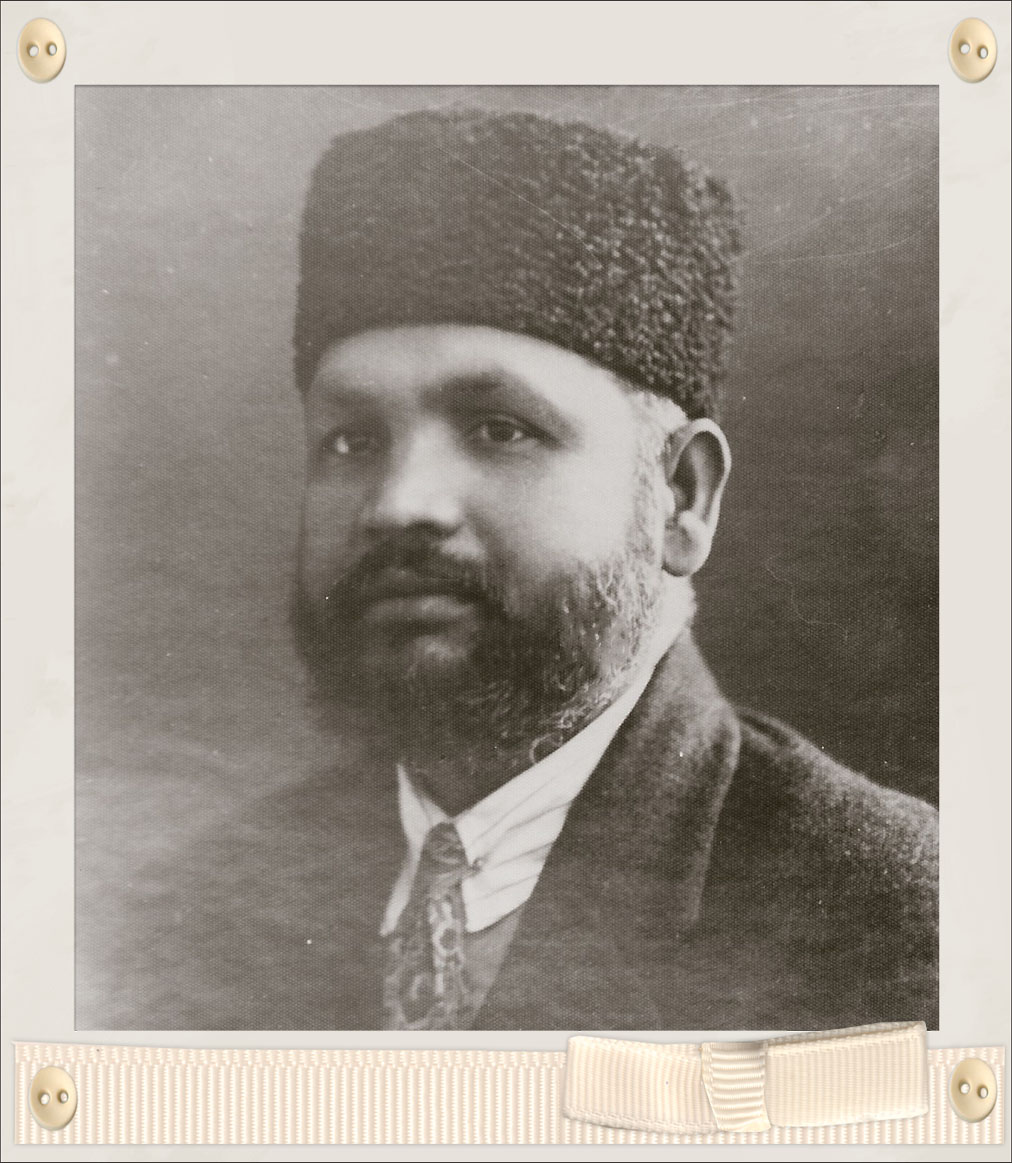
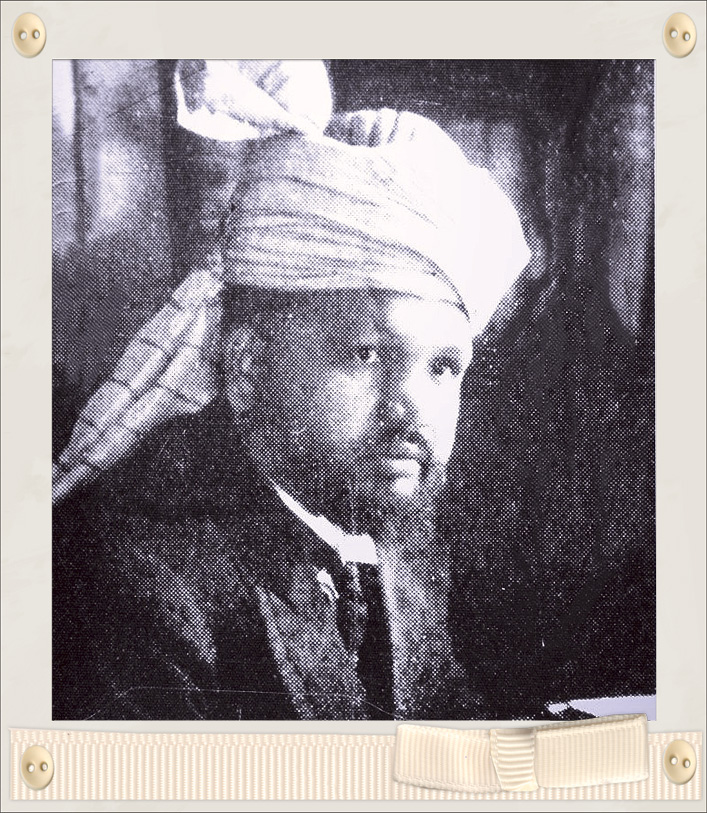
MOHD YAQUB KHAN, B.A„ B.T.
THE ISLAMIC REVIEW August/September 1920